
- Published on
Managing Glucose Levels During Night Shifts
It’s 3:00 AM. While the rest of the world is tucked away in bed, you’re halfway through your shift. Maybe you’re a nurse monitoring patients, a driver navigating quiet highways, or a security professional keeping watch. Whatever your role, you’ve likely felt that familiar "graveyard shift" fatigue—a mix of mental fog, physical exhaustion, and a strange, nagging hunger that seems impossible to satisfy.
For those living with diabetes or focusing on metabolic health, the night shift presents a unique challenge. Our bodies are governed by a circadian rhythm, an internal clock that expects us to be active during the day and resting at night. When we flip this schedule, our hormones—including insulin and cortisol—don't always get the memo. Managing your glucose levels during these hours requires more than just willpower; it requires a strategic approach to timing, nutrition, and monitoring.
The Science: Why Night Shifts Disrupt Your Glucose
Your body is a masterpiece of timing. Under normal circumstances, your insulin sensitivity is highest during the day when you are most likely to eat. As night falls, your body naturally becomes more insulin resistant to ensure that your brain has enough glucose while you fast during sleep.
When you work a night shift, you are essentially eating during the window when your body is least prepared to process sugar. Research shows that sleep deprivation and circadian misalignment can lead to higher post-meal glucose spikes and an increase in A1C (average blood sugar level over 3 months). Furthermore, the stress of staying awake when your body wants to sleep triggers the release of cortisol. Cortisol is a "stress hormone" that tells your liver to release extra glucose for energy, often leading to unexpectedly high readings even if you haven't eaten recently.
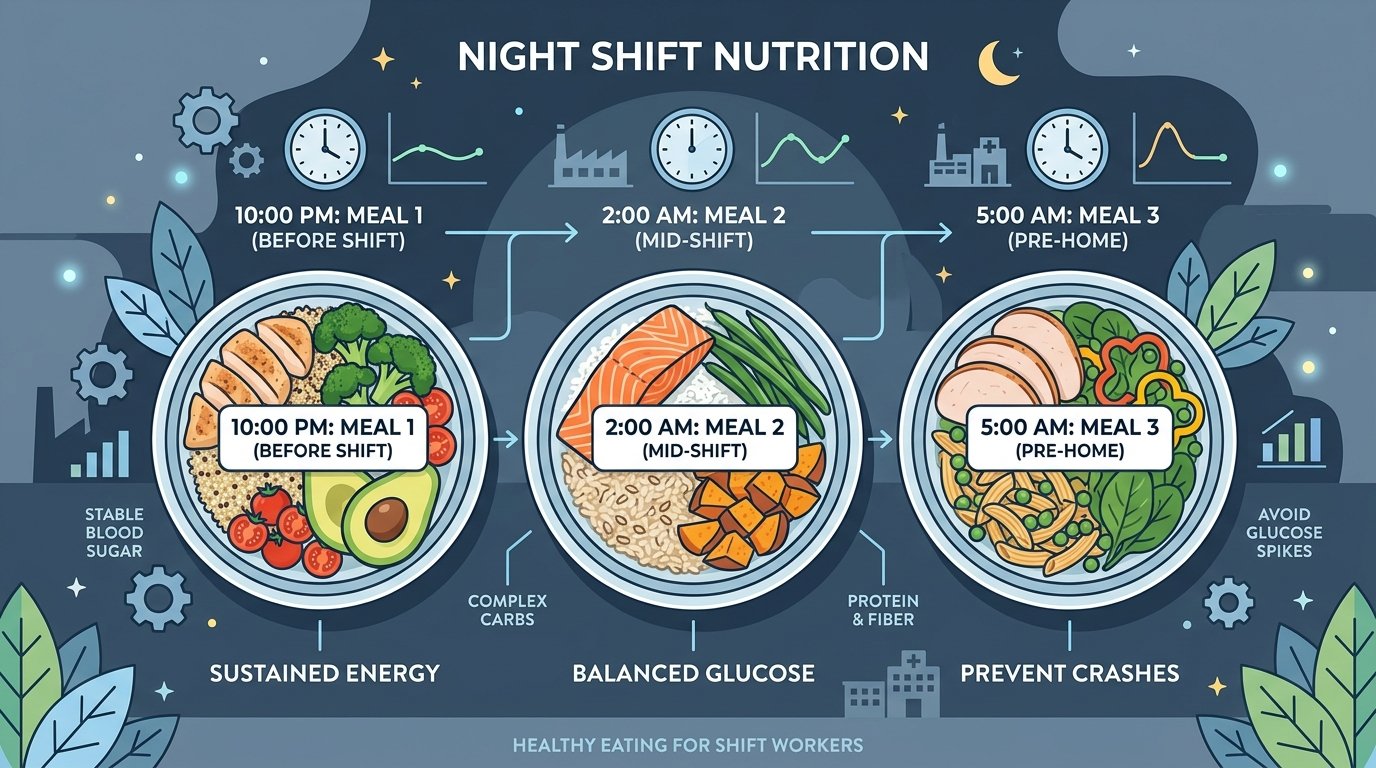
Strategy 1: Mastering Meal Timing
The biggest mistake many night shift workers make is eating "lunch" at midnight and a "dinner" at 4:00 AM. To keep your blood sugar stable, you need to trick your body into a state of metabolic predictability.
The Pre-Shift "Anchor" Meal
Eat your largest meal before you start your shift, ideally during daylight hours (between 4:00 PM and 7:00 PM). This is when your insulin sensitivity is still relatively high. Focus on a balance of complex carbohydrates, lean protein, and healthy fats. This "anchor meal" provides a steady stream of energy that prevents a mid-shift crash.
Grazing vs. Gorging
During the shift itself, avoid heavy meals. Large amounts of carbohydrates at 2:00 AM are much more likely to cause a significant glucose spike than the same meal eaten at noon. Instead, opt for small, protein-rich snacks. Think of these as "fueling stops" rather than full meals.
The "Before-Bed" Dilemma
When you get home at 7:00 AM or 8:00 AM, you might be tempted to eat a large breakfast before hitting the hay. However, sleeping on a full stomach—especially one full of cereal or toast—can lead to elevated glucose levels throughout your sleep cycle. If you are hungry, choose a small, low-carb snack like a hard-boiled egg or a handful of almonds, which won't send your numbers soaring while you rest.
Strategy 2: Navigating the "Vending Machine Trap"
When exhaustion hits at 3:00 AM, your brain screams for quick energy. This usually manifests as a craving for sugar or simple starches—chips, crackers, or candy from the breakroom vending machine. These foods provide a temporary "high" followed by a devastating glucose crash that leaves you feeling even more tired.
To manage your glucose effectively, you must be the architect of your own food environment. Pack a "Night Shift Survival Kit" containing:
- Protein sources: Greek yogurt, cottage cheese, or turkey roll-ups.
- Healthy fats: Avocado, walnuts, or pumpkin seeds.
- High-fiber veggies: Sliced cucumbers, bell peppers, or broccoli florets with hummus.
By having these ready, you bypass the decision-making fatigue that leads to poor food choices. For more on how food choices impact your levels, check out our guide on food order for better blood sugar control.
Strategy 3: Caffeine and Hydration Management
Caffeine is often the lifeblood of the night shift, but it’s a double-edged sword. While it keeps you alert, excessive caffeine can impair insulin sensitivity in some people. Moreover, if you drink coffee too late in your shift, it will interfere with your ability to get quality sleep once you get home.
The Caffeine Cut-off: Try to stop all caffeine intake at least four to five hours before you plan to sleep. If you finish at 7:00 AM, your last cup of coffee should be no later than 2:00 AM or 3:00 AM.
The Power of Water: Dehydration is a common cause of "sticky" high blood sugar. When you are dehydrated, the glucose in your bloodstream becomes more concentrated. Make it a goal to drink at least 8 ounces of water every hour of your shift. If you find plain water boring, try infusing it with lemon or mint.
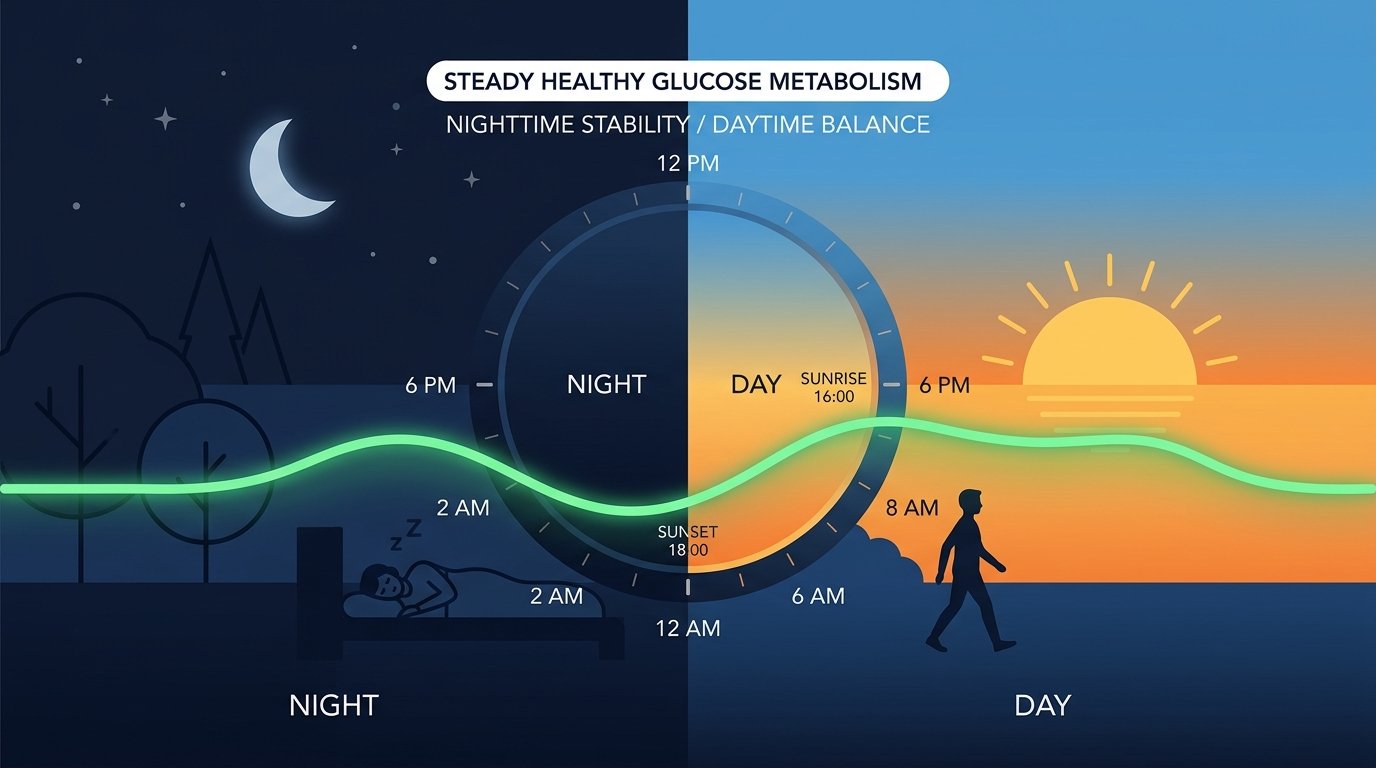
Strategy 4: Light Exposure and Movement
Light is the primary signal that sets your internal clock. During your shift, stay in well-lit areas to signal to your brain that it is "time to be awake." This helps suppress melatonin and can actually help stabilize the hormonal fluctuations that affect glucose.
Conversely, on your drive home, wear sunglasses. Reducing blue light exposure in the morning helps your body begin the transition to sleep mode. For a deeper dive into how environment affects your numbers, read about lighting, screens, and your glucose.
Physical activity is also a powerful tool. If you feel your glucose starting to climb during a quiet period of your shift, take a 10-minute "glucose walk" around the building. Even brief periods of movement help your muscles soak up excess sugar from the bloodstream without needing extra insulin.
Using Data to Solve the Night Shift Puzzle
Every body reacts differently to the night shift. Some people see their highest numbers at 4:00 AM due to the "dawn phenomenon," while others struggle with lows. The only way to know for sure is to track your data.
Using a Continuous Glucose Monitor (CGM) is incredibly helpful for night shift workers. It allows you to see the "hidden" trends that a finger-stick might miss. For example, you might discover that your "healthy" 2:00 AM protein bar is actually causing a massive spike.
This is where a glucose tracking app like GlucoAI becomes your best friend. By logging your meals and syncronizing your CGM data, you can see exactly how your night shift habits are affecting your metabolic health. GlucoAI can help you identify patterns, such as which snacks keep you stable and how your sleep quality after a shift impacts the next day’s readings.
Summary: Your Night Shift Action Plan
Managing glucose on the night shift isn't about being perfect; it's about being prepared. By understanding your circadian rhythm and making small, intentional choices, you can protect your metabolic health while you work.
Key Takeaways:
- Eat your main meal before your shift when insulin sensitivity is higher.
- Stick to low-carb, high-protein snacks during the night to avoid large spikes.
- Hydrate consistently to prevent concentrated blood sugar levels.
- Watch the caffeine clock—stop intake 4-5 hours before your planned sleep time.
- Use technology like a CGM and GlucoAI to track your unique patterns and adjust your strategy.
- Consult your doctor: If you are on insulin or medication, your dosages may need to be adjusted for your shift schedule. Always speak with a healthcare professional before making major changes to your treatment plan.
Working through the night is hard enough—don't let unstable blood sugar make it harder. With the right tools and a bit of planning, you can stay energized, healthy, and in control of your numbers.
Ready to see how your night shift impacts your glucose? Download GlucoAI today to start tracking your trends and take the guesswork out of your metabolic health. Small insights lead to big changes!
GlucoAI — Smart Blood Sugar Monitor
Track, analyze, and optimize your glucose levels with AI-powered insights.