
- Published on
30-Day CGM Guide to Reverse Prediabetes
Receiving a prediabetes diagnosis can feel like standing at a crossroads. Your doctor might have told you that your A1C (average blood sugar level over three months) is between 5.7% and 6.4%, or that your fasting glucose is higher than it should be. While this news is serious, it is also an incredible opportunity. Prediabetes is a reversible condition, and the most powerful tool in your arsenal to turn the tide is a Continuous Glucose Monitor (CGM).
Unlike traditional finger-stick tests that only give you a single data point in time, a CGM provides a movie-like stream of your glucose levels 24/7. It shows you exactly how that morning oatmeal or that late-night stress session affects your metabolic health in real-time. By the end of 30 days, you won’t just have data—you’ll have a personalized roadmap for your body.
Note: Please consult your doctor before making significant changes to your medication or diet. This guide is for educational purposes and should be used alongside professional medical advice.
Why the First 30 Days Matter
The first month of using a CGM is the "Golden Window." This is when your curiosity is highest and your data is most revealing. Most people with prediabetes have "silent" spikes—blood sugar surges that happen after meals and return to normal before their next doctor's visit. These spikes contribute to insulin resistance, the underlying cause of prediabetes.
Over the next four weeks, we are going to move through four distinct phases: Observation, Action, Optimization, and Sustainability. By breaking it down this way, you avoid "data overwhelm" and focus on making one or two impactful changes at a time.
Week 1: The Discovery Phase (Baseline Building)
In your first week, your primary goal is not to change anything. This might sound counterintuitive, but you need a "control" version of your life to understand what needs fixing. If you immediately start a restrictive diet the moment you apply the sensor, you’ll never know which of your old habits were the real culprits.
Log Your "Normal"
Eat your usual meals, follow your typical exercise routine, and go to bed at your regular time. Use a glucose tracking app like GlucoAI to log your meals, sleep, and stress levels.
What to Watch For
- The "Peak" Time: Notice how long it takes for your glucose to hit its highest point after a meal. For most, this is between 45 and 90 minutes.
- The Recovery: How long does it take for your blood sugar to return to its pre-meal level? If it takes more than two or three hours, your body is struggling to process those carbohydrates.
- The Morning Surge: Check your levels the moment you wake up. Are they higher than when you went to bed? This is often referred to as the "Dawn Phenomenon," and it’s a key indicator of how your liver handles glucose overnight.
Week 2: The Action Phase (Tinkering with Food)
Now that you have seven days of baseline data, it’s time to play "Glucose Detective." You likely noticed a few meals that caused significant spikes (anything over 140 mg/dL is a good threshold to watch for prediabetes management). This week, we test simple interventions.
Test the "Food Order" Rule
Science shows that eating fiber and protein before carbohydrates can significantly blunt a glucose spike. Try eating a small salad or a handful of almonds 10 minutes before your usual pasta or rice dish. Check your CGM data afterward—you’ll likely see a much flatter curve compared to Week 1.
The 15-Minute Movement Hack
One of the most effective ways to lower post-meal glucose is light activity. When you move your muscles, they soak up glucose for energy without needing as much insulin.
- The Experiment: After your largest meal of the day, take a 15-minute brisk walk.
- The Comparison: Compare the CGM graph of this meal to the same meal from Week 1 when you sat on the couch afterward. The difference is usually eye-opening.
Identifying "Hidden" Spikers
You might find that some "healthy" foods, like grapes or whole-wheat bread, spike you just as much as a candy bar. Everyone’s microbiome is different. Week 2 is about identifying which specific "healthy" foods don't work for your body.

Week 3: The Optimization Phase (Stress and Sleep)
By Week 3, you likely have your diet under better control. But glucose isn't just about food. Your metabolic health is deeply tied to your nervous system.
The Sleep Connection
Pay close attention to your fasting glucose after a poor night’s sleep. Sleep deprivation increases cortisol, which tells your liver to release more sugar into the bloodstream. You might notice that even if you eat perfectly, a 5-hour night of sleep leads to higher baseline levels all day.
Stress and "Invisible" Spikes
Have you ever seen your glucose climb while you’re just sitting in a stressful meeting or stuck in traffic? That’s your "fight or flight" response in action.
- The Strategy: When you feel stressed, try three minutes of deep diaphragmatic breathing.
- The Result: Watch your CGM. Often, you can see the numbers begin to stabilize as you calm your nervous system. This teaches you that managing prediabetes is about your whole lifestyle, not just your plate.
Week 4: The Sustainability Phase (Long-Term Vision)
In the final week of your 30-day challenge, we shift from "experimenting" to "cementing." Look back at your data in your diabetes management tools. Which changes were the easiest to maintain? Which gave you the "biggest bang for your buck"?
Defining Your New "Time in Range" (TIR)
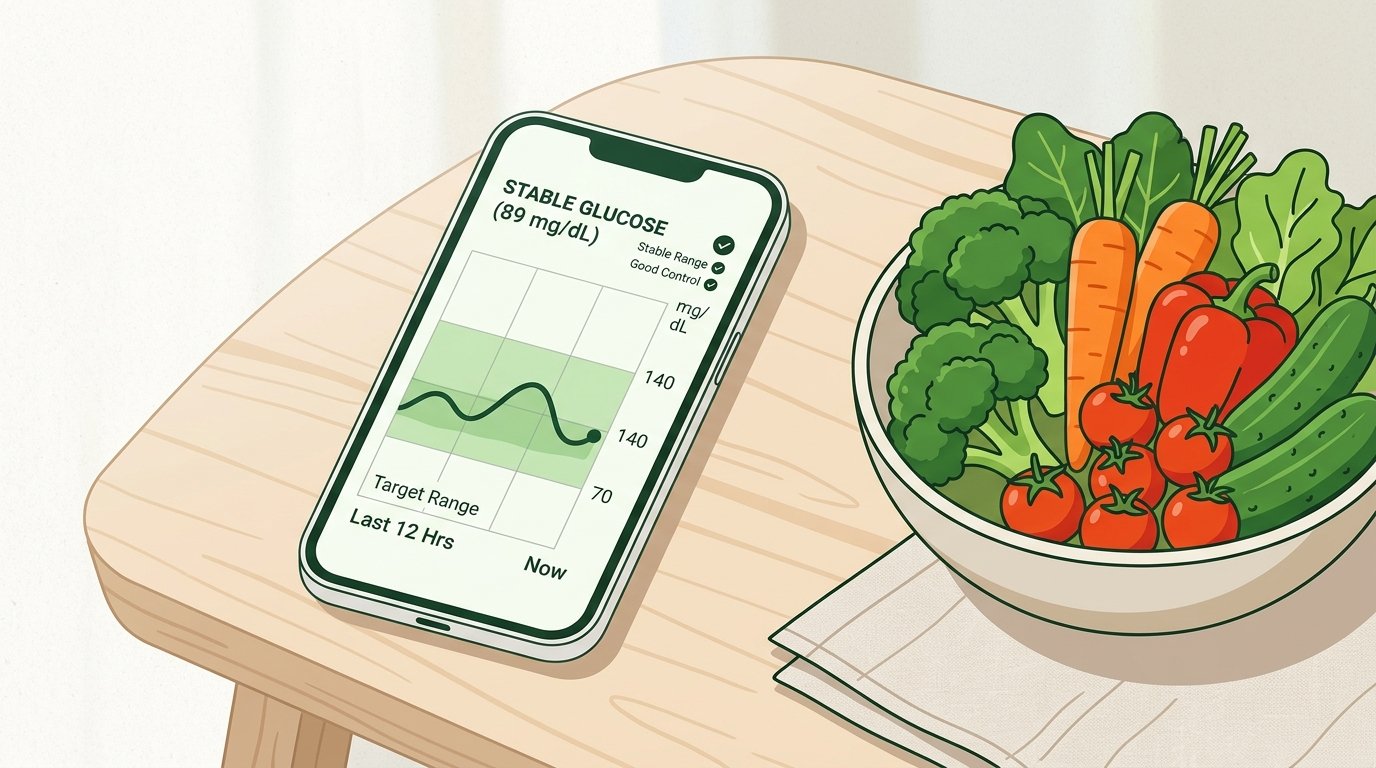
Time in Range is the percentage of time you spend within a healthy glucose target (usually 70–140 mg/dL for prediabetes). In Week 1, your TIR might have been 60%. By Week 4, aim for 80% or higher. This metric is often more encouraging than A1C because it shows daily progress.
Build Your "Safe Meal" Library
By now, you should have 5–10 go-to meals that you know keep your glucose stable. Write these down. These are your safety nets for busy days when you don't have the energy to experiment.
Reviewing the 30-Day Trend
Look at your average glucose for the month. If it’s trending downward, you are actively increasing your insulin sensitivity. This is the definition of reversing prediabetes. You are moving away from the "danger zone" and toward metabolic flexibility.
Key Takeaways for Success
- Don't Aim for Perfection: A single spike isn't a failure; it’s data. Use it to learn for next time.
- Hydration is Mandatory: Dehydration makes your blood sugar appear higher because the glucose in your blood is more concentrated. Drink plenty of water.
- Use Technology: Leverage tools like GlucoAI to correlate your lifestyle choices with your sensor readings. It’s much easier to see patterns when an AI helps highlight them for you.
- Focus on "Add, Don't Subtract": Instead of saying "I can't eat rice," say "I will add broccoli and chicken to this rice to keep my levels stable."
Summary
Reversing prediabetes is a marathon, not a sprint, but a CGM gives you the "cheatsheet" to finish faster. Over these 30 days, you’ve moved from guessing to knowing. You’ve discovered that you have the power to influence your biology through small, repeatable actions like changing your food order, walking after dinner, and prioritizing sleep.
The data you've gathered is your most valuable asset. It proves that you aren't at the mercy of your genetics or a diagnosis. With the right insights and a bit of consistency, a healthy, stable metabolism is well within your reach.
Ready to take the next step in your metabolic journey? Start logging your meals and activity alongside your CGM data today. Using a dedicated assistant like GlucoAI can help you find the hidden patterns in your 30-day data, making the path to reversing prediabetes clearer and more achievable than ever before. Let's get those numbers back in range!
GlucoAI — Smart Blood Sugar Monitor
Track, analyze, and optimize your glucose levels with AI-powered insights.