
- Published on
Fruit and Blood Sugar: Debunking 6 Common Myths
Have you ever found yourself staring longingly at a bowl of ripe strawberries or a crisp autumn apple, only to pull your hand back because you were worried about your blood sugar? If you are living with diabetes or simply trying to optimize your metabolic health, you have likely heard the "fruit is forbidden" warning more than a few times. It is one of the most common pieces of advice given in waiting rooms and online forums: "Fruit is just sugar, so stay away."
I understand how frustrating and confusing this can be. Fruit is nature’s candy, packed with flavor and nutrients, and being told to cut it out feels like losing a piece of joy in your diet. But here is the good news: the relationship between fruit and blood sugar is far more nuanced than a simple "yes" or "no." In fact, for most people, fruit can and should be a part of a healthy, glucose-conscious lifestyle. Let’s dive into the science and debunk six common myths that might be holding you back from enjoying these nutritional powerhouses.
Note: While this guide provides general educational information, please consult your doctor or a registered dietitian before making significant changes to your diabetes management plan.
Myth #1: Fruit is "Just Sugar" and Should Be Avoided
This is perhaps the most pervasive myth in the world of glucose management. While it is true that fruit contains naturally occurring sugars—primarily fructose and glucose—calling it "just sugar" is like calling a high-tech smartphone "just a piece of glass."
Unlike a spoonful of table sugar or a piece of hard candy, fruit is a complex package. It comes loaded with essential vitamins, minerals, antioxidants, and, most importantly, fiber. Fiber acts as a natural "brake" for your digestion. It slows down the rate at which your body breaks down and absorbs the sugar, which helps prevent the sharp blood sugar spikes you might get from processed sweets.
Furthermore, many fruits contain polyphenols. These are plant compounds that have been shown to improve insulin sensitivity. When you eat a whole piece of fruit, you aren't just dumping sugar into your bloodstream; you are providing your body with the tools it needs to process that sugar more effectively.
Myth #2: All Fruits Have the Same Impact on Blood Sugar
If you have ever noticed that a banana sends your glucose levels soaring while a handful of raspberries barely moves the needle, you already know this myth isn't true. Not all fruits are created equal when it comes to their Glycemic Index (GI).
The Glycemic Index is a scale from 0 to 100 that ranks how quickly a carbohydrate-containing food raises blood glucose.
- Low GI fruits (55 or less): Berries, cherries, grapefruit, pears, and apples.
- Medium GI fruits (56-69): Peaches, figs, and papayas.
- High GI fruits (70 or more): Watermelon and overly ripe bananas.
However, it is also important to consider the Glycemic Load (GL), which accounts for the portion size. For example, watermelon has a high GI, but because it is mostly water, its GL is relatively low if you stick to a standard serving. Understanding these metrics can help you make better choices. If you're looking for more ways to manage these responses, check out our guide on 5 Practical Strategies to Manage Blood Sugar Spikes.
Myth #3: You Should Only Eat "Sour" or Low-Sugar Fruits
There is a common belief that if a fruit isn't tart—like a green apple or a lemon—it's off-limits. While it is true that berries and citrus are excellent low-sugar options, restricting yourself only to "sour" fruits means you miss out on a massive range of nutrients.
Mangoes, pineapples, and grapes often get a bad reputation for being "sugar bombs." While they do have higher sugar content per serving, they also offer unique benefits. For instance, mangoes are rich in Vitamin A and folate, which are vital for immune health. The key isn't necessarily avoidance; it's portion control and "clothing" your carbs (which we will discuss in Myth #5). You don't have to live on grapefruit alone to maintain a stable A1C (average blood sugar level over 3 months).
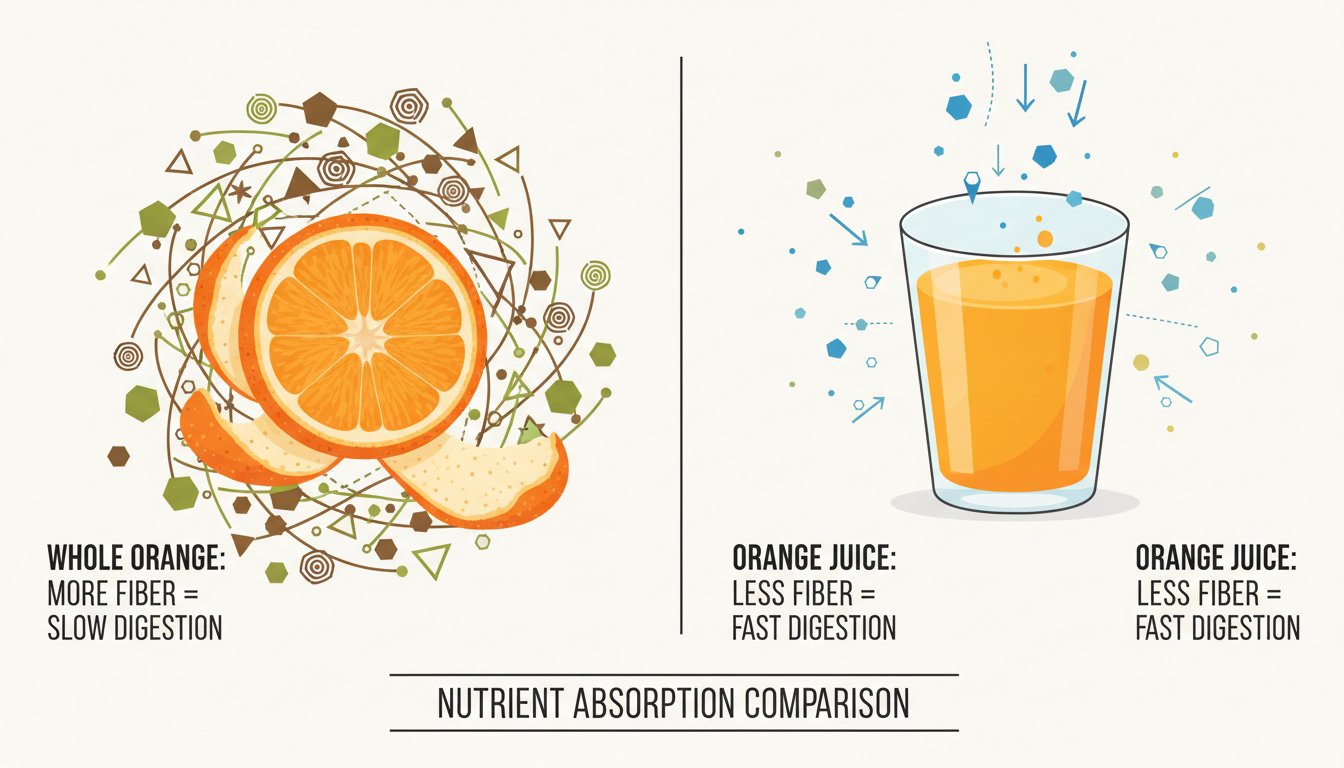
Myth #4: Fruit Juice is Just as Healthy as Whole Fruit
This is a myth that often trips people up because juice is marketed as a health food. Unfortunately, when you turn fruit into juice, you remove the most important component for glucose control: the fiber.
Without fiber, fruit juice is essentially a concentrated dose of liquid sugar that hits your bloodstream almost instantly. Even "100% natural" orange juice can cause a spike similar to a soda. Furthermore, it is much easier to consume the sugar of four oranges in a single glass of juice than it is to sit down and eat four whole oranges. Always choose the whole fruit over the liquid version. The act of chewing and the presence of pulp make a world of difference for your metabolic health.
Myth #5: You Should Eat Fruit on an Empty Stomach for Better Digestion
You may have seen "wellness gurus" claiming that eating fruit on an empty stomach prevents it from fermenting in your gut. Not only is the "fermentation" claim scientifically inaccurate, but for someone watching their glucose, eating fruit on an empty stomach is actually the worst way to consume it.
When you eat a "naked carb"—a carbohydrate eaten by itself—your body processes it very quickly, leading to a rapid rise in blood sugar. To keep your levels stable, you should always "clothe" your fruit by pairing it with a source of protein or healthy fat.
Try these combinations:
- An apple with a tablespoon of almond butter.
- Berries mixed into plain Greek yogurt.
- A pear with a small piece of cheese.
The protein and fat further slow down digestion, ensuring a much flatter glucose curve. For a deeper look at how the sequence of your food impacts your numbers, read our article on Food Order for Better Blood Sugar Control.
Myth #6: You Must Stop Eating Fruit After 6 PM
The idea that your body suddenly forgets how to process sugar once the sun goes down is a persistent myth. While our insulin sensitivity does naturally decline slightly in the evening as part of our circadian rhythm, the "6 PM rule" is an oversimplification.
The total amount of carbohydrates you consume throughout the day and what you pair your fruit with matters far more than the specific hour on the clock. If you are craving something sweet after dinner, a small serving of berries with some walnuts is a much better choice for your blood sugar than a processed dessert or a bowl of cereal. Consistency in your glucose monitoring will show you how your specific body reacts to evening snacks.
How to Enjoy Fruit While Managing Your Glucose
Now that we’ve cleared up the myths, how can you practically include fruit in your life? Here are three actionable steps:
- Prioritize Fiber-Rich Options: Reach for fruits with edible skins and seeds (like berries, apples, and pears), as these contain the most fiber.
- Watch the Ripeness: As fruit ripens, its starch converts into sugar. A green-tipped banana will have a much lower impact on your blood sugar than one with brown spots.
- Test and Learn: Everyone’s body is different. Use a Continuous Glucose Monitor (CGM) or a standard meter to see how specific fruits affect you.
Managing these data points can be overwhelming, which is where technology comes in. Using glucose tracking apps can help you spot patterns that you might otherwise miss. For example, GlucoAI can help you log your meals and see exactly how that afternoon peach affected your trends over time, allowing you to make empowered decisions rather than fear-based ones.
Summary
Fruit is not the enemy. By understanding the science and ignoring the myths, you can reclaim the health benefits and delicious taste of nature’s treats.
Key Takeaways:
- Whole fruit is better than juice: Keep the fiber to slow down sugar absorption.
- Pair your fruit: Never eat fruit "naked"; always add protein or fat to stabilize your response.
- Quality and quantity matter: Choose low-GI options like berries more often, and keep portions of high-GI fruits smaller.
- Individual response varies: What spikes your neighbor might not spike you.
Don't let fear dictate your diet. With the right tools and a bit of curiosity, you can find a balance that keeps your taste buds happy and your blood sugar stable.
Ready to see how fruit fits into your unique health journey? Start tracking your meals and glucose levels today with GlucoAI to discover your personal "safe" fruits and gain total confidence in your nutrition!
GlucoAI — Smart Blood Sugar Monitor
Track, analyze, and optimize your glucose levels with AI-powered insights.