
- Published on
Why Iron Deficiency Falsely Elevates A1C
Have you ever opened your lab results, expecting a stellar HbA1c (average blood sugar level over three months) score, only to find a number that felt completely out of sync with your daily habits? It can be incredibly frustrating. You have been tracking your meals, taking your walks, and managing your stress, yet the paper in front of you tells a different story.
Before you panic or drastically restrict your diet, there is an important physiological loophole you should know about: iron deficiency can falsely elevate your A1C levels. While we often treat the A1C test as the ultimate, indisputable gold standard for diagnosing prediabetes and diabetes, it is not perfect. The test relies on a biological vehicle—your red blood cells—that can be deeply impacted by nutritional deficiencies. When your body lacks iron, the mechanics of the A1C test change, leading to an artificially inflated percentage that does not accurately reflect your actual daily blood sugar control.
How the A1C Test Actually Works
To understand why iron deficiency skews your results, we first need to look at what the A1C test actually measures. When glucose circulates in your bloodstream, it naturally binds to hemoglobin, which is the oxygen-carrying protein inside your red blood cells. This binding process is called glycation.
The A1C test measures the percentage of your hemoglobin that has glucose stuck to it. Because red blood cells typically live for about 120 days before the body recycles them, the A1C test provides a convenient, three-month weighted average of your blood sugar levels.
However, this entire calculation relies on a crucial assumption: that your red blood cells are healthy, normal in size, and living a standard 120-day lifespan. If anything alters the lifespan or production of your red blood cells, the mathematical foundation of the A1C test begins to crumble.
Why Iron Deficiency Falsely Elevates A1C
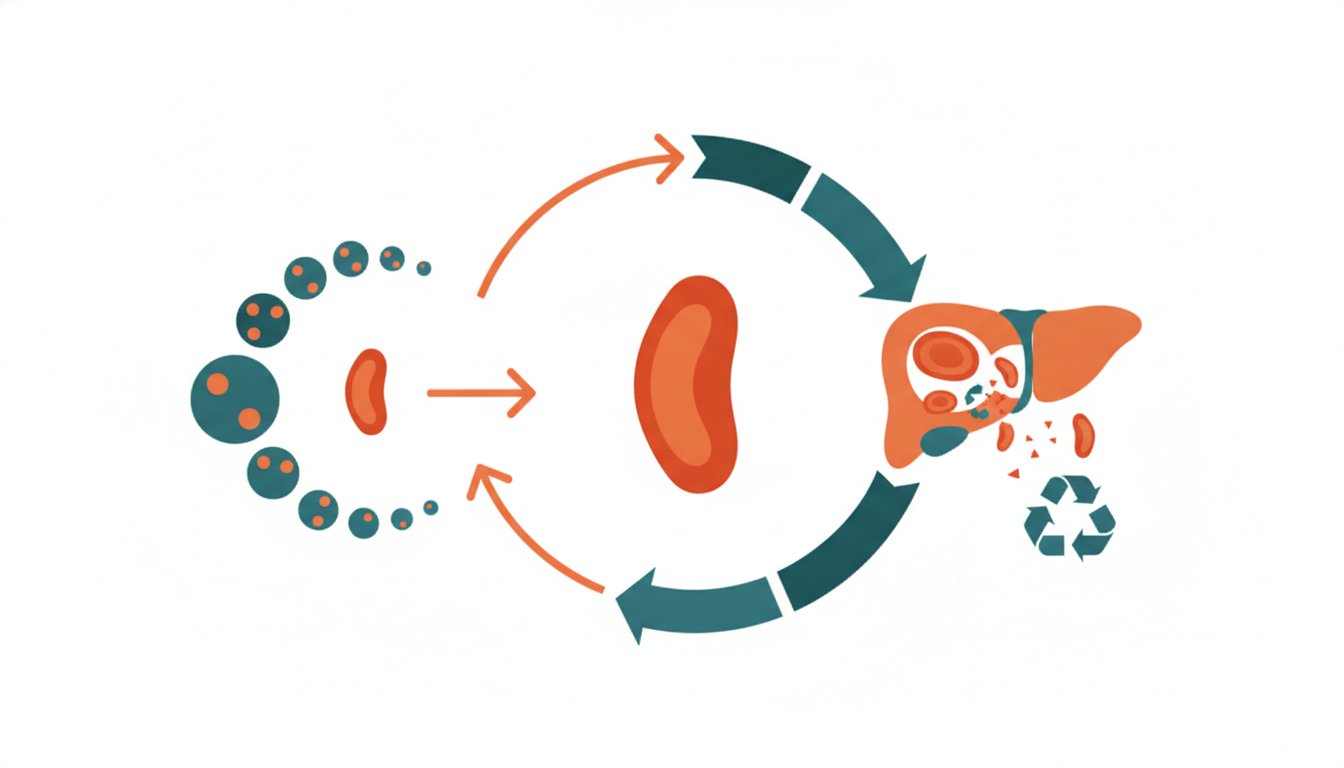
Iron deficiency is the most common nutritional deficiency worldwide, and it directly affects how your body produces red blood cells. When you do not have enough iron, your bone marrow cannot produce new red blood cells at a normal rate. This leads to a condition known as iron deficiency anemia.
So, how does this slow production cause a falsely high A1C?
When your body produces fewer new red blood cells, the existing red blood cells in your circulation have to work longer. Consequently, the average age of your red blood cell population increases. Because these older cells spend more time circulating in your bloodstream, they have more opportunities to collect glucose.
Think of it like a fleet of delivery trucks. If a company stops buying new trucks, the old trucks stay on the road much longer, racking up far more mileage than a newer fleet would. In this analogy, the mileage is the glucose binding to the hemoglobin. Because the cells are older, they appear "heavily glycated," which tricks the lab test into reporting a falsely elevated A1C level—even if your actual daily blood sugar levels are perfectly stable and healthy.
Scientific research has consistently backed this up. Studies published in major medical journals, including the Journal of Clinical Endocrinology & Metabolism, have demonstrated that people with iron deficiency anemia often have significantly higher A1C levels compared to those with normal iron status, despite having identical daily blood glucose levels. Crucially, when these individuals receive iron supplementation to correct their deficiency, their A1C levels naturally drop back down to normal without any changes to their diet or lifestyle.
Beyond Iron: Other Factors That Skew Your A1C
While iron deficiency is a primary culprit, it is not the only non-glycemic factor that can alter your A1C results. Several other conditions can influence red blood cell survival and lead to misleading lab reports:
- Vitamin B12 and Folate Deficiencies: Similar to iron, a lack of vitamin B12 or folate can impair red blood cell production, leading to older cell populations and falsely elevated A1C levels.
- Recent Blood Loss or Donation: If you have recently lost blood or donated blood, your body quickly produces a surge of young, new red blood cells. Because these young cells have not had much time to collect glucose, your A1C may read falsely low.
- Pregnancy: During pregnancy, blood volume expands rapidly, and red blood cell lifespan can change, often making A1C an unreliable metric, especially in the second and third trimesters.
- Hemoglobin Variants: Genetic variations in hemoglobin structure, which are more common in people of African, Mediterranean, or Southeast Asian descent, can interfere with certain lab testing methods.
Because so many variables can impact this single lab test, relying solely on A1C can sometimes lead to misdiagnosis or unnecessary anxiety. Please consult your doctor to look at the broader picture of your health rather than relying on one isolated number.

How to Get an Accurate Picture of Your Metabolic Health
If you suspect that your A1C reading might be falsely elevated due to low iron, you do not have to remain in the dark. You can take several practical steps to uncover your true metabolic health.
1. Request a Comprehensive Blood Panel
The first step is to speak with your healthcare provider. Instead of just checking your blood glucose and A1C, ask for a complete blood count (CBC) and a full iron panel. Key markers to look for include:
- Ferritin: This measures your body's stored iron and is the most sensitive marker for early iron deficiency.
- Hemoglobin and Hematocrit: These show if your low iron has progressed to actual anemia.
- Mean Corpuscular Volume (MCV): This measures the physical size of your red blood cells. Small cells (microcytic) often point to iron deficiency.
2. Monitor Your Daily Glucose Directly
To bypass the limitations of red blood cell lifespans entirely, you can look at your daily glucose levels directly. Using a continuous glucose monitor (CGM) or performing traditional fingerstick tests gives you real-time data that iron levels cannot distort.
3. Use Glucose Tracking Apps to Find Your True Average
Modern technology makes it incredibly easy to see past a skewed A1C. By pairing your glucose data with advanced diabetes management tools and glucose tracking apps, you can calculate your Glucose Management Indicator (GMI). GMI is a metric that estimates your A1C based directly on your average CGM glucose readings over several weeks, completely bypassing your red blood cells.
If your lab-measured A1C is an 6.2, but your app-calculated GMI is a stable 5.4, this gap is a strong clue that a physical factor like iron deficiency might be skewing your laboratory blood test.
Summary
When metabolic health markers do not align with your daily habits, it is always worth looking beneath the surface. An elevated A1C is not always a sign of insulin resistance or high sugar intake; sometimes, it is simply a cry for more iron.
- The core issue: Iron deficiency slows down the production of new red blood cells, causing existing cells to live longer.
- The result: Older red blood cells accumulate more glucose over their longer lifespan, resulting in a falsely elevated A1C level.
- The solution: Work with your doctor to test your ferritin and iron levels, and use real-time glucose monitoring to find your true metabolic baseline.
If you want to take control of your health and see what is really happening inside your body, consider tracking your daily trends with GlucoAI. By analyzing your real-time glucose patterns and lifestyle habits, GlucoAI helps you see the true picture of your metabolic health—free from the misleading distortions of nutrient deficiencies. Speak with your doctor, check your iron, and let daily data guide your path to wellness.
GlucoAI — Smart Blood Sugar Monitor
Track, analyze, and optimize your glucose levels with AI-powered insights.