
- Published on
What is GMI? A Guide to the Glucose Management Indicator
Have you ever looked at your lab results for your A1C (average blood sugar level over 3 months) and felt a bit confused because the number didn't seem to match what you were seeing on your daily glucose monitor? If so, you are definitely not alone. For years, the A1C test was the gold standard, the final word on how well someone was managing their diabetes. But as technology has evolved, so has our vocabulary.
Enter the GMI, or Glucose Management Indicator. If you use a Continuous Glucose Monitor (CGM), you have likely seen this acronym pop up in your reports. At first glance, it looks just like an A1C percentage, but it tells a slightly different story. Understanding what GMI is, how it differs from a traditional lab test, and how to use it can be a total game-changer for your metabolic health. Let’s explore this essential metric together and see how it can help you navigate your health journey with more confidence.
What Exactly is the Glucose Management Indicator (GMI)?
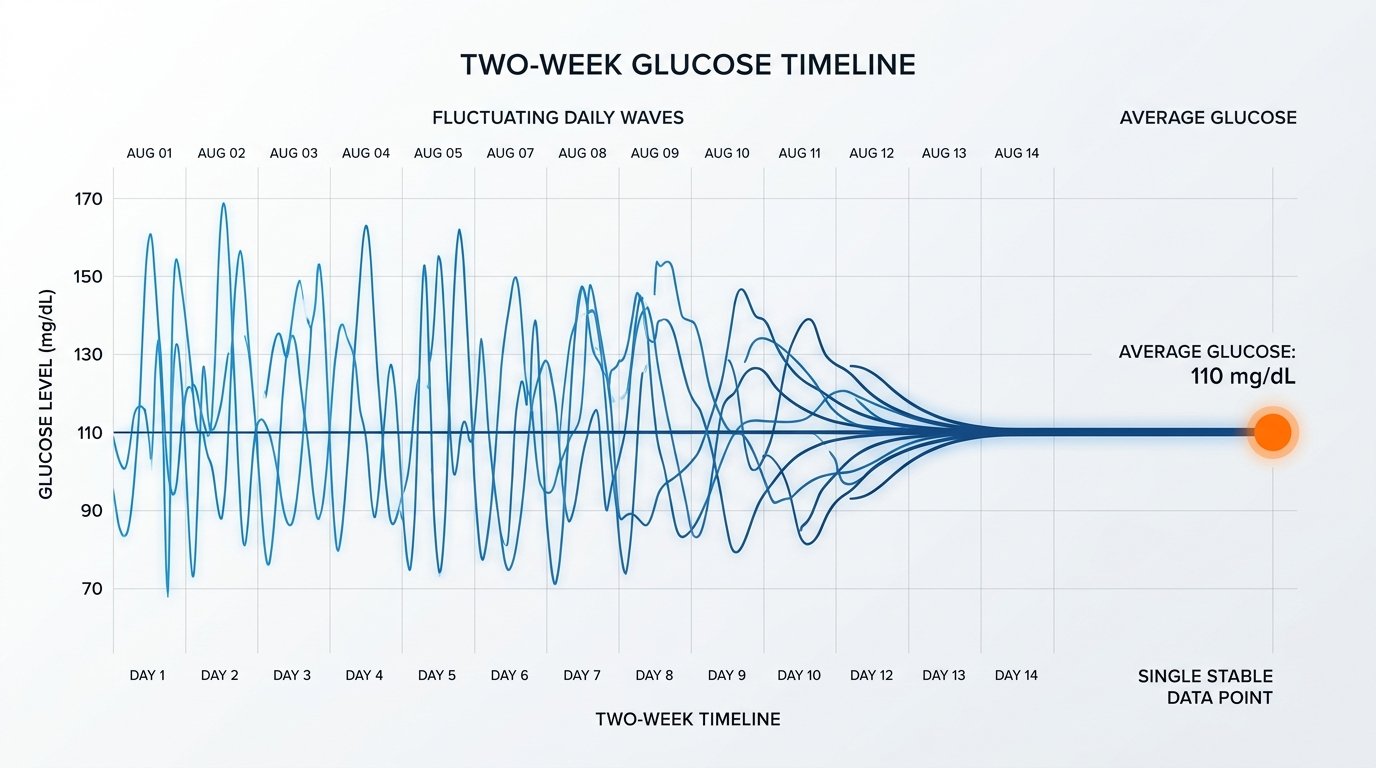
In the simplest terms, the Glucose Management Indicator (GMI) is an estimate of what your A1C level is likely to be, based on the average glucose readings captured by your CGM over a specific period—usually 10 to 14 days.
Think of it as a "bridge" between your daily finger-stick or CGM readings and your long-term lab results. Before we had GMI, many devices used the term "Estimated A1C." However, the clinical community realized that calling it "A1C" was a bit misleading because the two numbers are calculated using entirely different methods. To avoid confusion, the term GMI was officially introduced to represent the average glucose data specifically derived from a CGM.
The GMI provides a snapshot of your recent glucose management. While a lab A1C looks back over 90 days, your GMI can give you a "real-time" look at how your current diet, exercise, and medication routines are impacting your levels right now.
GMI vs. A1C: Why Are They Different?
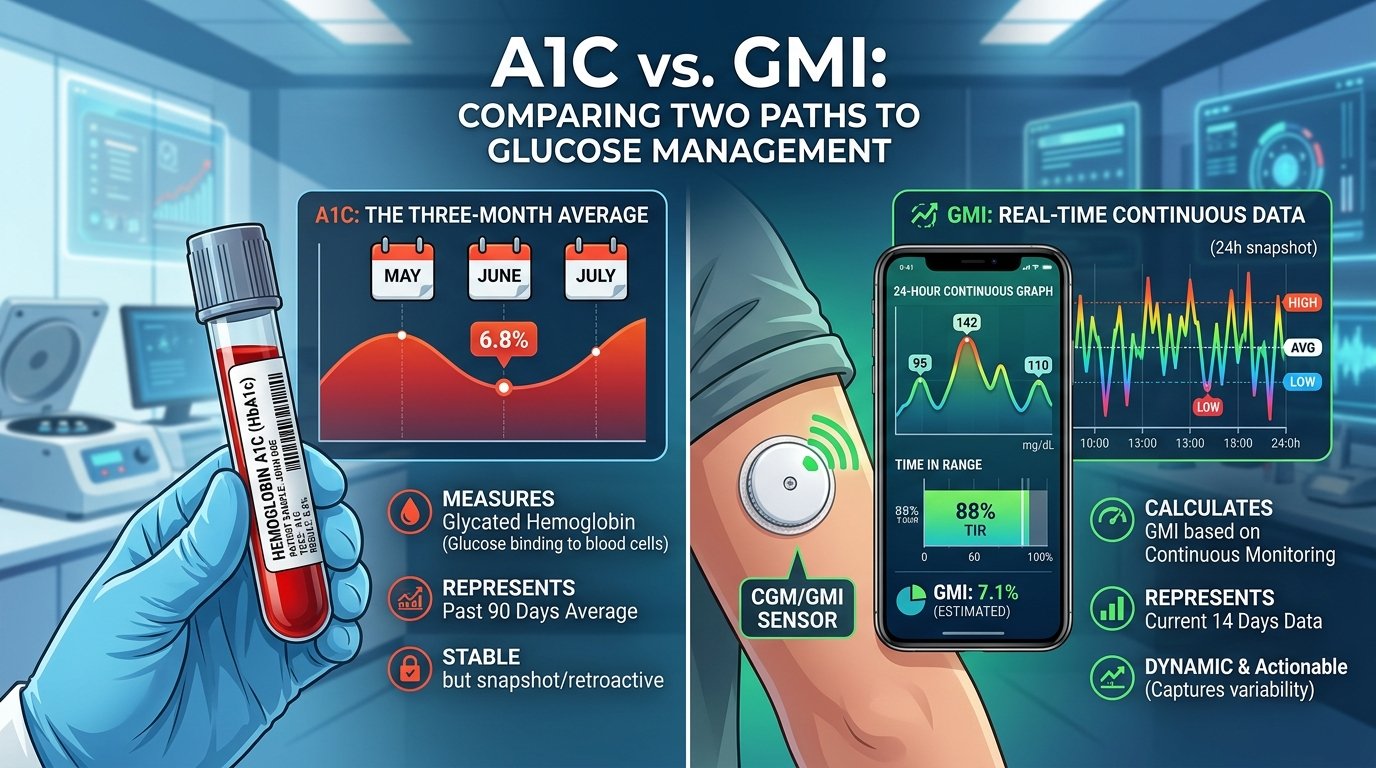
It is incredibly common for a person's GMI to be different from their lab-measured A1C. In fact, for many people, the numbers rarely match perfectly. This doesn't mean your CGM is broken or that the lab made a mistake. Instead, it reflects the different ways these two metrics "see" your blood sugar.
1. The Method of Measurement
A lab A1C test measures "glycation." This is the process where sugar in your bloodstream attaches to hemoglobin, a protein in your red blood cells. Because red blood cells live for about three months, the test shows how much sugar has been stuck to them over that lifespan.
GMI, on the other hand, is purely mathematical. It takes your average glucose reading from your CGM and plugs it into a formula. It doesn't care about your red blood cells; it only cares about the numbers your sensor recorded.
2. Individual Biology
We all have a unique biological makeup. Some people are "fast glycators," meaning sugar sticks to their red blood cells more easily than others. Some are "slow glycators." Additionally, things like anemia, pregnancy, or certain vitamins can change how long your red blood cells live. If your red blood cells live longer than average, your lab A1C might look higher than your GMI, even if your actual glucose levels are stable.
3. The Time Frame
As mentioned, A1C is a 3-month average. GMI is often calculated over 12 to 14 days. If you had a particularly rough month two months ago but have been "on track" for the last two weeks, your GMI will look great, while your A1C will still be carrying the "weight" of those older, higher readings.
Why GMI Matters for Your Daily Life
You might be wondering, "If I’m already getting an A1C test every few months, why do I need to care about GMI?" The answer lies in the power of immediate feedback.
Waiting three months for a lab test can feel like waiting for a final exam grade without ever getting feedback on your homework. GMI acts like those homework grades. It allows you to see the results of your hard work in near real-time.
If you decide to start a new walking routine or try a lower-carb breakfast, you don't have to wait 90 days to see if it's working. You can look at your GMI after two weeks and see if the needle is moving in the right direction. This immediate reinforcement is vital for staying motivated. Managing diabetes or prediabetes is a marathon, and GMI provides the "water stations" along the way that tell you you're doing a great job.
How to Improve Your GMI
If your GMI is higher than you’d like it to be, don’t panic. It is simply a data point, not a grade on your character. Here are some actionable steps you can take to bring that number into a healthier range:
- Focus on Time in Range (TIR): Instead of obsessing over the GMI percentage, try to increase the amount of time you spend between 70 and 180 mg/dL. As your TIR goes up, your GMI will naturally come down.
- Identify Your Spikes: Use your CGM data to see when your blood sugar is highest. Is it after breakfast? During a stressful work meeting? Once you identify the pattern, you can make small adjustments, like taking a 10-minute walk after a meal or switching to a high-protein breakfast.
- Be Consistent with Tracking: GMI is most accurate when you have at least 12 days of consistent data with at least 70% sensor wear time. The more data you provide, the more accurate the "picture" becomes.
- Use a Management Tool: Using a glucose tracking app can help you make sense of these numbers. For example, GlucoAI allows you to log your meals and see how they correlate with your glucose trends, making it much easier to see why your GMI might be fluctuating.
A Note on Medical Safety
While GMI is an incredible tool for self-management, it is important to remember that it does not replace the advice of a medical professional. Always consult your doctor before making significant changes to your medication or treatment plan based on your GMI. Your healthcare provider will use both your lab A1C and your CGM reports (including GMI and Time in Range) to get the most complete picture of your health.
Summary: Key Takeaways
Understanding GMI is a major step toward mastering your metabolic health. Here is a quick recap of what we’ve covered:
- Definition: GMI is an estimate of your A1C based on 10–14 days of CGM data.
- GMI vs. A1C: They are different because GMI measures average glucose levels, while A1C measures sugar attachment to red blood cells. It is normal for them to differ!
- Real-time Feedback: GMI allows you to see the impact of lifestyle changes much faster than a traditional lab test.
- Accuracy: To get a reliable GMI, aim for at least 10–14 days of consistent CGM wear.
- Actionable: Focus on increasing your Time in Range and identifying post-meal spikes to improve your GMI over time.
By keeping an eye on your GMI, you aren't just looking at a number; you're looking at a reflection of your daily habits and your body's unique rhythm. Tools like GlucoAI can help you bridge the gap between these complex metrics and your actual life, providing the insights you need to live healthily and happily.
Ready to take the guesswork out of your glucose levels? Start by checking your GMI today and identifying one small habit you can change this week. Whether it’s adding more fiber to your lunch or tracking your afternoon walk, every small step contributes to a more stable, healthier you.
GlucoAI — Smart Blood Sugar Monitor
Track, analyze, and optimize your glucose levels with AI-powered insights.