
- Published on
Vitamin B12 and Diabetes: Why This Nutrient Matters
Have you ever felt a strange tingling in your toes or noticed that you’re feeling more exhausted than usual, even when your blood sugar levels are stable? When you’re living with diabetes, it’s easy to blame every new symptom on your glucose numbers. We spend so much time focusing on A1C (average blood sugar level over 3 months) and daily fingersticks that other vital pieces of the health puzzle can slip through the cracks. One of the most important—and most frequently overlooked—pieces is Vitamin B12.
Vitamin B12 is a powerhouse nutrient that plays a massive role in how your body functions. For people with diabetes, the relationship with this vitamin is unique and, quite frankly, critical. Whether it is the impact of long-term medication use or the way B12 protects your nervous system, understanding this link can be a game-changer for your daily well-being. Let’s explore why this "energy vitamin" deserves a top spot in your diabetes management plan.
What Exactly is Vitamin B12?
Vitamin B12, also known as cobalamin, is a water-soluble vitamin that your body cannot produce on its own. This means you must get it through your diet or supplements. It is essential for several major bodily functions:
- Nerve Health: B12 helps maintain the myelin sheath, which is the protective coating around your nerves. Without it, nerve signals can become slow or erratic.
- Red Blood Cell Formation: It helps your body produce healthy, round red blood cells. A deficiency can lead to megaloblastic anemia, where cells are too large and can’t carry oxygen effectively.
- DNA Synthesis: It plays a role in creating the genetic material in all your cells.
- Energy Metabolism: While it doesn't provide energy directly, it helps your body convert the food you eat into glucose, which your cells use for fuel.
For most people, a balanced diet provides enough B12. However, for those of us managing diabetes, there are specific hurdles that make maintaining healthy levels a bit more complicated.
The Metformin Connection: A Hidden Risk
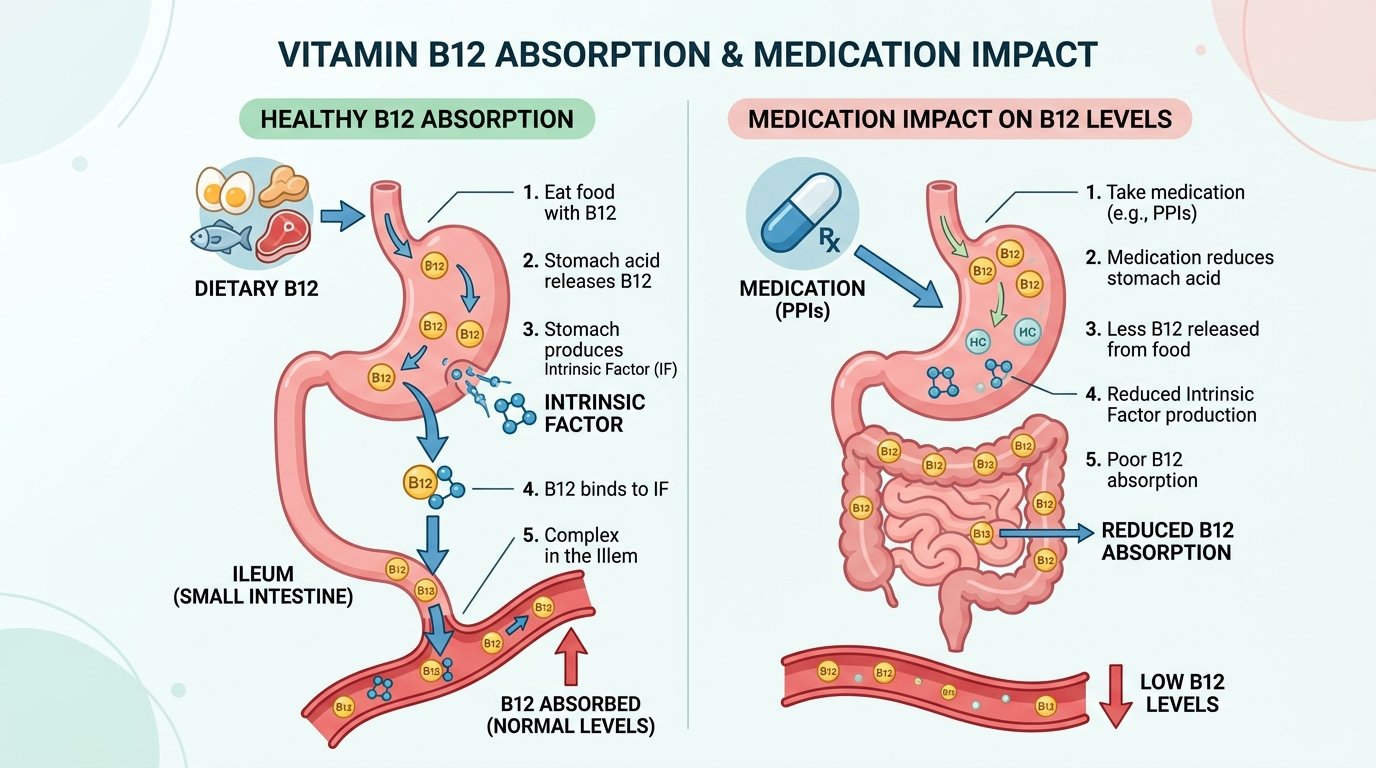
If you have Type 2 diabetes, there is a high chance you are familiar with Metformin. It is often the first-line medication recommended by doctors because it is effective, affordable, and has a long track record of safety. However, Metformin has a well-documented "side effect" that doesn't always make it into the initial conversation: it can interfere with how your body absorbs Vitamin B12.
Research suggests that up to 30% of people taking Metformin long-term experience decreased B12 absorption. The medication appears to affect the way the small intestine handles the "intrinsic factor"—a protein required for B12 to be absorbed into your bloodstream.
The risk is cumulative. This means the higher your dose and the longer you have been taking it, the more likely you are to develop a deficiency. Because the liver stores several years' worth of B12, you might not notice a problem for three to five years after starting the medication. This "slow burn" is why many people don't realize their fatigue or numbness is linked to their prescription.
Please consult your doctor if you have been on Metformin for more than a year to discuss regular B12 screening.
B12 Deficiency vs. Diabetic Neuropathy: The Great Mimic
One of the most frustrating aspects of Vitamin B12 deficiency is that its symptoms look almost exactly like diabetic neuropathy (nerve damage caused by high blood sugar).
If you start feeling "pins and needles," numbness, or burning sensations in your hands and feet, your first thought might be, "My diabetes is getting worse." While that’s a possibility, those exact symptoms are also the primary signs of low B12.
This creates a dangerous situation where a treatable vitamin deficiency is misdiagnosed as permanent nerve damage. If the cause is low B12, the solution might be as simple as a supplement or a dietary change. If it is ignored, the nerve damage from the deficiency can eventually become irreversible. By keeping your B12 levels optimal, you are giving your nervous system the best possible defense against the complications of diabetes.
Signs You Might Be Running Low
Because B12 affects so many systems, the symptoms of a deficiency can be broad and sometimes subtle. Keep an eye out for these common red flags:
Physical Symptoms
- Extreme Fatigue: Feeling weak or tired even after a full night's sleep.
- Muscle Weakness: Finding it harder to perform daily tasks or feeling "heavy" in your limbs.
- Glossitis: A sore, red, or abnormally smooth tongue.
- Pale or Jaundiced Skin: A slight yellow tinge to the skin or the whites of the eyes.
Neurological and Mental Symptoms
- Tingling or Numbness: The classic "stocking-glove" sensation in the hands and feet.
- Balance Issues: Feeling unsteady on your feet or having trouble with coordination.
- Brain Fog: Difficulty concentrating or experiencing memory lapses.
- Mood Changes: Increased irritability, anxiety, or feelings of depression.

How to Optimize Your B12 Levels
The good news is that B12 deficiency is highly treatable. If you suspect your levels are low, the first step is a simple blood test. Once you know your numbers, you can work with your healthcare team on a plan.
1. Focus on B12-Rich Foods
Since B12 is primarily found in animal products, incorporating these into your meal plan can help:
- Beef and Organ Meats: Excellent sources, but choose lean cuts to keep your heart health in mind.
- Fish: Salmon, trout, and tuna provide B12 along with heart-healthy omega-3 fatty acids.
- Dairy: Milk, cheese, and yogurt are easy ways to boost intake.
- Eggs: A great breakfast staple for stable morning glucose.
- Fortified Foods: If you are plant-based, look for fortified nutritional yeast, breakfast cereals, or plant milks.
2. Choose the Right Supplement
If your deficiency is caused by Metformin or poor absorption, diet alone might not be enough. Supplements come in two main forms:
- Cyanocobalamin: A synthetic, stable, and cost-effective form of B12.
- Methylcobalamin: A naturally occurring form that some believe is absorbed more easily by the body.
For those with severe deficiencies, your doctor might recommend B12 injections. These bypass the digestive system entirely, ensuring 100% absorption directly into the bloodstream.
3. Monitor Your Progress
When you start addressing a deficiency, it is helpful to track how you feel. Do your energy levels improve? Does the tingling subside? Pairing this with your glucose data is essential. Sometimes, a "spike" in energy can lead to more activity, which in turn affects your insulin sensitivity. Using a glucose tracking app like GlucoAI can help you see the "big picture" of how your nutrition, supplements, and blood sugar interact.
Why This Matters for Your Long-Term Health
Managing diabetes is about more than just staying within your target range; it’s about maintaining a high quality of life. A Vitamin B12 deficiency doesn't just make you tired; it saps your motivation to exercise, clouds your judgment when making food choices, and can lead to long-term mobility issues.
By staying proactive—testing your levels annually and ensuring you have an adequate intake—you are removing a major barrier to successful diabetes management. You deserve to have the energy and clarity to tackle your health goals every single day.
Summary: Key Takeaways
Understanding the link between Vitamin B12 and diabetes is a vital step in your health journey. Here are the main points to remember:
- B12 is essential for nerve health, red blood cell production, and energy.
- Metformin users are at risk because the medication can significantly reduce B12 absorption over time.
- Symptoms overlap with diabetic neuropathy, making it easy to misdiagnose a deficiency as permanent nerve damage.
- Regular testing is key. Ask your doctor for a B12 blood test at least once a year.
- Supplementation works. Whether through diet, pills, or injections, B12 levels can be restored effectively.
Managing your health is a marathon, not a sprint. Small adjustments, like ensuring you're getting the right vitamins, can make the miles feel much easier. If you want to get a better handle on how your nutrition affects your daily life, consider using tools that help you visualize your progress.
Start by logging your symptoms and meals consistently—tracking these small details is how you discover the patterns that lead to big health breakthroughs. Download GlucoAI today to start connecting the dots between your nutrition and your glucose stability!
GlucoAI — Smart Blood Sugar Monitor
Track, analyze, and optimize your glucose levels with AI-powered insights.