
- Published on
Understanding the Somogyi Effect: Managing Nighttime Highs
Waking up to high blood sugar readings in the morning can be incredibly frustrating. You go to bed feeling like your levels are stable, only to find an unexpected spike when you check your glucose monitor at sunrise. If this sounds familiar, you might be dealing with the Somogyi Effect, often called "rebound hyperglycemia."
The Somogyi Effect occurs when your blood glucose levels drop too low during the night, typically between 2:00 AM and 3:00 AM. In response to this hypoglycemia (low blood sugar), your body releases counter-regulatory hormones—like cortisol, adrenaline, and glucagon—to stabilize your levels. These hormones trigger your liver to release stored glucose into your bloodstream. By the time you wake up, your blood sugar has "rebounded" to a level that is significantly higher than what is considered your target range.
Understanding why this happens is the first step toward reclaiming your morning numbers. It is a complex metabolic response, but with the right data and a few adjustments, it is a manageable part of your diabetes care journey.
Identifying the Somogyi Effect vs. The Dawn Phenomenon
It is common to confuse the Somogyi Effect with another frequent cause of morning highs: the Dawn Phenomenon. While both result in elevated morning glucose, their causes and solutions are quite different.
The Dawn Phenomenon is a natural, early-morning release of hormones that occurs in almost everyone, regardless of whether they have diabetes. It is a steady, predictable rise in glucose driven by your circadian rhythm. In contrast, the Somogyi Effect is a reactionary response to an actual drop in blood sugar.
To distinguish between the two, you need to look at your overnight data. If you use a Continuous Glucose Monitor (CGM), you can observe your trends throughout the night. If you see a dip into hypoglycemic ranges followed by a sharp increase, you are likely looking at the Somogyi Effect. If your glucose levels remain stable through the night and then begin a steady climb toward morning, it is likely the Dawn Phenomenon.
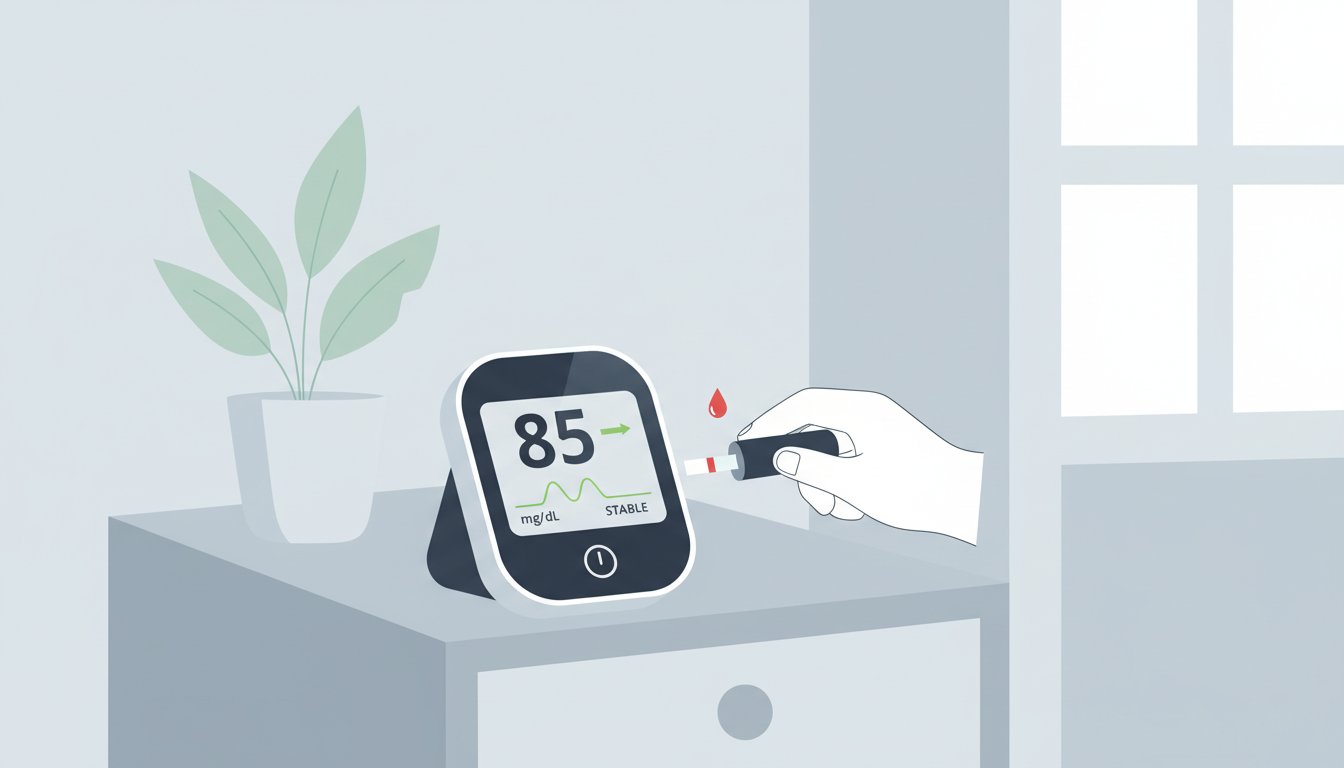
Prerequisites for Accurate Monitoring
To get a clear picture of what is happening while you sleep, you need reliable data. Relying on guesswork can lead to incorrect adjustments, which might make the situation worse.
- Continuous Glucose Monitoring (CGM): This is the most effective tool for identifying nighttime trends. A CGM allows you to see the "valleys" in your glucose curve that you would otherwise miss while sleeping.
- Consistent Logging: If you do not have a CGM, you may need to set an alarm to manually check your blood sugar around 3:00 AM for a few nights.
- Detailed Records: Keep a log of your evening meals, snack timing, physical activity, and medication dosages.
Using glucose tracking apps like GlucoAI can simplify this process by aggregating your data and helping you spot patterns in your glucose variability that might not be obvious to the naked eye.
Managing the Rebound: Practical Steps
Once you have identified that you are experiencing the Somogyi Effect, you can take action to prevent those overnight lows. Please note that any changes to your medication or insulin regimen must be discussed with your healthcare provider first.
1. Adjust Evening Medication or Insulin
If you take long-acting insulin or certain diabetes medications that increase insulin secretion, a dose that is too high might be causing your nighttime dip. Your doctor may suggest a slight reduction in your evening or bedtime dosage to prevent that initial hypoglycemia.
2. Evaluate Your Bedtime Snack
If you are skipping a bedtime snack, your body might not have enough fuel to sustain your glucose levels through the night. A small snack containing a balance of complex carbohydrates and protein—such as a few nuts or a slice of whole-grain toast with peanut butter—can provide a slow, steady release of energy that prevents your levels from bottoming out.
3. Review Your Evening Activity
High-intensity exercise too close to bedtime can increase your insulin sensitivity, making you more prone to overnight lows. If you notice a pattern of morning highs following evening workouts, try shifting your exercise to earlier in the day or ensuring you consume a balanced snack post-workout.
Troubleshooting Common Issues
Even with the best intentions, managing glucose levels is rarely a linear path. Here are a few common hurdles you might face while trying to address the Somogyi Effect.
Issue 1: Fear of Hypoglycemia
Many people are so afraid of the "rebound" that they purposefully keep their bedtime glucose levels much higher than necessary. This can lead to poor sleep quality and long-term health complications. Solution: Work with your endocrinologist to find a safe "target range" for bedtime. Using digital health tools can provide the confidence you need to manage these levels accurately rather than guessing.
Issue 2: Inconsistent Routine
Irregular meal times or varying exercise intensity can make it difficult to determine if your morning high is a one-off event or a consistent Somogyi response. Solution: Aim for more consistency in your evening routine for at least one week. This creates a "baseline" that makes it much easier to interpret your data accurately.
Results You Can Expect
By addressing the root cause of the Somogyi Effect, you can expect more than just better morning numbers. Many people report improved energy levels throughout the day once their overnight glucose stabilizes. Avoiding those sharp, reactive spikes also reduces the strain on your metabolic system, contributing to better long-term glycemic control.
Remember, progress is measured in patterns, not individual readings. It may take a few days of experimentation with your bedtime habits to see the results you want. Be patient with yourself as you navigate these changes.
Conclusion and Next Steps
The Somogyi Effect is a frustrating but solvable puzzle. By gathering accurate data, understanding the difference between reactive highs and natural morning shifts, and working closely with your medical team, you can achieve more stable glucose readings.
Consistency is your greatest ally in this process. Using tools to track your data, such as GlucoAI, allows you to visualize your nighttime trends clearly, making it easier to communicate with your doctor and make informed, evidence-based adjustments to your routine.
Action Plan:
- Gather Data: Use your CGM or manual logs to check your blood sugar at 3:00 AM for three consecutive nights.
- Analyze the Pattern: Check for a dip followed by a spike.
- Consult Your Doctor: Bring your data to your next appointment to discuss potential adjustments to your medication or bedtime routine.
- Track with Confidence: Use GlucoAI to keep all your glucose metrics in one place, helping you stay on top of your metabolic health every single day.
Disclaimer: This blog post is for informational purposes only and does not constitute medical advice. Always consult with your doctor or a qualified healthcare professional before making changes to your diabetes management plan, especially concerning medication or insulin dosages.
GlucoAI — Smart Blood Sugar Monitor
Track, analyze, and optimize your glucose levels with AI-powered insights.