
- Published on
Breathwork and Mindfulness to Lower Glucose Spikes
Breathwork and Mindfulness to Lower Glucose Spikes
Have you ever finished a satisfying meal only to watch your blood glucose numbers climb higher than you expected on your monitor? It is a common frustration for many people managing their metabolic health. While we often focus on what we eat and how much we move, we frequently overlook one of the most powerful tools in our arsenal: the nervous system.
When you are stressed, your body enters a "fight or flight" mode, releasing hormones like cortisol and adrenaline. These hormones signal your liver to release stored glucose into your bloodstream for quick energy—energy you likely don’t need while sitting at the dinner table. By incorporating simple breathwork and mindfulness techniques after a meal, you can shift your body back into a "rest and digest" state, potentially blunting those post-meal glucose spikes.
The Science of Stress and Blood Sugar
To understand why mindfulness works, we have to look at the autonomic nervous system. This system has two main branches: the sympathetic nervous system (our stress response) and the parasympathetic nervous system (our "rest and digest" state).
When you are stressed, the sympathetic system takes the wheel. It prioritizes immediate survival over long-term stability. This means your body increases insulin resistance and dumps glucose into the blood to prepare for physical activity. If you aren't actually running from a predator, that extra sugar just sits in your bloodstream, leading to higher peaks on your CGM (continuous glucose monitor).
By practicing mindfulness, you actively signal your brain that it is safe to relax. This activates the parasympathetic nervous system, which encourages better insulin sensitivity and helps your body process the nutrients you just consumed more efficiently.
How Breathwork Calms Your Metabolism
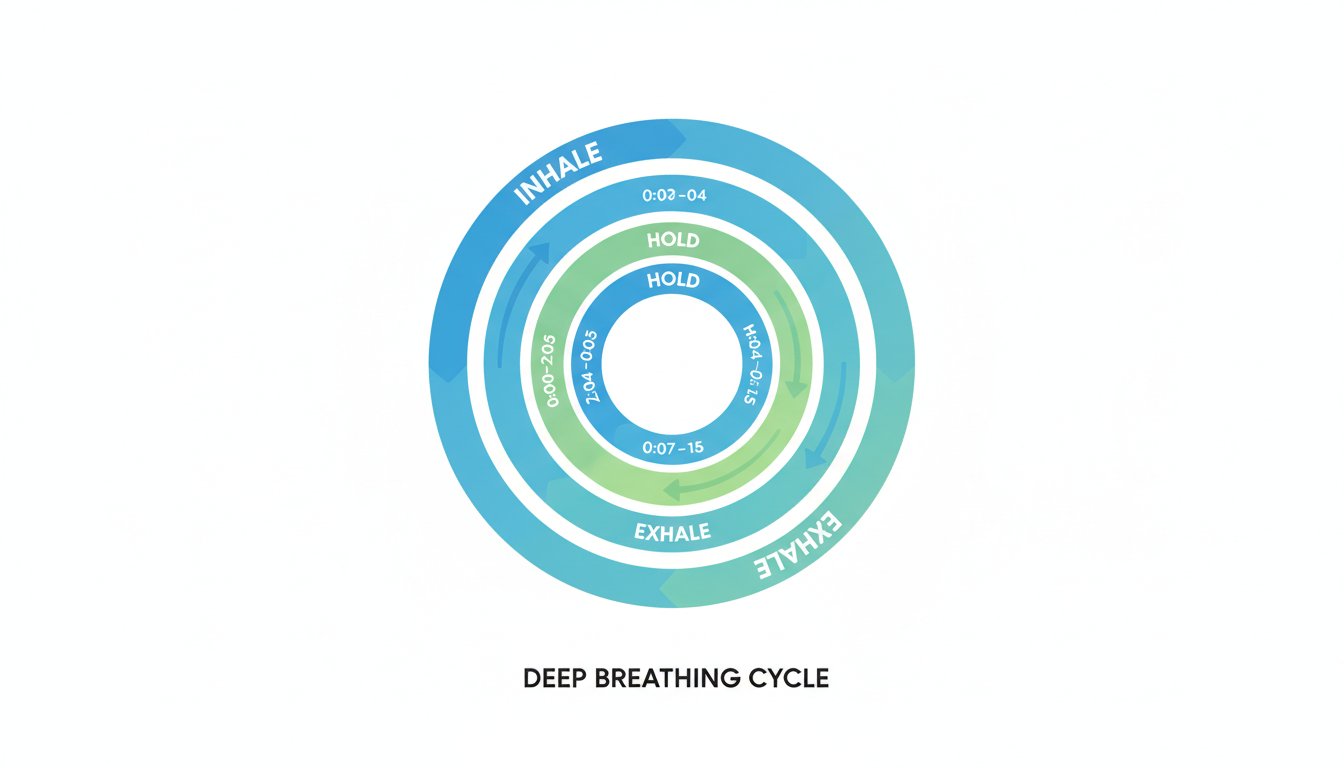
Breathwork is perhaps the fastest way to hack your nervous system. By changing the rhythm and depth of your breathing, you can physically slow your heart rate and lower stress hormones within just a few minutes.
The 4-7-8 Technique
The 4-7-8 breathing method is a favorite for post-meal relaxation.
- Sit comfortably after your meal.
- Exhale completely through your mouth.
- Inhale quietly through your nose to a count of four.
- Hold your breath for a count of seven.
- Exhale completely through your mouth, making a whoosh sound, to a count of eight.
This cycle helps lower blood pressure and quiets the mind. When you repeat this for four or five cycles, you are effectively telling your body that it is time to focus on digestion rather than stress management.
Box Breathing
Used by high-performance athletes and tactical teams, box breathing is excellent for stabilizing your internal environment. Inhale for four, hold for four, exhale for four, and hold empty for four. This rhythmic pattern creates a sense of internal order that can prevent the "glucose roller coaster" often caused by eating while distracted or anxious.
Mindfulness: Eating With Intention
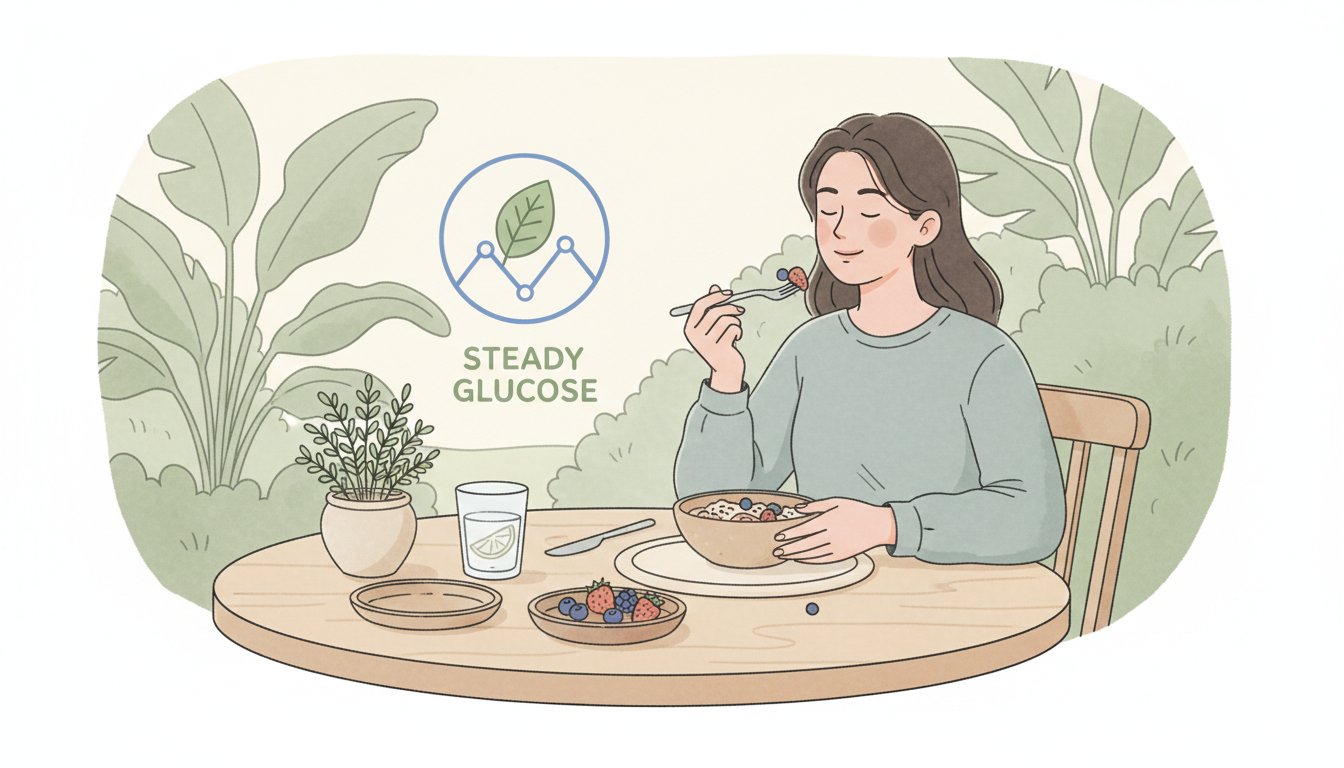
Mindfulness goes beyond breathing; it is about your relationship with the meal itself. Many of us eat while scrolling through phones, watching television, or rushing to the next meeting. This distracted eating often leads to faster consumption and higher stress levels.
Practice Mindful Appreciation
Before you take your first bite, take 30 seconds to observe your food. Notice the colors, the aromas, and the effort it took to prepare the meal. This practice of gratitude centers your focus. Studies suggest that slowing down your eating pace allows your hormones to signal satiety more effectively, which can lead to better glucose regulation over the long term.
The Post-Meal Body Scan
After eating, try a three-minute body scan. Close your eyes and move your focus from your toes to the top of your head, noticing any areas of tension. When you find a tight muscle, breathe into it and let it soften. This simple act keeps you grounded in your body rather than letting your mind drift into stress-inducing thoughts about your to-do list.
Practical Tips for Your Daily Routine
You don't need an hour of meditation to see results. The best habits are the ones you can actually stick to. Here is how to build these into your life:
- The 10-minute rule: Give yourself 10 minutes of "quiet time" after a meal before returning to work or high-intensity tasks.
- Use your tools: If you feel your blood sugar rising, use your
glucose tracking appsto log your mood alongside your numbers. You might notice that your spikes are lower on days when you actually take the time to breathe. - Consistency over intensity: One deep breath is better than none. Don't worry about being perfect; just aim to be present.
Monitoring Your Progress with GlucoAI
While breathwork and mindfulness are excellent, they are most effective when you can see the impact they have on your specific physiology. This is where GlucoAI becomes an essential partner. By consistently logging your meals and noting when you practiced breathwork, you can start to see correlations between your state of mind and your A1C (average blood sugar level over 3 months) trends.
When you use GlucoAI to track these patterns, you move from guessing about your health to making data-driven decisions. If you notice a specific breathing technique consistently lowers your post-meal peak by 10 or 15 mg/dL, you have objective proof that your mindfulness practice is working.
Troubleshooting Common Issues
"I don't have time for this."
If you truly only have two minutes, simply focus on lengthening your exhale. A longer exhale is the physiological trigger for the parasympathetic nervous system. It takes zero extra time to do this while you are clearing the table or walking to your next task.
"I keep forgetting."
Set a reminder on your phone or use a widget on your home screen. Linking your breathing practice to a post-meal habit—like washing your dish—makes it much easier to remember.
Summary
The impact of mindfulness and breathwork on your metabolic health is profound. By managing your stress response, you are doing more than just feeling better; you are actively supporting your body's ability to maintain stable blood sugar levels.
To recap:
- Stress raises glucose: Understanding that your nervous system dictates your metabolic response is the first step.
- Breathwork is a hack: Use 4-7-8 or box breathing to trigger your "rest and digest" state.
- Mindfulness changes outcomes: Eating with intention and practicing post-meal body scans helps you stay in control.
- Track to improve: Use tools like
GlucoAIto correlate your mindfulness efforts with your actual glucose data.
Managing your health is a journey, not a sprint. Start by adding just one minute of deep breathing after your dinner tonight. You might be surprised by how much more stable your numbers look the next morning. If you are ready to take control of your metabolic health, start tracking your daily habits with GlucoAI today and see how small, calm adjustments lead to big, healthy changes.
Disclaimer: This blog post is for educational purposes only and does not constitute medical advice. Please consult your doctor before making significant changes to your diabetes management plan or if you have concerns about your blood glucose levels.
GlucoAI — Smart Blood Sugar Monitor
Track, analyze, and optimize your glucose levels with AI-powered insights.