
- Published on
Understanding the Foot-on-the-Floor Glucose Spike
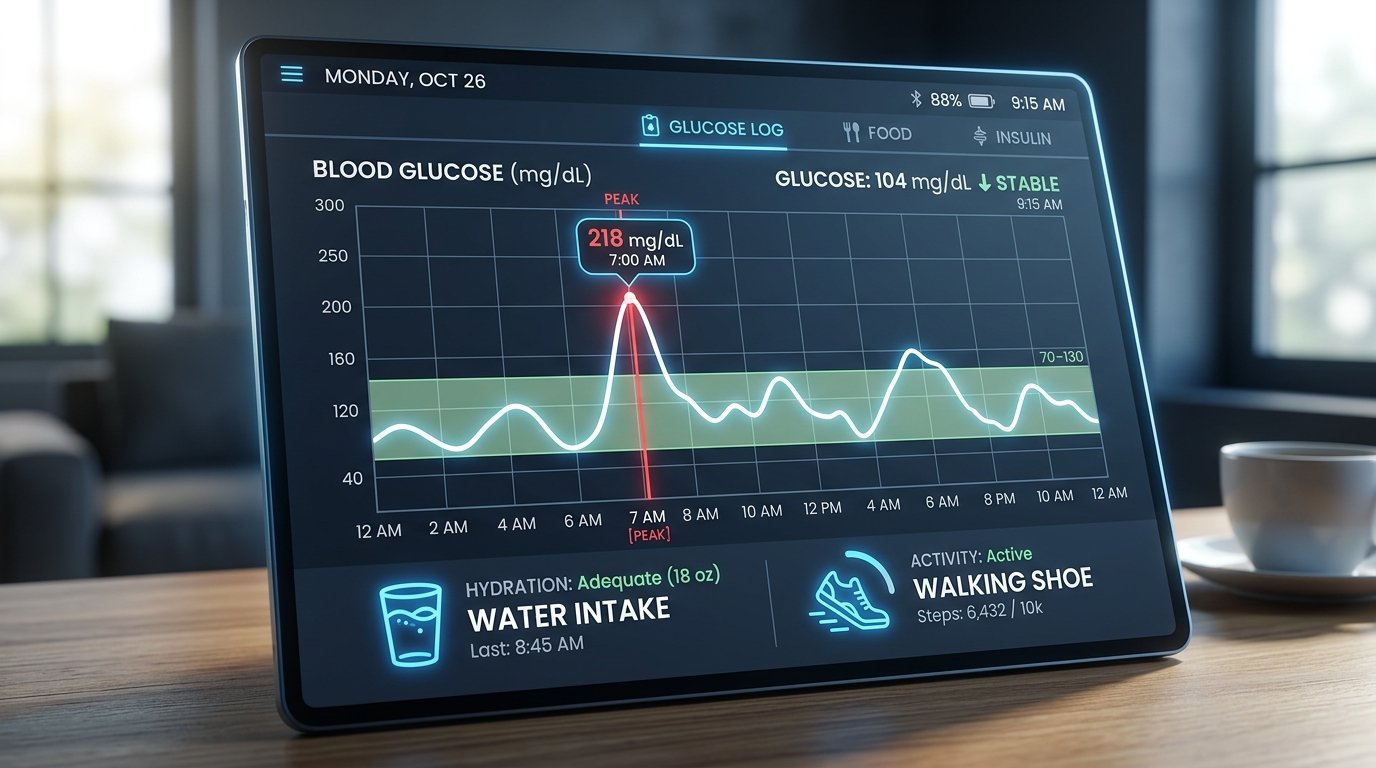
Have you ever woken up, checked your glucose levels while still cozy under the covers, and felt a sense of victory because your numbers were perfectly stable? You feel great, you swing your legs out of bed, and you head to the kitchen to start your day. But 30 minutes later, before you’ve even taken a single bite of food or a sip of coffee, you check your monitor again and see a sharp climb.
It feels like a glitch in the system. How can your blood sugar rise when you haven't eaten anything?
This frustrating experience is known as the "Foot-on-the-Floor" (FOTF) phenomenon. If you are living with type 1, type 2, or prediabetes, this morning mystery can be one of the most confusing parts of your data. I understand that feeling of doing everything "right" only to see the graph move in the wrong direction. The good news is that this isn't a failure on your part—it is a biological process that we can understand, track, and manage together.
What Is the Foot-on-the-Floor Phenomenon?
The Foot-on-the-Floor phenomenon describes a rapid rise in blood sugar levels that occurs the moment you wake up and get out of bed. Unlike other spikes that are tied to a bagel or a stressful meeting, this one is triggered simply by the act of starting your day.
For many people, this spike can range anywhere from 20 mg/dL to 50 mg/dL or more. It usually happens within the first 30 to 60 minutes of rising. Because it happens during a fasting state, it can be particularly discouraging for those trying to maintain a tight "Time in Range" (the percentage of time your sugar stays within a target window).
While it might feel like your body is working against you, this spike is actually a relic of human evolution. Your body is trying to be helpful by providing you with a "burst" of energy to fuel your morning activities. However, for those of us with insulin resistance or a lack of natural insulin production, that burst of energy lingers in the bloodstream rather than being used by the cells, leading to the high numbers you see on your screen.

The Science: Why Your Liver "Dumps" Glucose
To understand why this happens, we have to look at the relationship between your brain, your hormones, and your liver. Your liver acts as a storage warehouse for glucose, kept in a form called glycogen.
When you are asleep, your body is in a state of repair. But the moment your brain perceives that you are waking up, it sends a signal to prepare for movement. This triggers a release of several "counter-regulatory" hormones:
- Cortisol: Often called the stress hormone, cortisol naturally peaks in the early morning to help you wake up and feel alert.
- Adrenaline (Epinephrine): This hormone tells the liver to rapidly convert stored glycogen back into glucose for quick energy.
- Glucagon: This hormone signals the liver to release that glucose into the bloodstream.
- Growth Hormone: This also peaks in the early hours and can temporarily increase insulin resistance.
In a person without diabetes, the pancreas detects this rising glucose and releases a precise "squirt" of insulin to move that sugar into the muscles. In people with diabetes or metabolic dysfunction, the insulin response is either missing or delayed. The result? The "fuel" for your morning walk stays in your blood, and your glucose levels climb.
FOTF vs. The Dawn Phenomenon: What’s the Difference?
It is very common to confuse the Foot-on-the-Floor phenomenon with the "Dawn Phenomenon," but they are slightly different biological events.
The Dawn Phenomenon is a surge of hormones that happens while you are still sound asleep, usually between 4:00 AM and 8:00 AM. If you use a Continuous Glucose Monitor (CGM), you will see your graph start to drift upward while you are still in dreamland.
The Foot-on-the-Floor Phenomenon, however, is specifically triggered by waking and standing up. You might have perfectly flat glucose all night and through the dawn hours, but the second your "feet hit the floor," the spike begins.
Some people experience both, creating a "double climb" in the morning. Identifying which one you are dealing with is the first step toward fixing it. Using a glucose tracking app like GlucoAI can help you visualize these patterns over several days, making it much easier to tell the difference between a late-night snack lingering in your system and a true hormonal morning spike.
Strategies to Manage the Morning Spike
While you cannot stop your hormones from doing their job, you can change how your body reacts to them. Here are several actionable steps you can take to flatten that morning curve. Always remember to please consult your doctor before making significant changes to your medication or insulin routine.
1. Don't Skip Breakfast (But Choose Wisely)
It sounds counterintuitive to eat when your blood sugar is rising, but for some, a small, high-protein snack can actually signal the liver to stop dumping glucose. By providing an external source of energy, you tell your body, "I've got food now, you can stop releasing the backup stores." Aim for something like a hard-boiled egg, a few almonds, or a piece of turkey. Avoid high-carb cereals or toasts, which will only add fuel to the fire.
2. Hydrate Immediately
Dehydration makes blood sugar appear higher because the glucose in your blood is more concentrated. Drinking 8 to 16 ounces of water as soon as you wake up can help dilute the glucose and assist your kidneys in flushing out any excess.
3. Morning Movement
Light exercise, such as a 10-minute walk or some gentle stretching, can help your muscles soak up that extra glucose. However, be cautious with high-intensity interval training (HIIT) very early in the morning, as intense exercise can sometimes trigger more adrenaline, potentially worsening the spike temporarily.
4. Medication and Insulin Adjustments
If you are on insulin, you and your doctor might discuss a "feet-on-floor" bolus—a small dose of rapid-acting insulin taken the moment you wake up to counteract the hormonal surge. If you are on oral medications like Metformin, your doctor might suggest adjusting the timing of your evening or morning dose to better cover the early hours.
How to Use Data to Solve the Mystery
The most powerful tool you have in managing FOTF is your own data. Because everyone’s hormonal profile is unique, what works for one person might not work for you.
This is where technology becomes your best friend. By using a CGM and syncing it with a tool like GlucoAI, you can look for the "why" behind the "what." Ask yourself:
- Did the spike happen faster if I stayed in bed scrolling on my phone?
- Did a high-protein dinner the night before reduce the morning rise?
- How did a 5-minute walk change the peak of the spike?
Tracking these variables helps you move from being a frustrated observer to an empowered manager of your health. When you see the patterns clearly, the Foot-on-the-Floor phenomenon becomes just another data point you know how to handle.
Summary
The Foot-on-the-Floor glucose spike is a natural, biological reaction to waking up, driven by hormones like cortisol and adrenaline. While it can be frustrating to see high numbers before breakfast, understanding the mechanism allows you to take control.
Key Takeaways:
- FOTF is hormonal: It is caused by your liver releasing glucose to give you morning energy.
- Timing matters: It happens specifically upon waking and standing, unlike the Dawn Phenomenon which happens during sleep.
- Protein is key: A small, carb-free breakfast can sometimes signal your liver to stop the glucose dump.
- Hydration and movement: Water and light walking are natural ways to help lower a morning spike.
- Consult your team: Work with your healthcare provider to see if medication timing needs an adjustment.
Managing your glucose is a journey of small discoveries. If you’re tired of guessing why your morning numbers are high, start tracking your patterns today. Tools like GlucoAI can help you make sense of your CGM data, turning those confusing spikes into actionable insights. You don't have to navigate the "morning mystery" alone—let's use the data to build a healthier, more stable routine together.
GlucoAI — Smart Blood Sugar Monitor
Track, analyze, and optimize your glucose levels with AI-powered insights.