
- Published on
Understanding the C-Peptide Test: A Beginner's Guide
Have you ever wondered exactly how much insulin your body is producing on its own? When you are diagnosed with diabetes, prediabetes, or general metabolic dysfunction, it can sometimes feel like you are operating in the dark. You can easily measure your daily blood sugar levels, but you might not know what is actually happening behind the scenes inside your pancreas.
This is where the C-peptide test comes in. This simple blood test acts as a direct window into your body's natural insulin factory. Whether you are trying to determine if you have Type 1 or Type 2 diabetes, investigating frequent low blood sugar episodes, or simply looking to understand your overall metabolic health, measuring your C-peptide levels can provide you and your doctor with the exact answers you need to tailor your treatment plan.
In this beginner's guide, we will break down what C-peptide is, why this test is so valuable, how to prepare for it, and what your results might mean for your daily health journey.
What Is C-Peptide?
To understand C-peptide, it helps to take a quick look at how your pancreas creates insulin. Your pancreas contains specialized cells called beta cells. When these beta cells prepare to release insulin, they do not just create insulin by itself. Instead, they produce a larger, inactive molecule called proinsulin.
To turn proinsulin into active insulin that your body can use, your beta cells must snip the molecule into two distinct parts. One part is the active hormone insulin, and the other part is a chain of amino acids called connecting peptide, or C-peptide for short.
Because proinsulin is always split into equal halves, your pancreas releases insulin and C-peptide into your bloodstream in a perfect 1:1 ratio. For every single molecule of insulin your body manufactures, it also creates exactly one molecule of C-peptide.
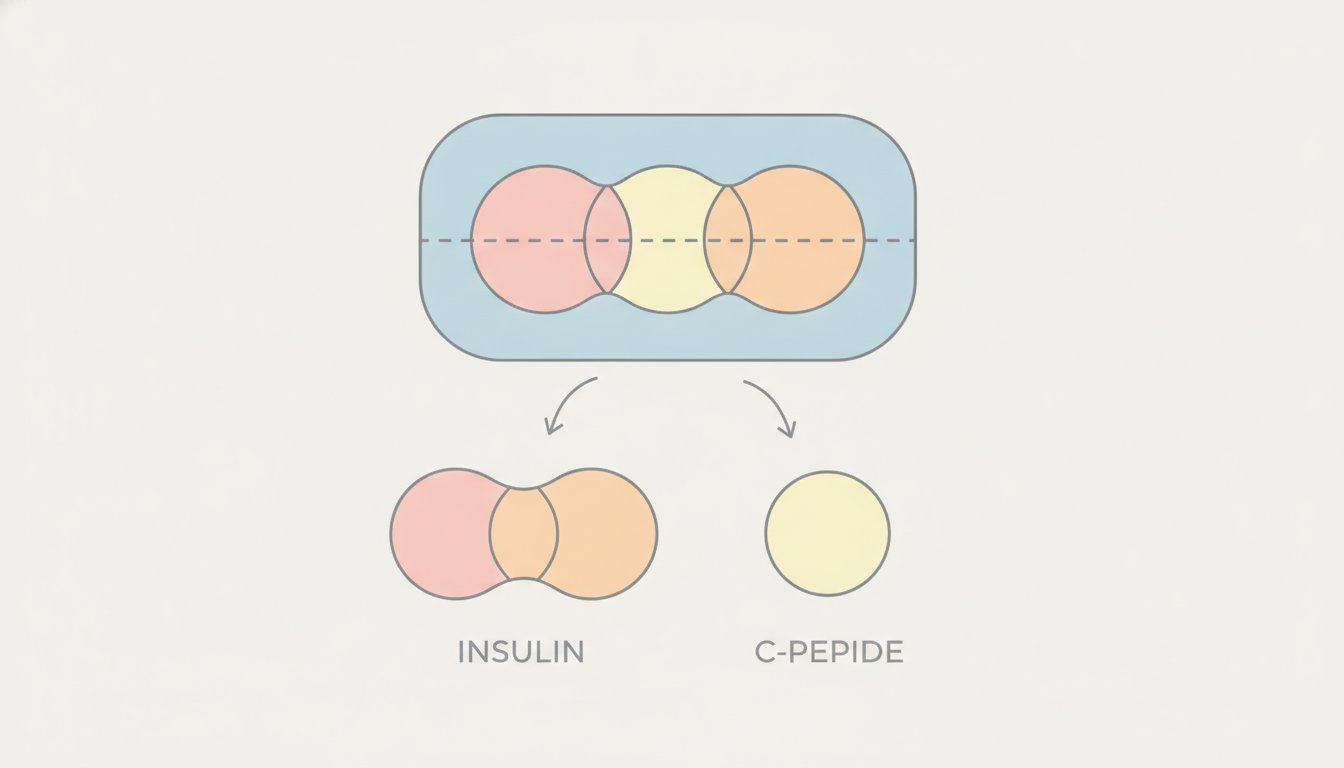
This equal ratio makes C-peptide an incredibly accurate mirror of your body's natural insulin production. You might wonder why doctors do not simply measure insulin levels directly instead. While that sounds logical, insulin is actually very difficult to measure accurately in the bloodstream.
Once insulin is released, it goes straight to your liver, which rapidly processes and clears a large portion of it from your body. Because insulin levels spike and drop within minutes, direct insulin testing is highly volatile. C-peptide, on the other hand, is much more stable. It stays in your bloodstream for a longer period and is cleared slowly by your kidneys. This stability makes C-peptide a far more reliable marker for assessing how hard your pancreas is working.
Why Does the C-Peptide Test Matter?
Your healthcare provider might order a C-peptide test for several different reasons. Because insulin and C-peptide are produced together, this test helps solve several medical mysteries regarding your metabolism.
Distinguishing Between Type 1 and Type 2 Diabetes
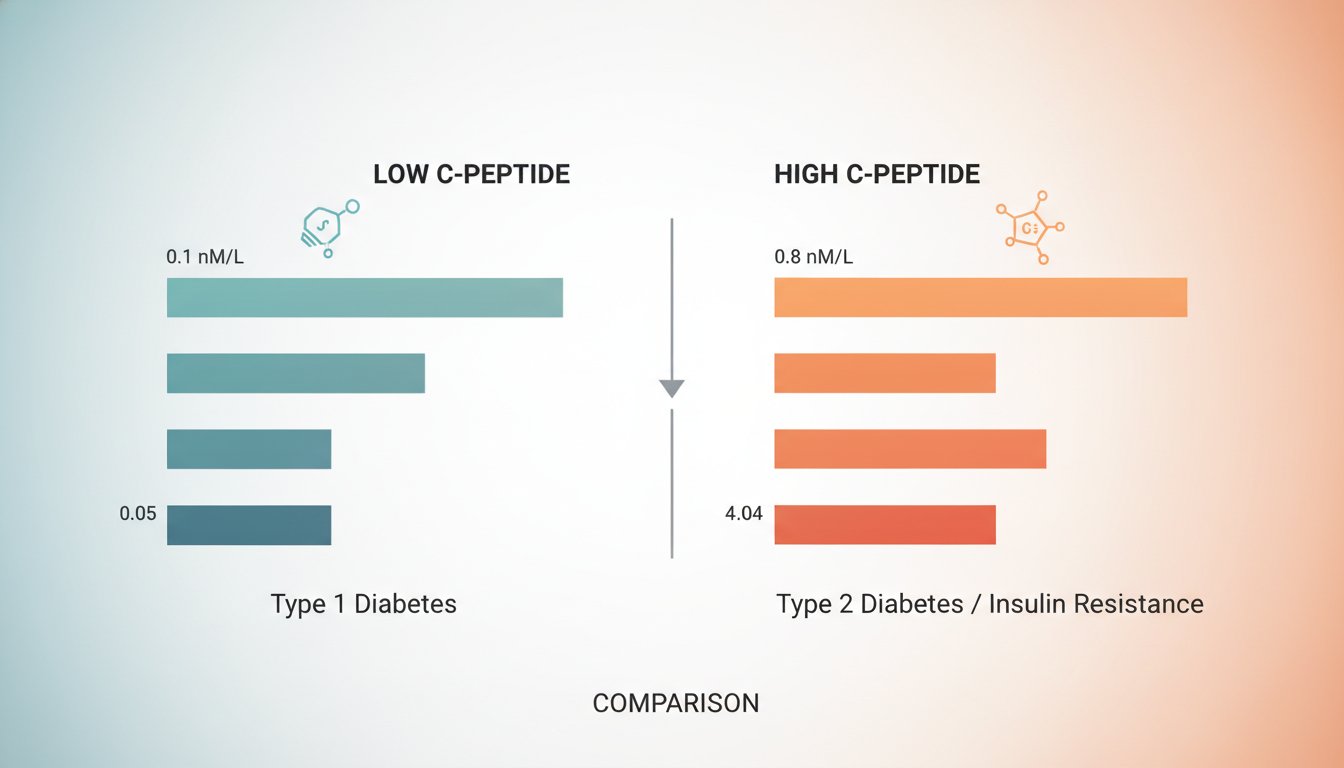
This is perhaps the most common use for the test. In Type 1 diabetes, the body's immune system mistakenly attacks and destroys the insulin-producing beta cells in the pancreas. As a result, a person with Type 1 diabetes will have very low or completely undetectable levels of C-peptide.
In contrast, Type 2 diabetes is primarily a condition of insulin resistance. People with Type 2 diabetes often have plenty of beta cells, but their body's cells do not respond effectively to insulin. To compensate, the pancreas actually pumps out more insulin than normal, resulting in normal or even elevated C-peptide levels. Knowing which type of diabetes you have is critical because it dictates whether you require immediate insulin therapy.
Identifying Latent Autoimmune Diabetes in Adults (LADA)
LADA, sometimes informally referred to as "Type 1.5 diabetes," is a slow-progressing form of autoimmune diabetes that occurs in adults. Because it develops gradually, it is frequently misdiagnosed as Type 2 diabetes. A C-peptide test can help clear up this confusion. If your C-peptide levels are normal at first but steadily decline over several months or years, it may indicate LADA, meaning you will eventually need to transition to insulin therapy.
Investigating the Cause of Low Blood Sugar (Hypoglycemia)
If you experience frequent, unexplained episodes of low blood sugar, your doctor will want to know why. If your C-peptide levels are high during a low blood sugar event, it means your pancreas is producing too much insulin on its own. This could point to a rare, benign pancreatic tumor called an insulinoma.
On the other hand, if your blood sugar is low but your C-peptide levels are also extremely low, it suggests that the excess insulin in your system is coming from an external source, such as an accidental overdose of injected insulin.
How Does the C-Peptide Test Work?
Taking a C-peptide test is straightforward, but it does require a bit of preparation to ensure the results are accurate.
Step 1: Fasting
In most cases, your doctor will ask you to fast for 8 to 12 hours before your blood draw. This means you should not eat or drink anything except plain water. Fasting is crucial because consuming food naturally triggers your pancreas to release insulin and C-peptide. A fasting baseline gives your healthcare team a clear picture of your pancreas's resting state.
Step 2: The Blood Draw
The test itself is a standard blood draw. A phlebotomist or nurse will clean a small area on your arm, insert a needle into a vein, and collect a small vial of blood. The entire process takes less than five minutes and usually feels like a brief pinch.
Step 3: The Glucagon Stimulation Test (Optional)
In some clinical situations, your endocrinologist might want to see how your pancreas responds under pressure. To do this, they may perform a stimulated C-peptide test. They will first draw your blood to get a fasting baseline, then give you an injection of glucagon (a hormone that triggers the liver to release stored glucose).
After a few minutes, they will draw your blood again. This test shows whether your beta cells are still capable of ramping up insulin production when your blood sugar rises.
Interpreting Your Results
When you receive your lab results, you will see a number measured in either nanograms per milliliter (ng/mL) or nanomoles per liter (nmol/L). While exact reference ranges vary depending on the laboratory analyzing your sample, a typical fasting C-peptide level ranges from 0.5 to 2.0 ng/mL.
To make sense of your results, your doctor must look at your C-peptide levels alongside your blood glucose levels taken at the exact same time. Here is a general breakdown of how these numbers are interpreted:
- Low C-Peptide + High Blood Sugar: This combination indicates that your blood sugar is elevated because your pancreas is not producing enough insulin. This is a classic pattern for Type 1 diabetes, LADA, or advanced Type 2 diabetes where the beta cells have become exhausted after years of overproducing insulin.
- High C-Peptide + High Blood Sugar: This suggests that your pancreas is working overtime and producing massive amounts of insulin, yet your blood sugar remains high. This is a clear indicator of severe insulin resistance, which is the defining characteristic of Type 2 diabetes and metabolic syndrome.
- Low C-Peptide + Low Blood Sugar: This is generally considered a normal, healthy physiological response. If your blood sugar is low, your pancreas should naturally shut down insulin and C-peptide production to prevent your blood sugar from dropping dangerously lower.
- High C-Peptide + Low Blood Sugar: This is an abnormal finding that suggests your pancreas is inappropriately pumping out insulin even when your blood sugar is already low. Your doctor will likely investigate this further to rule out insulinomas or other metabolic conditions.
Please note: Always consult your doctor or endocrinologist to interpret your specific lab results. Medical decisions should never be made based on self-diagnosis or general reference ranges.
Next Steps After Your Test
Discovering your C-peptide levels is an incredibly empowering step toward mastering your metabolic health. Once you and your doctor have these insights, you can create a highly targeted plan to manage your blood sugar.
If your results show that your pancreas is still producing plenty of insulin (high C-peptide), your primary focus should be on reversing insulin resistance. You can achieve this by adopting a whole-food diet rich in fiber, engaging in regular physical activity, and utilizing medications that improve insulin sensitivity.
If your results reveal that your pancreas is struggling to produce insulin (low C-peptide), your management plan will focus on replacing that missing insulin safely. This typically involves learning how to dose insulin precisely to match your carbohydrate intake and maintain stable blood sugar levels.
Regardless of your C-peptide levels, daily monitoring is the key to long-term success. While a lab test gives you a valuable static snapshot, daily tracking shows you the dynamic, real-time picture of your health.
Using modern glucose tracking apps can help you seamlessly bridge the gap between your lab results and your daily life. By logging your meals, tracking your physical activity, and monitoring your daily glucose trends, you can easily identify which habits keep your blood sugar in a stable, healthy range.
Summary
The C-peptide test is an invaluable tool for anyone looking to understand their metabolic health. By measuring this stable byproduct of insulin production, you can gain deep insights into exactly how your pancreas is functioning.
Key Takeaways
- Equal Production: C-peptide and insulin are created in a 1:1 ratio, making C-peptide an excellent proxy for natural insulin production.
- Greater Stability: C-peptide remains in the bloodstream longer than insulin, providing a much more stable and accurate measurement.
- Diagnostic Power: The test is essential for distinguishing between Type 1 diabetes, Type 2 diabetes, and LADA.
- Context Is Key: C-peptide results must always be interpreted alongside a matching blood sugar reading and under the guidance of a medical professional.
Understanding how your body produces insulin is a major milestone on your health journey. While laboratory tests provide the essential roadmap, managing your day-to-day metabolic health requires consistent, daily awareness.
To help you stay on top of your numbers, consider using GlucoAI. Our intelligent glucose tracking tool makes it incredibly easy to log your blood sugar levels, track your meals, and uncover personalized insights that empower you to live a healthier, more vibrant life. Download GlucoAI today to take the guesswork out of your metabolic health!
GlucoAI — Smart Blood Sugar Monitor
Track, analyze, and optimize your glucose levels with AI-powered insights.