
- Published on
Mastering Food Labels to Prevent Glucose Spikes
Have you ever walked down the grocery aisle, picked up a box of "healthy" granola bars, and felt confident about your choice, only to see your glucose levels skyrocket an hour later? It’s a frustrating experience that many of us in the glucose-monitoring community know all too well. You did the "right" thing by choosing a product with a green leaf on the package, yet your body reacted as if you’d just eaten a candy bar.
The truth is, food labels are often designed more for marketing than for metabolic health. Between confusing serving sizes and the dozens of different names for sugar, it can feel like you need a PhD in chemistry just to buy a jar of pasta sauce. But mastering the art of reading food labels is one of the most powerful skills you can develop for long-term blood sugar stability. By learning what to look for—and what to ignore—you can take the guesswork out of grocery shopping and prevent those mystery spikes.
In this guide, we’ll break down the nutrition facts panel, uncover the hidden aliases of sugar, and teach you how to calculate the numbers that actually matter for your metabolic health.
The Foundation: Serving Size and Total Carbohydrates
When you flip a package over, the first thing your eyes should land on is the Serving Size. This is the most common place where people get tripped up. Manufacturers often set serving sizes much smaller than what a person typically eats to make the calorie and sugar counts look lower.
For example, a standard bag of chips might contain "2.5 servings." If you eat the whole bag, you have to multiply every number on that label by 2.5. If the label says 15g of carbohydrates per serving, you’ve actually consumed 37.5g. Always start by asking yourself: "Is this serving size realistic for how much I am actually going to eat?"
Once you’ve established the serving size, look at the Total Carbohydrates. This number is the sum of several different components, including dietary fiber, total sugars, and added sugars. While "Total Carbs" gives you the big picture, we need to dig deeper to understand how those carbs will affect your glucose.
The "Net Carb" Equation: Why Fiber is Your Best Friend
Not all carbohydrates are created equal. Some hit your bloodstream like a lightning bolt, while others provide a slow, steady burn. The difference often comes down to Dietary Fiber.
Fiber is a type of carbohydrate that your body cannot fully digest. Because it doesn't break down into glucose, it doesn't raise your blood sugar levels. In fact, fiber slows down the absorption of other sugars in your meal, acting as a "buffer" against glucose spikes.
Many people managing their glucose use the Net Carb calculation to get a more accurate idea of a food's impact. To find the net carbs, use this simple formula:
Total Carbohydrates - Dietary Fiber - (Select Sugar Alcohols / 2) = Net Carbohydrates
(Note: We divide sugar alcohols by two because some can still have a slight impact on glucose, though much less than regular sugar).
If a wrap has 20g of total carbs but 15g of fiber, your body is only "seeing" 5g of net carbs. This is why high-fiber foods are the gold standard for metabolic health. They allow you to feel full and satisfied without the subsequent "sugar crash."
Spotting the Secret Aliases of Sugar
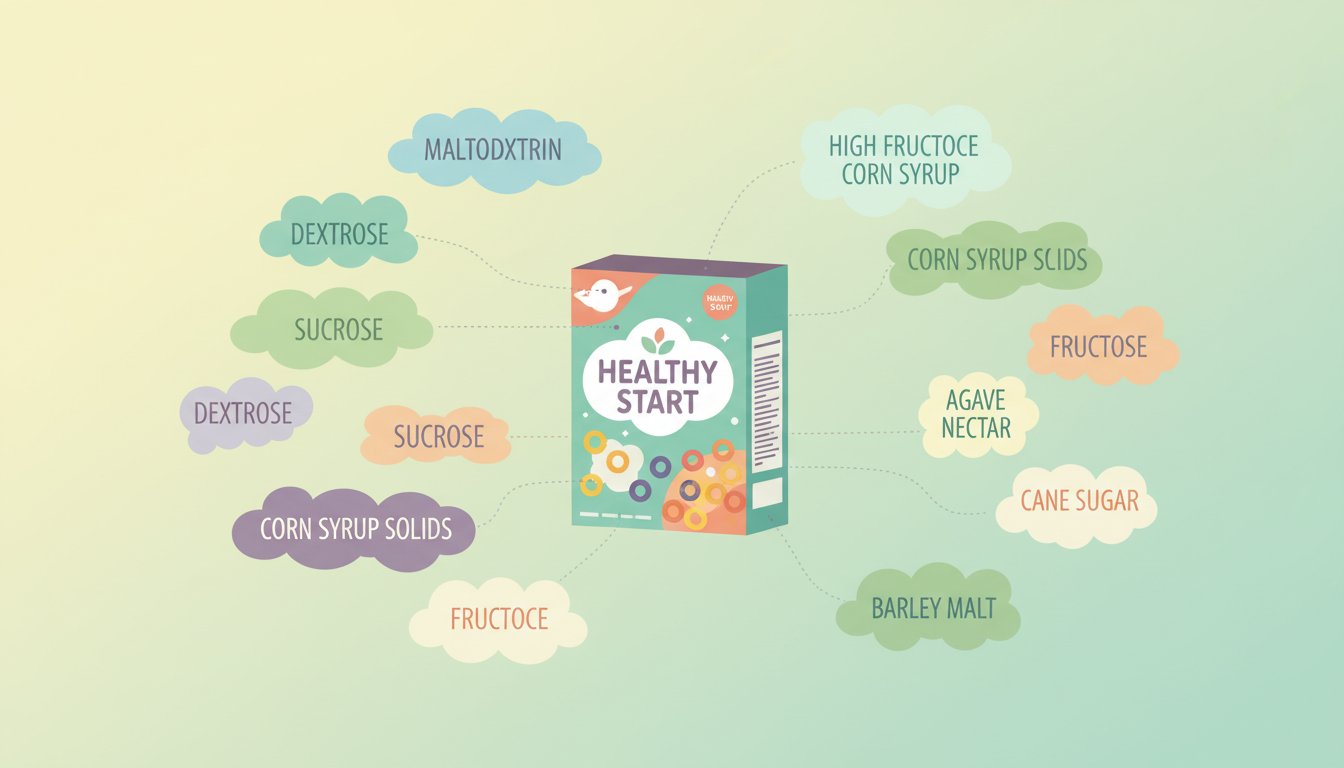
If you look at the "Added Sugars" line on a nutrition label, you’ll see a gram amount. However, the ingredients list tells the real story. Food scientists have developed over 60 different names for sugar, many of which sound healthy or "natural."
To prevent unexpected glucose spikes, you need to become a detective. Look for these common sugar aliases in the ingredients list:
- The "Ose" Family: Glucose, fructose, sucrose, maltose, dextrose, and lactose.
- The Syrups: High fructose corn syrup, agave nectar, maple syrup, rice syrup, malt syrup, and sorghum syrup.
- The "Natural" Sugars: Cane juice, fruit juice concentrate, honey, molasses, and coconut sugar.
- The Technical Terms: Maltodextrin, barley malt, and ethyl maltol.
A pro tip for reading ingredients: they are listed in order of weight. If any form of sugar is one of the first three ingredients, that product is likely to cause a significant glucose spike. Even "organic" or "raw" sugars are still sugars—your liver and pancreas process them almost exactly the same way as white table sugar.

Decoding Marketing Traps: "No Sugar Added" vs. "Unsweetened"
Marketing claims on the front of the box can be incredibly misleading. Let’s clear up the confusion between three common phrases:
- "No Sugar Added": This does not mean the food is sugar-free. It simply means the manufacturer didn't pour extra sugar into the vat during processing. Items like fruit juice or dried fruit are naturally very high in sugar and will still cause a massive spike, even if no extra sugar was added.
- "Sugar-Free": This means the product contains less than 0.5g of sugar per serving. However, it might be loaded with flour or other refined starches that turn into glucose the moment they hit your saliva. Always check the total carbohydrate count.
- "Unsweetened": This is usually the safest bet. It means no sugar or artificial sweeteners were used. You’ll often see this on almond milk or applesauce.
Another term to watch out for is "Keto-Friendly." While these products are usually lower in net carbs, they often contain "bulking agents" like maltodextrin, which actually has a higher glycemic index than table sugar! If you see maltodextrin on a label, proceed with caution and monitor your glucose closely.
How to Shop Like a Pro: A Practical Checklist
Next time you’re at the store, follow these steps to ensure your cart is filled with glucose-friendly options:
- Ignore the front of the box: Ignore the "heart-healthy" or "natural" stickers. Flip it over immediately.
- Check the 5:1 Fiber Ratio: A good rule of thumb is to look for foods where the ratio of total carbs to fiber is 5 to 1 or less. For example, if a bread has 15g of carbs, it should ideally have at least 3g of fiber.
- Look for "Whole" Ingredients: If the ingredients list is a paragraph long and full of words you can't pronounce, your body will likely have a hard time processing it.
- Beware of "Low-Fat": When manufacturers remove fat, they almost always add sugar or salt to make up for the lost flavor. Healthy fats (like those in nuts, seeds, and avocados) actually help stabilize glucose.
Using Technology to Verify Your Findings
Even when you become an expert at reading labels, every body is unique. Bio-individuality means that two people can eat the exact same "low-carb" cracker and have completely different glucose responses. This is where tools like Continuous Glucose Monitors (CGMs) and tracking apps become invaluable.
When you try a new food based on its label, use GlucoAI to log that meal and track your subsequent glucose curve. Over time, you’ll start to see patterns. You might find that you can handle "tapioca starch" just fine, but "brown rice syrup" sends you into a tailspin. By combining label-reading skills with real-time data, you move from guessing to knowing exactly what works for your metabolism.
Summary: Key Takeaways for Stable Glucose
Mastering food labels is a marathon, not a sprint. Don't feel discouraged if you find a "hidden" sugar in your pantry today—use it as a learning opportunity! Here are the core points to remember:
- Always check the serving size first to ensure the numbers reflect what you actually eat.
- Focus on Net Carbs (Total Carbs minus Fiber) to understand the true glucose impact.
- Scan the ingredients for sugar aliases like maltodextrin and various syrups.
- Don't trust marketing claims on the front of the package; the real story is on the back.
- Prioritize a high fiber-to-carb ratio to slow down sugar absorption.
Managing your blood sugar is about making informed choices, not about perfection. By learning to decode the language of food labels, you are taking a massive step toward preventing spikes and feeling more energized throughout your day.
Ready to see how your favorite snacks actually affect your numbers? Start logging your meals and monitoring your trends with GlucoAI. It’s the easiest way to turn label-reading into a personalized roadmap for your health. Always remember to consult your doctor or a registered dietitian before making significant changes to your diet or diabetes management plan.
Citations:
- American Diabetes Association. (2023). Understanding Food Labels.
- Mayo Clinic. (2022). Dietary fiber: Essential for a healthy diet.
GlucoAI — Smart Blood Sugar Monitor
Track, analyze, and optimize your glucose levels with AI-powered insights.