
- Published on
Managing Blood Sugar on a Plant-Based Diet
Have you ever wondered if transitioning to a plant-based diet could be the key to unlocking better metabolic health? Many people make the switch hoping to naturally lower their A1C (average blood sugar level over three months) and improve insulin sensitivity. However, managing blood sugar on a plant-based diet can sometimes feel like a tightrope walk. While plant-rich eating plans are packed with essential vitamins and minerals, they also tend to be naturally higher in carbohydrates. If you are not careful, those healthy-looking grain bowls and fruit smoothies can send your glucose levels on an absolute roller coaster ride.
Fortunately, you do not have to choose between your ethical or environmental values and stable metabolic health. With a few strategic adjustments, you can enjoy all the wonderful benefits of plant-based eating while keeping your blood sugar beautifully stable. Let's explore how to navigate this transition smoothly and confidently.
The Plant-Based Paradox: Why Healthy Carbs Can Still Cause Spikes
When you transition to a plant-based lifestyle, your primary energy source shifts from animal proteins and fats to whole grains, legumes, fruits, and vegetables. These foods are incredibly rich in complex carbohydrates. While complex carbohydrates are far superior to refined sugars, they still break down into glucose during digestion.
For someone focusing on glucose control, this shift can trigger unexpected glucose spikes. You might eat a large bowl of oatmeal topped with bananas and maple syrup, thinking it is a health-conscious choice, only to find your blood sugar soaring past 180 mg/dL shortly after.
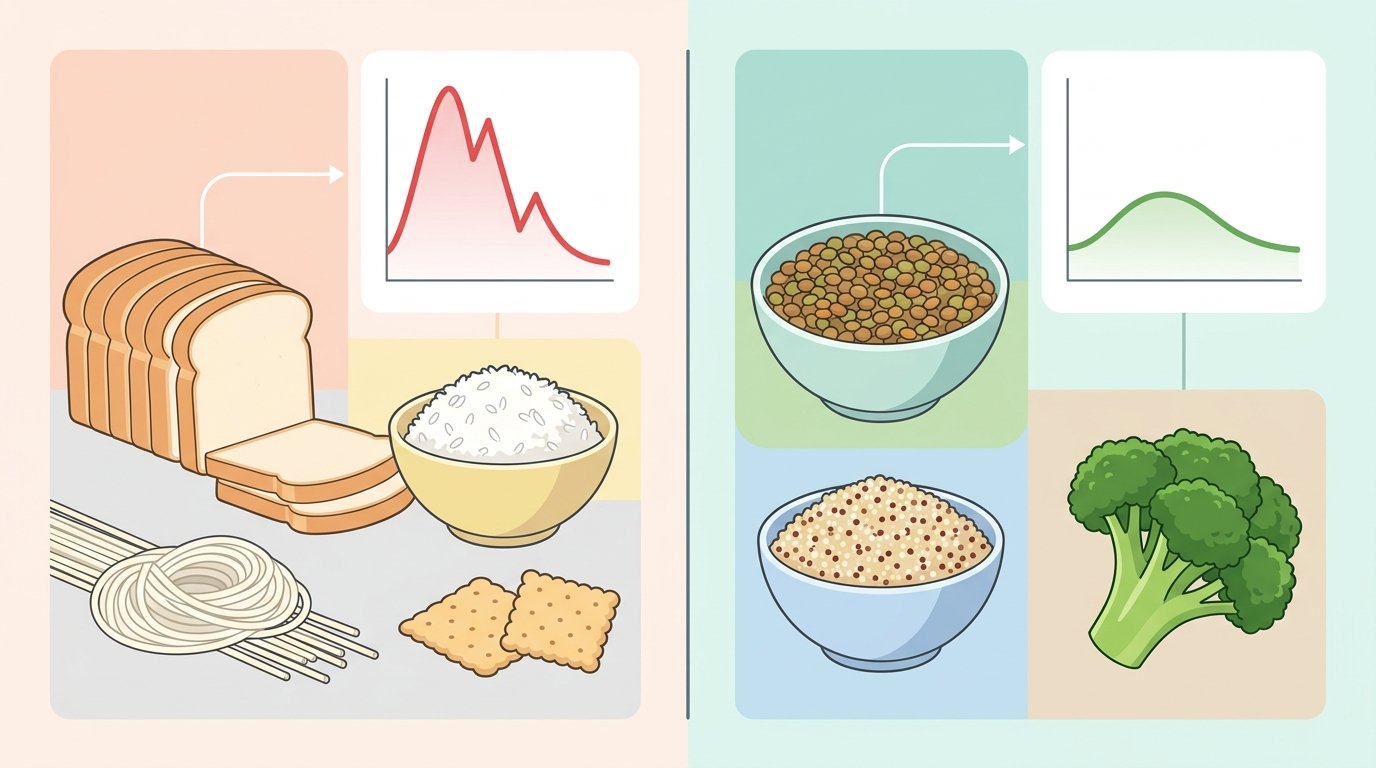
This happens because plant-based foods vary wildly in their fiber, protein, and fat structures. When we consume carbohydrates in isolation—even healthy, whole-food carbohydrates—our bodies absorb them rapidly. The key to successfully managing blood sugar on a plant-based diet is not avoiding carbohydrates entirely, but rather learning how to select, combine, and time them to minimize their impact on your bloodstream.
Four Golden Rules for Stable Glucose on a Plant-Based Diet
To keep your blood sugar in your target range, you need to change how you approach your daily meals. These four actionable rules will help you enjoy plant-based meals without the metabolic drama.
1. Make Fiber Your Ultimate Secret Weapon
Fiber is a type of carbohydrate that your body cannot digest. Because it passes through your system largely intact, it slows down the absorption of sugar in your small intestine. This gradual digestion prevents rapid insulin surges and keeps your energy levels steady for hours.
When planning your meals, aim to maximize your soluble fiber intake. Excellent sources include:
- Black beans, kidney beans, and lentils
- Chia seeds and flaxseeds
- Brussels sprouts and broccoli
- Oats and barley
As a rule of thumb, try to choose foods that have a high fiber-to-total-carbohydrate ratio. If a food has 30 grams of carbohydrates but 10 grams of fiber, its net impact on your blood sugar will be much lower than a food with 30 grams of carbohydrates and zero fiber.
2. Always Pair Your Carbs (The "Protein-Fat-Fiber" Buffer)
Eating a plain sweet potato or a bowl of white rice by itself is a recipe for a rapid glucose spike. To protect your metabolism, never let a carbohydrate travel through your digestive system alone. Always pair your carbohydrates with a source of plant-based protein and healthy fat.
Protein and fat stimulate the release of satiety hormones and slow down gastric emptying. This means the stomach empties its contents into the small intestine at a much slower rate, resulting in a gentle, rolling curve on your glucose monitor rather than a sharp mountain peak.
For example, if you want an apple, pair it with two tablespoons of unsweetened almond butter. If you are making quinoa, toss it with extra virgin olive oil, avocado slices, and grilled tofu.
3. Understand Glycemic Index vs. Glycemic Load
The glycemic index (GI) ranks foods based on how quickly they raise blood sugar. However, the glycemic load (GL) is an even more useful metric because it takes portion size into account.
Some plant-based foods, like watermelon, have a high glycemic index but a very low glycemic load because they are mostly water. Conversely, foods like brown rice have a moderate glycemic index but can have a high glycemic load if you eat a massive portion. Focus on keeping your overall meal glycemic load low by keeping portion sizes of grains and starchy vegetables moderate, while filling the rest of your plate with non-starchy greens.
4. Master Your Food Order
Did you know that the order in which you eat your food can change your post-meal glucose response by up to 70%?
When you sit down to a meal, try to eat your vegetables first. The fiber coats your digestive tract, creating a mesh-like barrier. Next, eat your plant-based proteins and fats (such as tofu, tempeh, nuts, or seeds). Finally, finish your meal with your complex carbohydrates (such as brown rice, sweet potatoes, or fruit). This simple shift in sequence can drastically flatten your glucose curve without forcing you to change a single ingredient on your plate.
Building Your Glucose-Friendly Plant-Based Plate
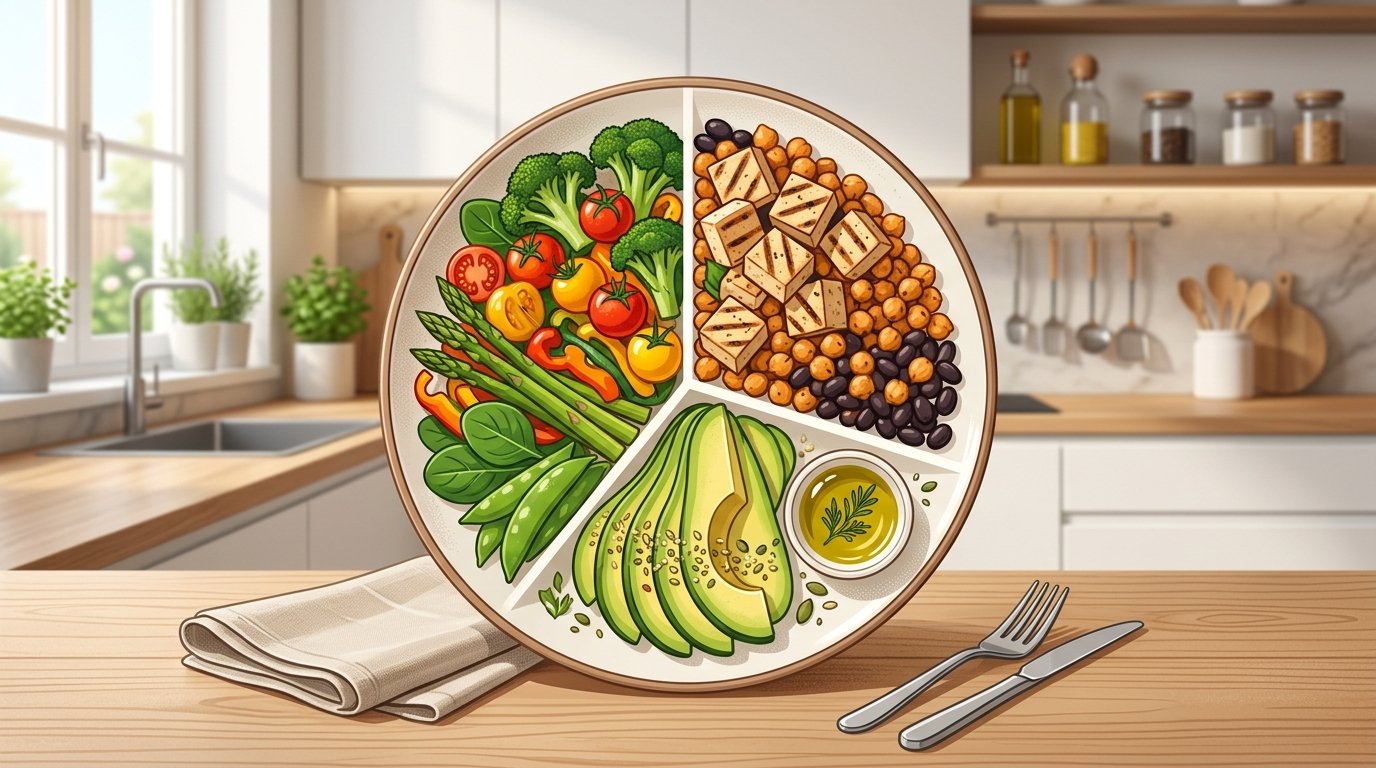
Creating a balanced meal does not require a kitchen scale or complicated calculations. Instead, you can use a simple visual guide to structure your plate for optimal glucose control.
- Half of your plate: Fill this with non-starchy vegetables. Think leafy greens, spinach, kale, zucchini, bell peppers, cucumbers, and cauliflower. These are incredibly low in calories and carbohydrates but packed with water and fiber.
- One-quarter of your plate: Dedicate this to high-quality plant proteins. Excellent options include organic tofu, tempeh, edamame, seitan, or lupini beans.
- One-quarter of your plate: Reserve this small section for your complex carbohydrates, such as quinoa, wild rice, lentils, or roasted squash.
- The healthy addition: Drizzle your meal with a tablespoon of healthy fats, such as extra virgin olive oil, pumpkin seed oil, or add a quarter of an avocado.
Common Plant-Based Pitfalls to Avoid
As you navigate your plant-based journey, be on the lookout for these common traps that can quietly disrupt your metabolic health.
Falling for the "Vegan Junk Food" Trap
Just because a product is labeled "vegan," "plant-based," or "gluten-free" does not mean it is healthy. Many processed vegan meats, cheeses, and frozen meals are loaded with refined starches, emulsifiers, and added sugars to improve their taste and texture. These highly processed ingredients can cause significant insulin resistance over time. Stick to whole, single-ingredient foods as much as possible.
Consuming Your Carbs in Liquid Form
Green smoothies and fruit juices are often marketed as health elixirs. However, blending fruits and vegetables pulverizes their fiber structure. This mechanical breakdown means your body does not have to do any work to digest the sugars, leading to rapid absorption and immediate glucose spikes. If you love smoothies, keep fruit to a minimum (such as a half-cup of berries), and load up on spinach, protein powder, and chia seeds.
Ignoring Hidden Sugars in Plant Milks
Oat milk has exploded in popularity, but it is one of the most common culprits behind mysterious morning glucose spikes. Oats are highly starched, and the processing of oat milk enzymatically breaks down these starches into simple sugars (specifically maltose). Additionally, many plant milks contain added cane sugar. Always choose unsweetened almond, soy, hemp, or macadamia milk instead.
How to Monitor and Personalize Your Journey
Every individual's metabolic system is entirely unique. A cup of black beans might keep your friend's blood sugar perfectly flat while causing your glucose to spike significantly. The only way to truly know how your body responds to different plant-based foods is through consistent monitoring.
Using a continuous glucose monitor (CGM) or tracking your meals alongside your blood sugar readings can provide invaluable insights. By recording what you eat and observing your subsequent glucose curves, you can identify your personal "superfoods" and uncover hidden triggers.
This is where a dedicated digital companion becomes essential. Utilizing modern glucose tracking apps can help you log your daily meals, note your physical activity, and visualize your progress over time.
If you want to take the guesswork out of your plant-based journey, GlucoAI is designed to help you analyze your glucose trends, understand how specific meals affect your body, and provide personalized, actionable insights. By tracking your daily habits with GlucoAI, you can confidently fine-tune your diet to achieve stable, long-term metabolic health.
Summary
Managing blood sugar on a plant-based diet is entirely achievable with the right strategies in place. By focusing on fiber, pairing your carbohydrates with proteins and fats, paying attention to food order, and avoiding processed vegan traps, you can protect your metabolic health while enjoying a vibrant, plant-rich lifestyle.
Key Takeaways:
- Emphasize fiber: Soluble fiber slows sugar absorption and prevents dramatic spikes.
- Never eat carbs naked: Always pair grains and fruits with plant proteins and healthy fats.
- Eat in order: Consume your non-starchy vegetables first, followed by proteins, and save complex carbs for the end of the meal.
- Watch out for liquid sugars: Avoid fruit juices, blended smoothies, and sweetened plant milks like oat milk.
- Track your progress: Use a helper tool like GlucoAI to find your unique metabolic patterns.
Please consult your doctor or a registered dietitian before making significant changes to your diet, especially if you are managing diabetes or taking blood sugar-lowering medications.
Are you ready to see how your favorite plant-based meals impact your body? Download GlucoAI today to start tracking your glucose trends, optimizing your nutrition, and taking control of your metabolic health journey one meal at a time!
GlucoAI — Smart Blood Sugar Monitor
Track, analyze, and optimize your glucose levels with AI-powered insights.