
- Published on
Cardio or Weights First? Best Order for Stable Glucose
Have you ever finished a sweaty, high-energy workout, checked your blood sugar, and stood there completely baffled? Maybe you expected a beautiful, flat green line on your screen, but instead, you saw a sharp spike or a sudden, stomach-dropping crash. It is incredibly frustrating when you are doing everything right for your health, yet your glucose numbers refuse to cooperate.
The secret to unlocking stable, predictable blood sugar during and after your workouts might not be what exercises you are doing, but the exact order in which you do them. If you regularly combine strength training and cardiovascular exercise in a single session—often called concurrent training—sequencing them correctly is a game-changer for your metabolic health. Let's look at the science behind why the order of your exercises matters and how you can structure your workouts to keep your glucose levels perfectly balanced.
The Physiology of Exercise and Glucose
To understand the best workout order, we first need to look at how your muscles use energy. Different types of exercise tap into different metabolic pathways, which directly influences how glucose enters and leaves your bloodstream.
During cardiovascular exercise (like jogging, cycling, or using the elliptical), your body primarily relies on aerobic metabolism. This type of moderate-intensity, steady-state activity is highly efficient at drawing glucose directly out of your blood to use as fuel. It does this by stimulating glucose transporters to move to the surface of your muscle cells, allowing them to absorb sugar without even needing insulin. This is why a simple 20-minute walk or light jog can rapidly lower your blood sugar.
Strength training (like lifting weights, using resistance bands, or doing bodyweight exercises), on the other hand, relies heavily on anaerobic metabolism. Because lifting weights requires short, intense bursts of power, your muscles rely on stored fuel called muscle glycogen. This high-intensity strain triggers your body to release counter-regulatory hormones like adrenaline and cortisol. These hormones tell your liver to release stored glucose into your blood to provide immediate energy. As a result, you might actually see a temporary blood sugar spike during or immediately after a heavy lifting session.
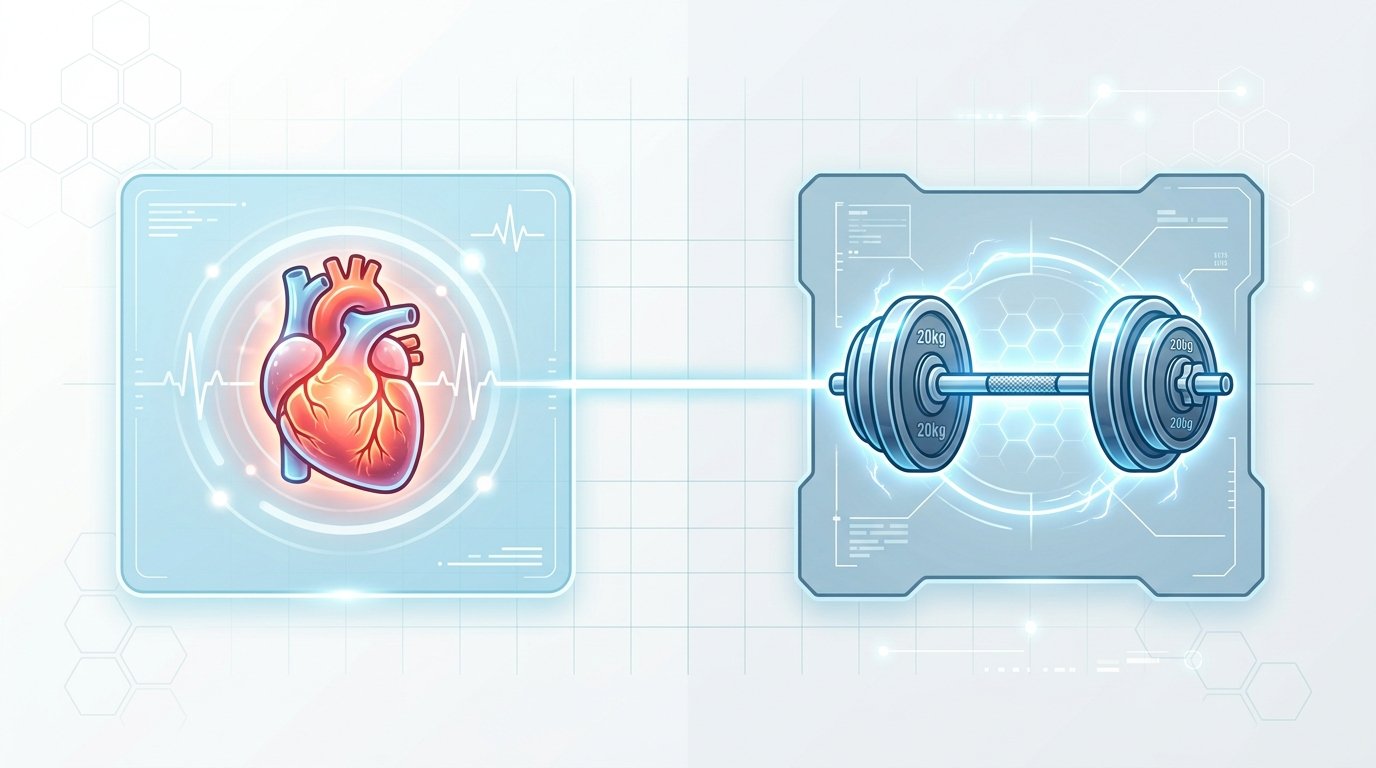
Why Weights First, Cardio Second Is the Winning Formula
If you want to maintain stable glucose levels and avoid dramatic spikes or crashes, science strongly points to one specific sequence: performing your resistance training first, followed by your cardiovascular exercise.
When you lift weights first, you initiate an anaerobic response. Your body releases those counter-regulatory hormones that mobilize glucose. While this can cause a mild, temporary rise in your blood sugar, it actually acts as a protective shield against hypoglycemia (low blood sugar). Your muscles also begin to deplete their glycogen stores, priming them to absorb more glucose later to rebuild.
By transitioning to steady-state cardio immediately afterward, you create the perfect metabolic synergy. The aerobic exercise acts as a natural sponge for the excess glucose that your liver just pumped into your bloodstream during your weight-lifting session. Instead of that glucose lingering in your blood and causing a prolonged spike, your active muscles quickly burn it off as fuel.
A landmark study published in the journal Diabetes Care confirmed this exact phenomenon. Researchers found that when individuals with Type 1 diabetes performed resistance exercise before aerobic exercise, it significantly reduced the risk of post-exercise hypoglycemia compared to doing cardio first (source: Diabetes Care). The weights-first sequence produced a much more stable, gradual decline in glucose, keeping participants safely within their target range both during the workout and throughout the recovery period.
The Risks of Reversing the Order
What happens when you run on the treadmill first and then head over to the weight room? For many people, this reverse sequence is a recipe for a glucose rollercoaster.
Starting with moderate-to-high intensity cardio rapidly drains your circulating blood glucose. By the time you pick up your first dumbbell, your blood sugar may already be trending downward. When you then subject your body to the intense physical stress of strength training on top of depleted glucose levels, your body reacts by releasing an emergency flood of stress hormones.
This can lead to two frustrating scenarios:
- An abrupt spike: Your liver overcompensates by dumping massive amounts of glucose into your bloodstream, causing a sharp post-workout spike that is difficult to bring back down.
- A severe crash: If your liver's glycogen stores are already low, your blood sugar may continue to plummet during the weight session, leaving you feeling dizzy, shaky, and exhausted—a classic case of post-exercise hypoglycemia.
Furthermore, lifting weights when you are already physically fatigued from cardio increases your risk of poor form and injury. From both a safety and a metabolic standpoint, saving the cardio for the end of your session is the clear winner.
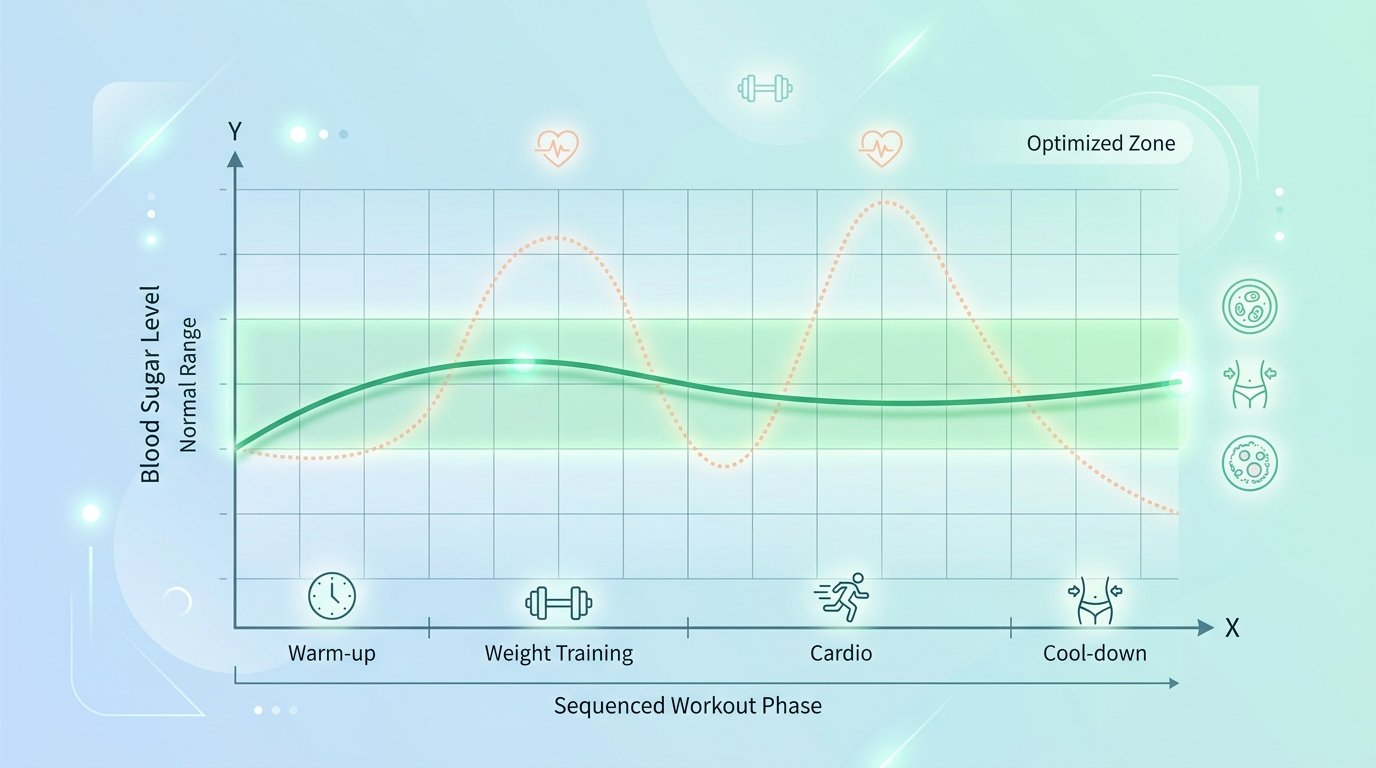
Your Step-by-Step Workout Blueprint for Glycemic Control
Ready to put this science into practice? Here is a simple, highly effective workout template designed to optimize your insulin sensitivity and keep your glucose curves beautifully stable.
Step 1: The Warm-Up (5 to 10 minutes)
Begin with a dynamic warm-up to prepare your joints and muscles. Focus on mobility work, light stretching, or very low-intensity movement (like slow walking). Keep it gentle so you do not prematurely deplete your energy.
Step 2: Strength Training (30 to 45 minutes)
This is the core of your workout. Focus on compound movements that recruit large muscle groups—such as squats, lunges, chest presses, and rows. Recruiting larger muscles means you will use up more muscle glycogen, which maximizes your long-term insulin sensitivity. Aim for three to four sets of 8 to 12 repetitions per exercise.
Step 3: Cardiovascular Exercise (15 to 30 minutes)
Immediately following your weights, transition to moderate-intensity steady-state (MISS) cardio. This could be a brisk walk on an incline, cycling at a moderate pace, or using a rowing machine. Keep your heart rate in a zone where you can still carry on a comfortable conversation. This steady effort will smoothly mop up any circulating glucose mobilized during your lifting session.
Step 4: The Cool-Down (5 minutes)
Finish with light stretching and deep, diaphragmatic breathing. This helps transition your nervous system out of "fight or flight" mode (sympathetic) and into "rest and digest" mode (parasympathetic), helping to lower cortisol and gently bring your glucose levels back to baseline.
How to Monitor and Master Your Metabolic Response
While the "weights first, cardio second" rule works beautifully for the vast majority of people, everyone's metabolic profile is unique. Your individual response can be influenced by what you ate before your workout, your hydration status, stress levels, and your medication regimen.
This is where continuous glucose monitoring becomes incredibly valuable. By wearing a continuous glucose monitor (CGM), you can watch how your body responds in real time to different exercise sequences. You might notice that a blood sugar of 140 mg/dL before your workout dictates a slightly different approach than starting at 95 mg/dL.
To make sense of all this data without getting overwhelmed, using an intelligent companion tool like GlucoAI is incredibly empowering. Instead of trying to manually correlate your exercise logs with your glucose curves, GlucoAI analyzes your patterns for you. It can help you identify exactly how many minutes of cardio you need post-weights to bring your glucose back to your target range, allowing you to fine-tune your routine with clinical precision.
Summary: Key Takeaways for Your Next Workout
Understanding the relationship between exercise order and metabolic health gives you total control over your fitness journey. You do not have to guess how your body will react to your workouts anymore.
Here is a quick recap of how to sequence your exercise for optimal glycemic control:
- Always lift weights first: Strength training utilizes anaerobic pathways, depleting muscle glycogen and safely elevating glucose-regulating hormones.
- Follow with steady-state cardio: Aerobic exercise acts as a natural sponge, safely burning off circulating blood sugar mobilized during your lifting session.
- Avoid starting with intense cardio: Doing cardio first can lead to unpredictable glucose crashes or reactive spikes during your weight session.
- Track your patterns: Use a CGM and track your sessions with GlucoAI to see how your body responds to different workout structures, helping you build a sustainable, personalized routine.
Remember, consistency is key. Every single workout you complete helps build long-term insulin sensitivity that lasts up to 48 hours. Please consult your doctor before starting any new, intense exercise regimen, especially if you take insulin or other glucose-lowering medications.
Are you ready to stop guessing and start mastering your metabolic health? Download GlucoAI today to track your workouts, visualize your glucose trends, and receive personalized insights tailored to your unique body!
GlucoAI — Smart Blood Sugar Monitor
Track, analyze, and optimize your glucose levels with AI-powered insights.