
- Published on
How Thyroid Hormones Impact Your Blood Sugar
Have you ever had one of those days where your blood sugar spikes or plunges for absolutely no apparent reason? You ate the exact same balanced breakfast as yesterday, walked the exact same number of steps, and slept a solid eight hours. Yet, your glucose monitor shows a completely different, unpredictable story.
When your numbers refuse to behave, the culprit might not be your kitchen or your workout routine. Instead, it could be a small, butterfly-shaped gland resting at the base of your neck: your thyroid. This tiny gland plays a massive role in how your body processes energy, and when it gets out of balance, your blood sugar goes on a rollercoaster ride right along with it.
Let's explore the deep, fascinating connection between your thyroid hormones and your glucose levels, and look at how you can regain control.
The Thyroid: Your Body's Master Regulator
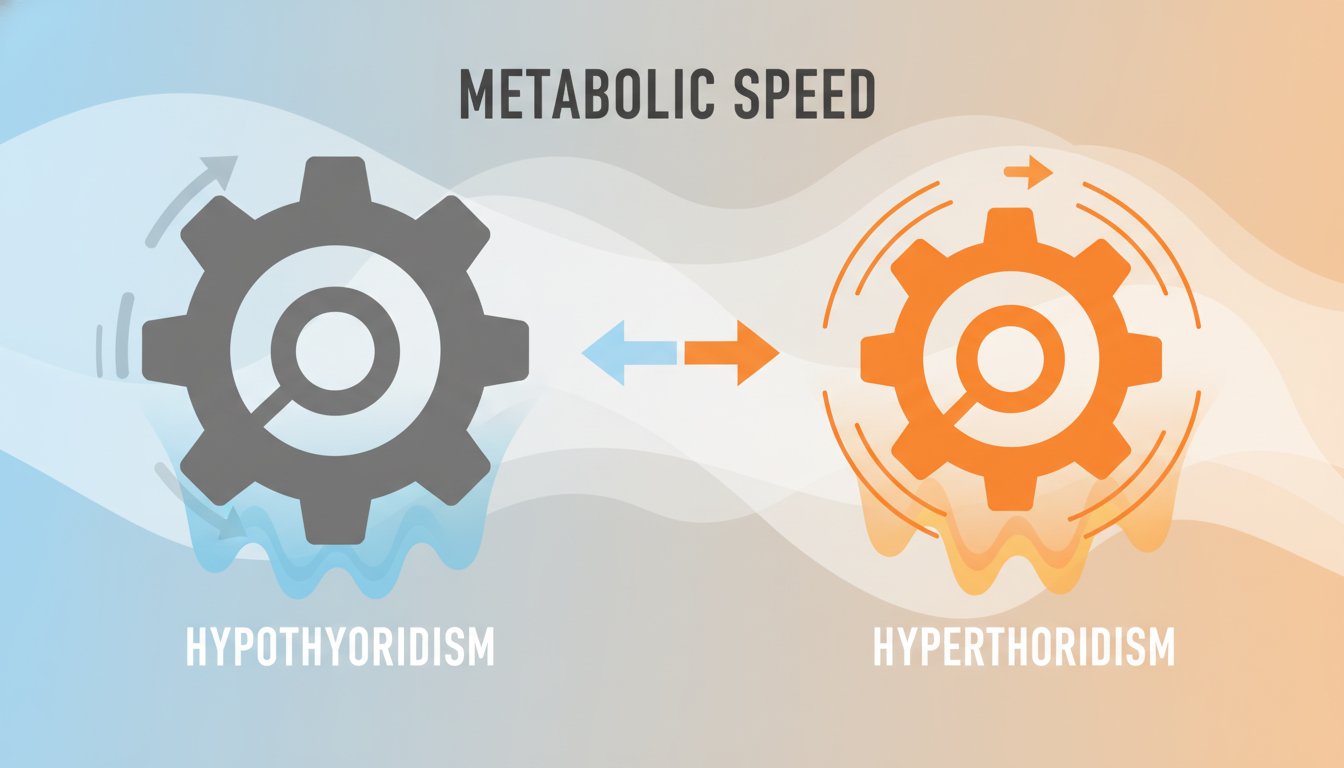
Think of your thyroid as your body's central thermostat or gas pedal. It produces two primary hormones: T3 (triiodothyronine, the active thyroid hormone) and T4 (thyroxine, the inactive form that your body converts into T3). Together, these hormones control your metabolism, which is the process your body uses to turn food into energy.
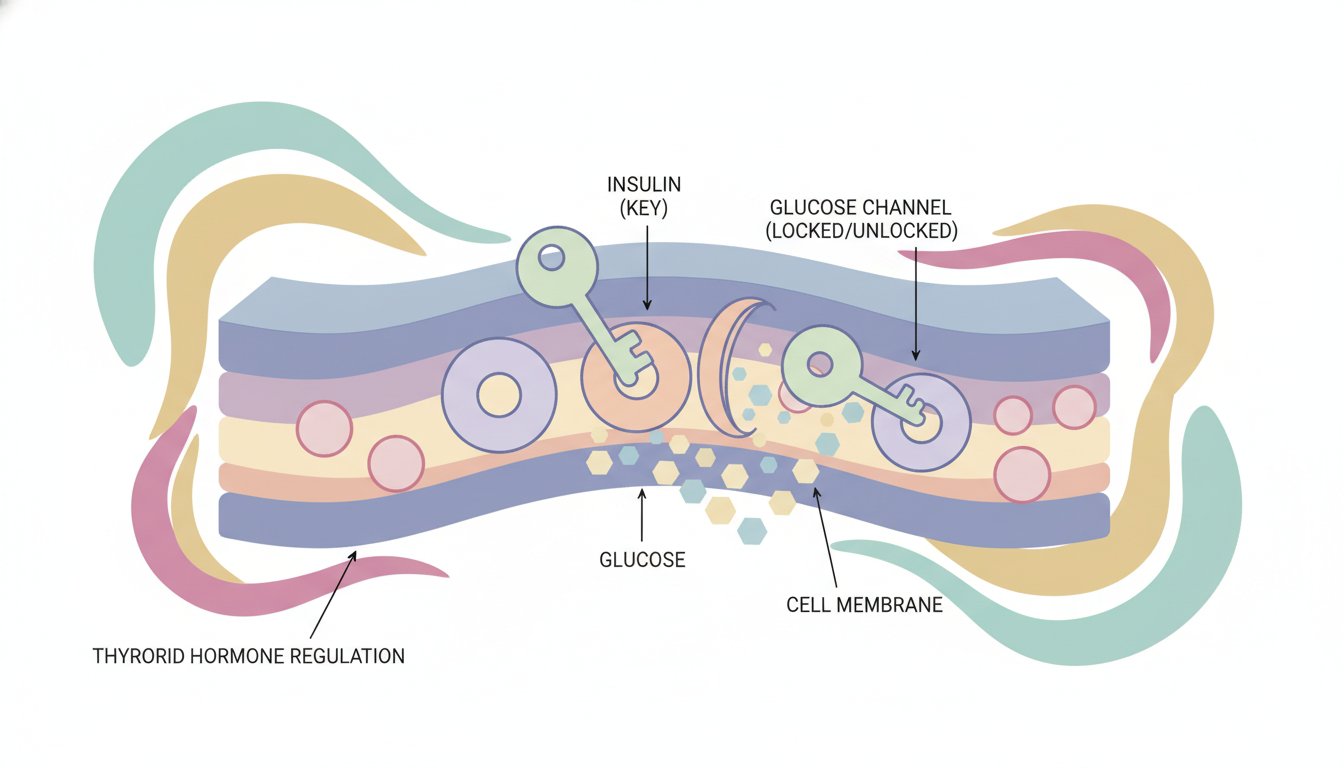
Because glucose is your body's primary source of fuel, your thyroid hormones naturally dictate how that glucose is used, stored, and cleared from your bloodstream. When your thyroid is functioning perfectly, it works in harmony with insulin (the hormone that allows your cells to absorb glucose). But when your thyroid hormones are either too high or too low, this delicate partnership falls apart.
The Biological Link: How Thyroid Hormones Control Glucose
To understand why thyroid issues disrupt your blood sugar, we have to look at how thyroid hormones interact with three key players in your metabolic system: your liver, your gut, and your muscles.
- The Liver: Your liver acts as a glucose storage facility. Thyroid hormones signal your liver to release stored glucose into the blood when you need energy.
- The Gut: Thyroid hormones control how quickly your digestive tract absorbs carbohydrates from the food you eat.
- The Muscles and Fat Cells: Your thyroid influences how sensitive your muscle and fat cells are to insulin, determining how easily they can pull sugar out of your blood.
When thyroid hormones fluctuate, every single one of these pathways is affected. Let's look at what happens when your thyroid runs too slow, and what happens when it runs too fast.
Hypothyroidism: When an Underactive Thyroid Slows Everything Down
Hypothyroidism (an underactive thyroid) occurs when your thyroid gland does not produce enough thyroid hormones. When your thyroid slows down, your entire metabolism slows down with it. You might experience fatigue, weight gain, feeling cold, and brain fog.
But what does this slow metabolism mean for your blood sugar?
1. Insulin Resistance Develops
When you have too little T3 and T4, your cells become sluggish and less responsive to insulin. This condition is known as insulin resistance. Because your muscle and fat cells cannot efficiently open their doors to let glucose in, the sugar pools in your bloodstream, leading to elevated baseline glucose levels and higher A1C (average blood sugar level over 3 months) readings.
2. Slower Insulin Clearance
On the flip side, a slow metabolism also means your body clears insulin from your system much slower than normal. Because active insulin stays in your bloodstream longer, you might experience sudden, unexpected drops in blood sugar, also known as hypoglycemia (blood sugar below 70 mg/dL).
This combination of insulin resistance and slow insulin clearance is why people with hypothyroidism often experience highly unpredictable "highs" and "lows."
Hyperthyroidism: When an Overactive Thyroid Speeds Things Up
Hyperthyroidism (an overactive thyroid) is the exact opposite. Your thyroid produces too much T3 and T4, putting your metabolic rate into overdrive. Symptoms often include a rapid heart rate, unexplained weight loss, anxiety, and heat intolerance.
When your metabolic engine is constantly revving, your blood sugar management faces a different set of challenges:
1. Increased Glucose Production
An excess of thyroid hormones tells your liver to rapidly dump its stored glucose into your bloodstream. At the same time, your intestines speed up the absorption of carbohydrates from your meals. This double-whammy leads to rapid, steep post-meal glucose spikes.
2. Rapid Insulin Clearance
In hyperthyroidism, your body processes and eliminates insulin at an accelerated rate. Even if your pancreas is producing plenty of insulin to cover a meal, the insulin may be cleared from your system before it has a chance to successfully move glucose into your cells.
This frequently results in persistent hyperglycemia (high blood sugar), which can eventually exhaust your pancreas and increase your risk of developing type 2 diabetes.
Practical Steps to Balance Your Thyroid and Blood Sugar
If you suspect your thyroid is impacting your glucose levels, you are not powerless. There are several highly effective, practical steps you can take to support both your thyroid and your metabolic health.
1. Request a Full Thyroid Panel
Many standard doctor visits only test TSH (thyroid-stimulating hormone). While TSH is important, it only tells part of the story. Ask your healthcare provider for a comprehensive panel that includes:
- TSH
- Free T4
- Free T3
- Thyroid Antibodies (to check for autoimmune conditions like Hashimoto's or Graves' disease)
Please consult your doctor before making any changes to your medication or treatment plan.
2. Monitor Your Glucose Patterns
Because thyroid issues cause highly erratic blood sugar swings, standard fingerstick tests might miss the bigger picture. Using a continuous glucose monitor (CGM) allows you to see how your blood sugar behaves in real-time.
By pairing your CGM data with advanced glucose tracking apps like GlucoAI, you can easily identify whether your spikes are related to meal times, stress, or potential hormonal imbalances. Tracking these trends provides invaluable data that you can bring to your next doctor's appointment.
3. Adopt a Blood Sugar-Friendly Plate
To ease the burden on your metabolism, focus on slowing down digestion. Avoid eating "naked" carbohydrates. Instead, always pair your carbs with healthy fats, fiber, and lean protein. For example, instead of eating a plain apple, pair it with a tablespoon of almond butter. This simple trick slows down glucose absorption, preventing the steep spikes associated with hyperthyroidism.
4. Prioritize Stress Management
Chronic stress releases cortisol, a hormone that actively interferes with thyroid hormone production and conversion. Cortisol also signals your liver to release extra glucose into your blood. Simple daily practices like a 10-minute walk in nature, deep breathing exercises, or consistent sleep schedules can significantly lower cortisol levels, benefiting both your thyroid and your blood sugar.
Key Takeaways
- The Master Control: Thyroid hormones (T3 and T4) act as the gas pedal for your metabolism, directly controlling how your body stores and uses glucose.
- Hypothyroidism (Underactive): Slows down your metabolism, which can lead to insulin resistance, slower insulin clearance, and unpredictable blood sugar swings.
- Hyperthyroidism (Overactive): Speeds up your metabolism, causing the liver to dump glucose rapidly and clearing insulin too quickly, leading to frequent spikes.
- Actionable Support: Get a complete thyroid panel, manage stress, eat balanced meals, and track your daily glucose trends to identify hormonal patterns.
Summary
Your endocrine system is a beautifully complex web where every hormone affects another. When thyroid hormones are out of balance, your blood sugar will inevitably feel the effects. By understanding this connection, you can stop blaming yourself for "mystery" spikes and start addressing the root cause.
Ready to discover the patterns behind your numbers? Consider using a CGM and logging your daily habits with GlucoAI. By tracking your meals, sleep, and glucose curves together, you can pinpoint exactly how your body responds to hormonal shifts and take confident, proactive steps toward optimal metabolic health.
GlucoAI — Smart Blood Sugar Monitor
Track, analyze, and optimize your glucose levels with AI-powered insights.