
- Published on
Glycemic Index vs. Glycemic Load: A Beginner's Guide
Have you ever stared at a ripe, juicy slice of watermelon on a hot summer day and hesitated to take a bite? You might have heard that watermelon has a high glycemic index, meaning it can cause rapid blood sugar spikes. But then, perhaps you ate it anyway and noticed your glucose levels barely budged. On the other hand, maybe a "healthy" bowl of instant oatmeal sent your blood sugar soaring.
If you find yourself confused by how different carbohydrates affect your body, you are not alone. Navigating the world of nutrition when managing your blood sugar can feel like learning a whole new language. Fortunately, two powerful tools can help you decode how food impacts your body: the Glycemic Index (GI) and the Glycemic Load (GL). Understanding the difference between Glycemic Index vs. Glycemic Load is the ultimate secret weapon for enjoying your favorite foods without experiencing dramatic blood sugar spikes or feeling forced to cut out carbs entirely. Let's explore how these metrics work and how you can use them to optimize your metabolic health.
Understanding the Glycemic Index: The Speed of Sugar
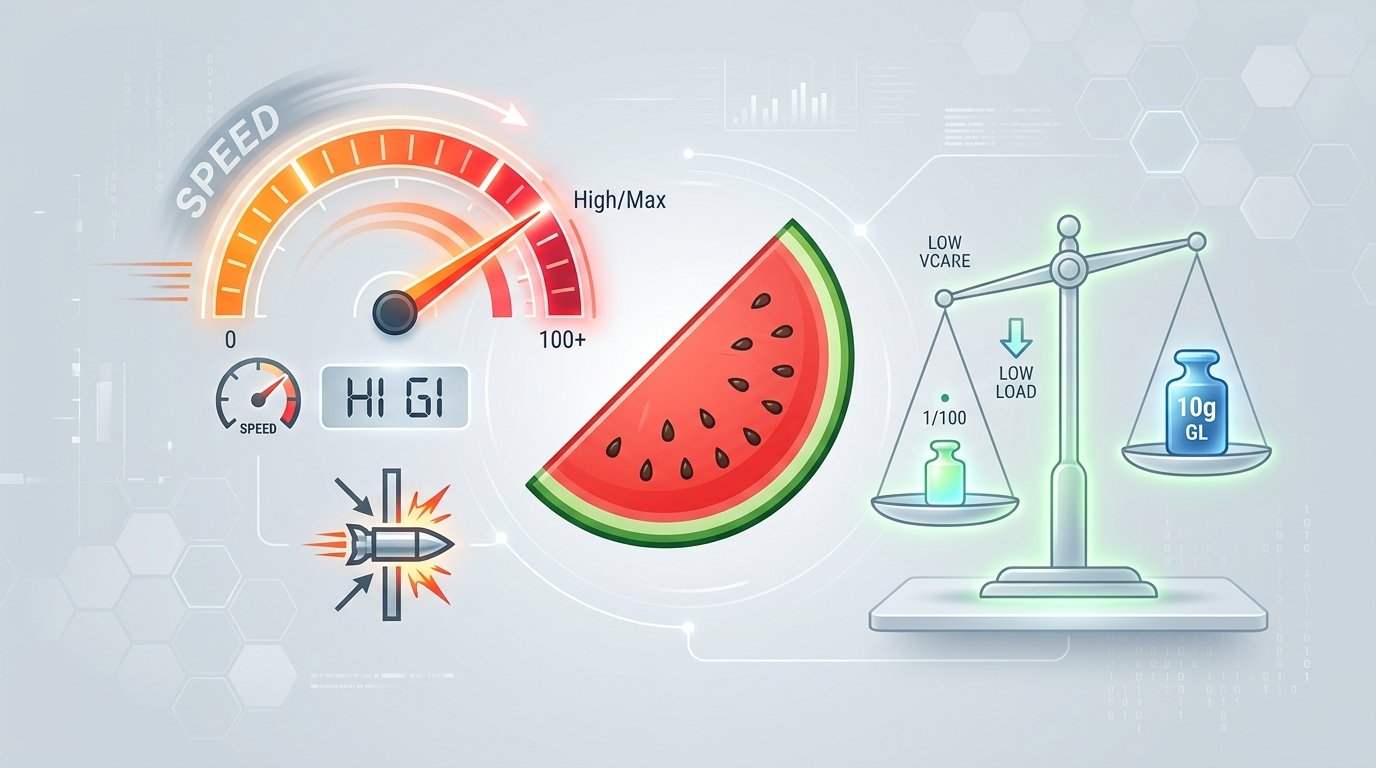
To grasp the concept of Glycemic Index vs. Glycemic Load, we must first look at the Glycemic Index (GI) on its own. Think of the Glycemic Index as a speedometer for carbohydrates. It measures how quickly a specific food raises your blood glucose levels compared to pure glucose, which has a baseline score of 100.
Foods are ranked on a scale from 0 to 100 and are generally grouped into three categories:
- Low GI (55 or less): These foods are digested and absorbed slowly, causing a gentle, gradual rise in blood sugar. Examples include steel-cut oats, non-starchy vegetables, chickpeas, and most lentils.
- Medium GI (56 to 69): These foods cause a moderate rise in blood sugar. Examples include brown rice, sweet potatoes, and whole wheat bread.
- High GI (70 or more): These foods are rapidly broken down into glucose, leading to swift blood sugar spikes and a subsequent insulin response. Examples include white bread, pretzels, russet potatoes, and sugary sodas.
While the GI is an incredibly useful tool for evaluating carbohydrate quality, it has one major limitation: it does not take portion size into account. The GI of a food is determined by testing a portion that contains exactly 50 grams of pure, digestible carbohydrates. For a food like white bread, 50 grams of carbs is about two slices. But for a food like carrots or watermelon, you would have to eat an enormous, unrealistic amount of food to consume 50 grams of carbs. This is where the Glycemic Index can sometimes paint an incomplete picture of your daily meals.
Demystifying Glycemic Load: The Real-World Impact
If the Glycemic Index represents the speed at which blood sugar rises, the Glycemic Load (GL) represents the actual amount of glucose that enters your bloodstream per serving. It bridges the gap between laboratory testing and your actual dinner plate by factoring in portion control.
To calculate the Glycemic Load of a food, we use a simple formula:
Just like the GI, the Glycemic Load is divided into three helpful categories:
- Low GL (10 or less): Very minimal impact on your blood sugar levels.
- Medium GL (11 to 19): Moderate impact on blood sugar.
- High GL (20 or more): Likely to cause a significant blood sugar spike.
By focusing on the GL, you gain a much more accurate understanding of how a typical serving of food will affect your metabolic health. It teaches us that you do not need to avoid carbs completely; instead, you can manage your glycemic response simply by adjusting your portion sizes.
Glycemic Index vs. Glycemic Load: The Ultimate Showdown
To truly understand how Glycemic Index vs. Glycemic Load work together, let's look at a classic real-world comparison: watermelon versus a glazed donut.
Watermelon has a Glycemic Index of 72, which places it firmly in the "high GI" category. Based on GI alone, you might assume you should avoid watermelon forever to prevent sharp blood sugar spikes. However, watermelon is mostly water and fiber. A typical 120-gram serving of watermelon contains only about six grams of carbohydrates.
If we calculate the Glycemic Load for that serving of watermelon:
A GL of 4.3 is incredibly low! This means that enjoying a slice of watermelon will have a negligible impact on your blood sugar because the actual carbohydrate quality and portion size are very low.
Now, let's look at a glazed donut. It has a GI of approximately 76—only slightly higher than watermelon. However, a single donut contains about 23 grams of highly refined carbohydrates and virtually no water or fiber.
Let's calculate the Glycemic Load for the donut:
The donut has a medium-to-high GL, which is more than four times the glycemic impact of the watermelon! This showdown perfectly illustrates why looking at both metrics gives you the freedom to eat a wider variety of foods while keeping your blood sugar stable.
Practical Ways to Optimize Your Diet Using GI and GL
Now that you know the difference between these two metrics, how can you apply this knowledge to your daily life? You do not need to carry a calculator to every meal. Instead, you can use these simple, actionable guidelines to maintain a stable glycemic response.
1. Pair Carbs with "Armor" (Protein, Fat, and Fiber)
One of the easiest ways to lower the glycemic response of a high-GI food is to slow down its digestion. When you eat carbohydrates on their own, your stomach empties quickly, leading to rapid absorption. By pairing your carbs with healthy fats, lean proteins, or soluble fiber, you create a buffer. For example, if you want to eat a high-GI banana, pair it with a tablespoon of almond butter (fat and protein) or stir it into some Greek yogurt.
2. Practice Smart Portion Control
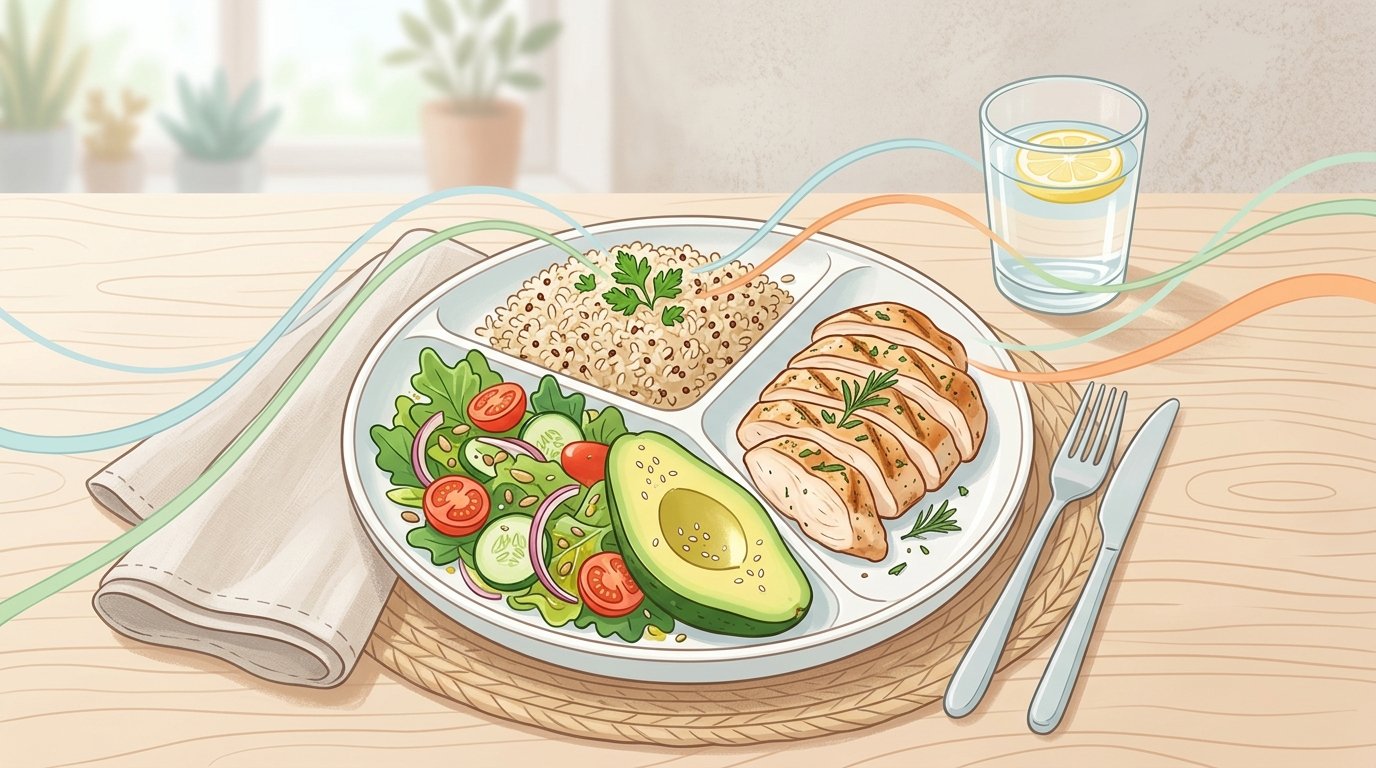
As we saw with the watermelon example, portion control is the easiest way to turn a high-GI food into a low-GL meal. If you love white rice or pasta, you do not have to banish them from your kitchen. Simply reduce the portion size to a half-cup and fill the rest of your plate with non-starchy vegetables and a clean source of protein, like grilled chicken or tofu.
3. Swap Refined Grains for Whole Foods
Whenever possible, choose carbohydrates that are minimally processed. Highly processed foods have already had their natural fiber stripped away, which naturally increases their GI. Swap white bread for sprouted grain bread, and exchange instant oatmeal for steel-cut oats. These small swaps significantly lower the insulin response required by your body.
4. Cook, Cool, and Reheat Your Starches
Did you know you can physically alter the structure of carbs to make them healthier? When you cook starches like potatoes, rice, or pasta and then let them cool in the fridge overnight, they develop something called resistant starch. Resistant starch acts like fiber, resisting digestion and lowering both the GI and GL of the food—even after you reheat it!
Personalizing Your Metabolic Journey
While Glycemic Index vs. Glycemic Load charts offer excellent baselines, it is crucial to remember that everyone's body is beautifully unique. Your sleep quality, stress levels, gut microbiome, and genetics all play a massive role in how you respond to different foods. A food that causes a mild rise in one person might cause significant blood sugar spikes in another.
This is where modern technology becomes a game-changer. Using a continuous glucose monitor (CGM) allows you to see your body’s unique glycemic response in real-time. To make sense of this data without feeling overwhelmed, a glucose tracking app like GlucoAI can help you log your meals, track patterns, and identify exactly which foods work best for your metabolism. By pairing the science of GI and GL with personalized insights from GlucoAI, you can build a sustainable, delicious diet that loves your body back.
Please consult your doctor or a registered dietitian before making significant changes to your diet or diabetes management plan.
Summary
- Glycemic Index (GI) measures how fast a carbohydrate raises your blood sugar on a scale of 0 to 100.
- Glycemic Load (GL) factors in portion size, showing the actual impact of a typical serving of food on your blood sugar.
- High-GI foods can still be blood-sugar-friendly if their portion size is small, resulting in a low GL (like watermelon).
- You don't have to cut carbs; instead, focus on portion control, choosing whole grains, and pairing carbs with protein, healthy fats, and fiber to minimize blood sugar spikes.
- Personal tracking is key. Use tools like GlucoAI alongside your CGM to discover your body's specific responses to your favorite meals.
Ready to take control of your metabolic health without giving up the foods you love? Start by picking one high-GI food you eat regularly and pairing it with a healthy fat or protein today. For an even clearer picture of your progress, download GlucoAI to start tracking your daily patterns and unlock personalized insights for a happier, healthier you!
GlucoAI — Smart Blood Sugar Monitor
Track, analyze, and optimize your glucose levels with AI-powered insights.