
- Published on
Airport Security with a CGM and Insulin Pump
Standing in a long airport security line is stressful enough on its own. But when you are wearing a CGM (continuous glucose monitor) and an insulin pump, that stress can easily double. You might worry about whether the security scanners will damage your expensive devices, how to explain your medical tech to busy security officers, or what to do if your blood sugar starts crashing mid-line.
We understand that travel anxiety completely. The good news is that thousands of people with diabetes fly safely every single day. With a little preparation and the right knowledge, you can breeze through airport security with your CGM and insulin pump without any unnecessary hassle.
Understanding the Science: Why Airport Scanners Matter for Diabetes Tech
Before you head to the airport, it is crucial to understand how security screening technology interacts with your diabetes devices. Not all scanners are created equal, and knowing the difference can protect your technology from malfunctioning.
There are three main types of security screening methods you will encounter at the airport:
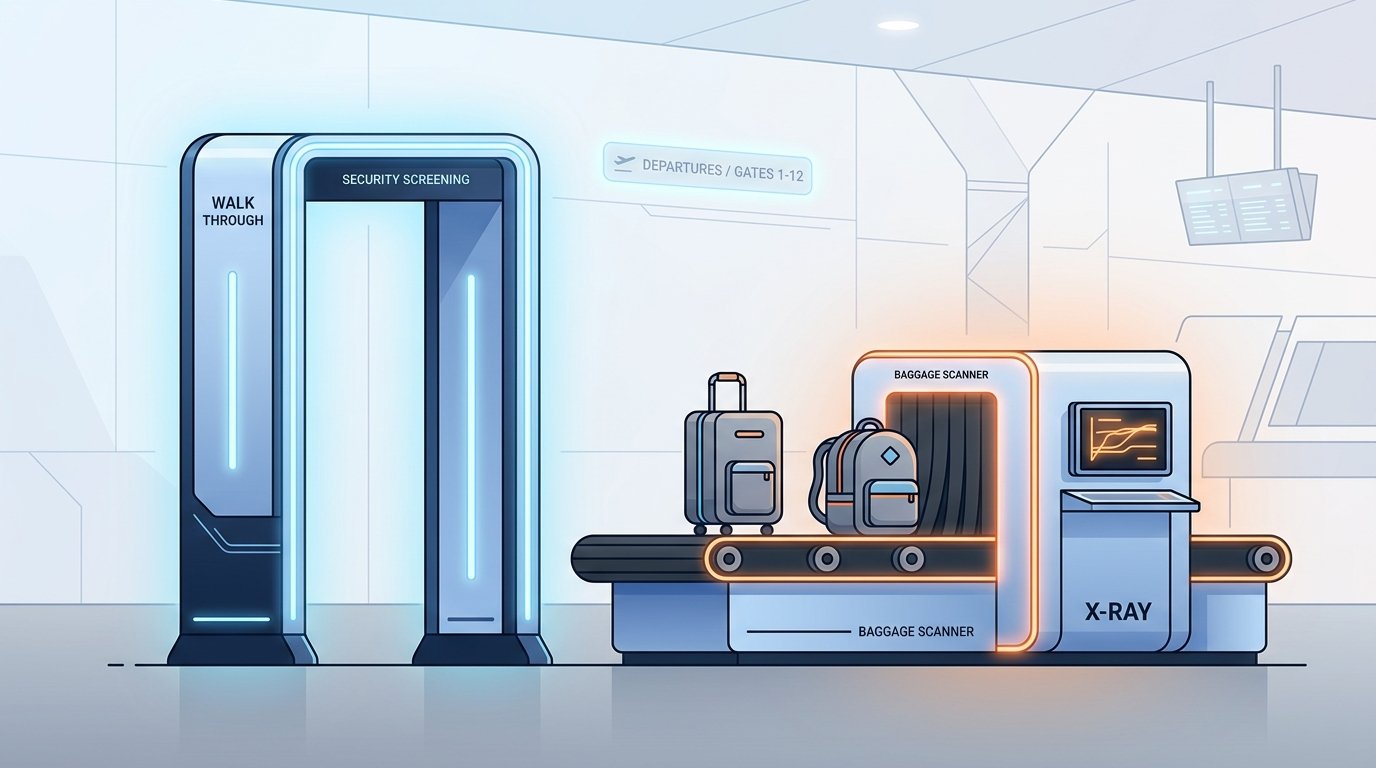
- Walk-through metal detectors: These use low-frequency electromagnetic fields to find metal. They are generally safe for most CGMs and insulin pumps, though they may trigger an alarm if your device contains enough metal.
- Full-body scanners (Advanced Imaging Technology or AIT): These scanners use millimeter-wave technology to create a 3D image of your body. Most major manufacturers of CGMs and insulin pumps explicitly state that their devices should not go through these scanners, as the high-frequency radiation can interfere with the device's programming or calibration.
- X-ray machines: These are the conveyor-belt scanners used to inspect your carry-on luggage and personal items. You must never put your CGM transmitter, sensor, or insulin pump through an X-ray machine. The powerful X-rays can permanently damage the delicate computer chips inside them.
Because of these technical limitations, you have the legal right to request alternative screening methods. Always consult your doctor or diabetes care team before traveling to establish a solid backup plan, such as carrying a manual blood glucose meter and insulin pens just in case a device fails.
Your Step-by-Step Guide to Navigating TSA Security
Navigating the Transportation Security Administration (TSA) or any international airport security checkpoint requires clear communication and a calm demeanor. Here is exactly how to handle the process from start to finish.
Step 1: Prepare Your Documentation
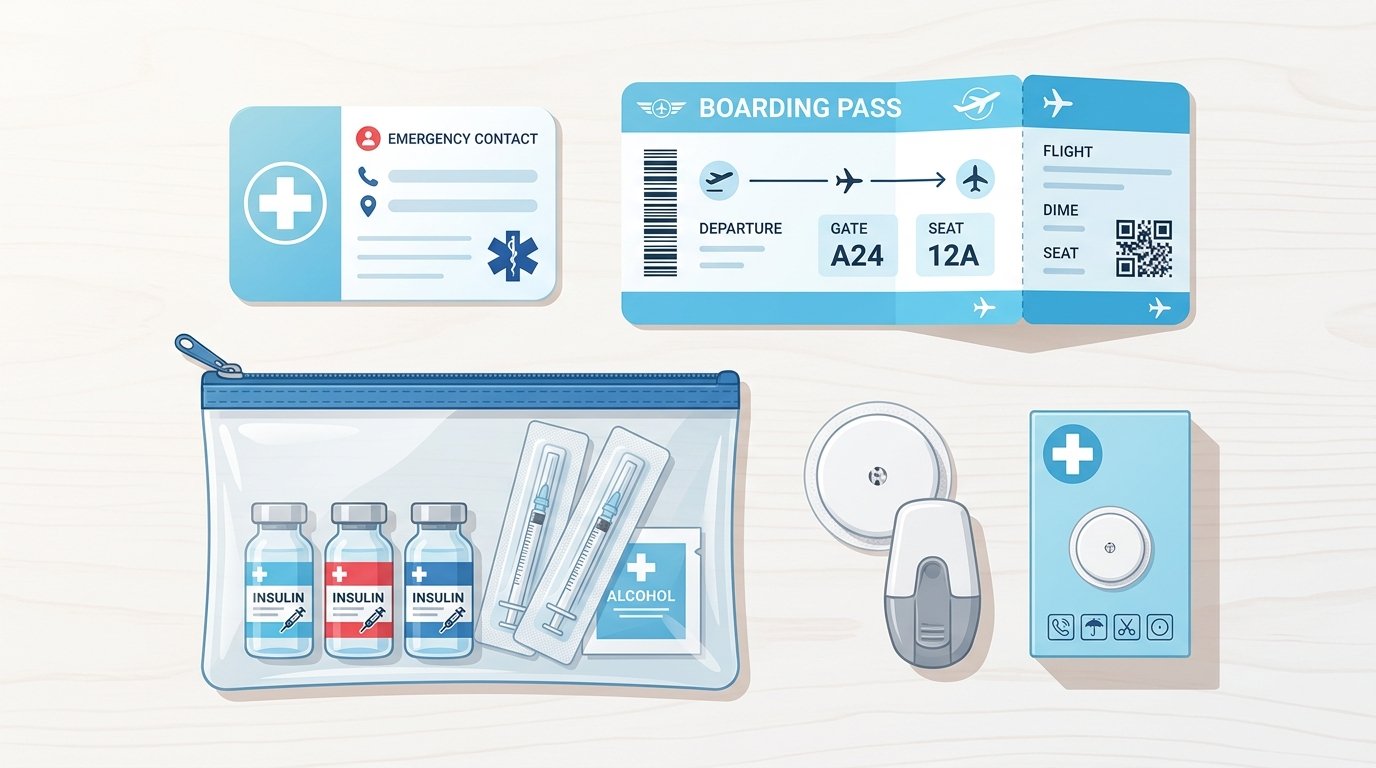
Before you even join the security queue, gather your medical documentation. While the TSA does not strictly require a doctor's letter, having one makes the process much smoother. Ask your healthcare provider for a signed letter explaining that you have diabetes and must carry insulin, needles, syringes, a CGM, and an insulin pump at all times.
Step 2: Notify the Officer Immediately
As soon as you reach the front of the line, tell the security officer that you are wearing a CGM and an insulin pump. You can state this clearly: "I am wearing a continuous glucose monitor and an insulin pump. These devices cannot go through the full-body scanner or the X-ray machine."
Many travelers find it helpful to use a TSA Notification Card. This is a simple, printable card where you can write down your medical conditions and devices, allowing you to hand it to the officer quietly if you prefer not to announce your medical status to the entire line.
Step 3: Choose Your Screening Method
Because your devices should not go through the full-body scanner, you should request a physical pat-down and a handheld metal detector screening instead. The security officer will guide you to a designated area.
During the pat-down, the officer will inspect your body, including the areas where your CGM and pump are attached. They will ask you to touch your devices with your own hands, and then they will swab your hands to test for explosive residue. This is a standard, routine procedure, so there is no need to feel alarmed.
Packing Your Diabetes Supplies Like a Pro
How you pack your carry-on bag can make a massive difference in how quickly you get through security. Never pack your life-saving diabetes supplies in your checked luggage. Checked bags are subject to extreme temperature fluctuations in the cargo hold, which can ruin your insulin, and there is always a risk that your luggage could get lost or delayed.
Keep all your supplies in your carry-on bag, and follow these packing best practices:
- Keep medical liquids accessible: Insulin, glucagon, and fast-acting glucose juices are exempt from the standard liquid limits (the 3-1-1 rule). You can carry liquids larger than 100 mL (3.4 ounces) if they are medically necessary. Keep them in a separate, clear bag so you can easily pull them out for inspection.
- Use an insulated travel case: Insulin is highly sensitive to temperature. Use a specialized gel-pack cooling case to keep your insulin cool during long travel days.
- Bring extra supplies: Always pack at least 150% of the supplies you think you will need. This includes extra CGM sensors, pump infusion sets, reservoirs, batteries, and manual fingerstick testing supplies.
What to Do If Things Don't Go to Plan
Even with perfect preparation, you might occasionally encounter a security officer who is unfamiliar with diabetes technology. If an officer insists that you must send your insulin pump through the X-ray machine or walk through the full-body scanner, stay calm and advocate for yourself.
First, politely repeat that the manufacturer's guidelines state that the device will be damaged by the scanner. If they still insist, ask to speak directly with a TSA Supervisor or a Passenger Support Specialist (PSS). These supervisors receive advanced training in handling medical devices and disability accommodations.
If you are traveling within the United States, you can also contact the TSA Cares helpline at least 72 hours before your flight. They can provide dedicated assistance and even arrange for a support specialist to meet you at the airport to guide you through the security process.
Flying and Glucose: Managing Your Numbers in the Air
Once you successfully navigate security, your journey isn't quite over. Air travel introduces unique variables that can impact your metabolic health and blood sugar levels.
For instance, cabin pressure changes during takeoff and landing can occasionally cause tiny air bubbles to form in your insulin pump tubing, which might inadvertently deliver an extra micro-dose of insulin or cause a temporary blockage. To prevent this, some endocrinologists recommend disconnecting your pump during takeoff and landing, or manually checking your tubing for bubbles once you reach cruising altitude.
Furthermore, travel stress, airport food, and crossing multiple time zones can cause unexpected blood sugar fluctuations. Stress hormones like cortisol can cause sudden glucose spikes, while sitting still for hours on a long flight can reduce your insulin sensitivity.
Using a glucose tracking app like GlucoAI can be incredibly empowering during your travels. By logging your meals, sleep changes, and flight times, you can easily visualize how travel stress impacts your glucose levels. This helps you make informed, real-time adjustments to your insulin doses or activity levels, ensuring you stay in your target range throughout your journey.
Summary: Your Pre-Flight Checklist
To ensure your next trip is as seamless as possible, use this quick checklist before you head to the airport:
- Doctor's letter: Carry a signed letter explaining your diabetes devices and medication needs.
- Hand-luggage only: Pack all insulin, CGMs, pumps, and testing supplies in your carry-on bag.
- Cooling case: Keep your insulin protected from extreme temperatures.
- TSA Notification Card: Have this ready to show the security officers.
- Backup supplies: Bring extra sensors, infusion sets, and a manual blood glucose meter.
- Advocate for yourself: Politely request a physical pat-down instead of going through the full-body scanner.
Traveling with a CGM and an insulin pump requires a few extra steps, but it should never hold you back from exploring the world. By staying prepared, communicating clearly with airport staff, and keeping a close eye on your glucose trends, you can fly with absolute confidence.
Ready to make your next trip even smoother? Download GlucoAI today to easily track your glucose trends, log your travel meals, and manage your metabolic health effortlessly wherever your adventures take you!
GlucoAI — Smart Blood Sugar Monitor
Track, analyze, and optimize your glucose levels with AI-powered insights.