
- Published on
Digital Stress: How Screen Time Affects Glucose Levels
Digital Stress: How Screen Time Affects Glucose Levels
In our hyper-connected world, most of us spend the majority of our waking hours looking at screens. Whether you are scrolling through social media, answering emails, or catching up on the latest news, your devices are likely never far from reach. But have you ever wondered if your digital habits are influencing more than just your mood? Emerging research suggests that the stress triggered by our constant engagement with digital platforms can have a measurable impact on our blood sugar levels.
Understanding the connection between digital stress and metabolic health is essential for anyone looking to maintain stable glucose readings. When we talk about "digital stress," we are referring to the physiological response triggered by information overload, the "fear of missing out" (FOMO), and the constant demand for our attention. This stress can lead to physical changes in the body that directly influence how we process glucose.

The Physiological Link: Cortisol and Glucose
When you encounter a stressful stimulus—even if that stimulus is a frustrating social media comment or a flurry of urgent work notifications—your body initiates the "fight-or-flight" response. This evolutionary mechanism is designed to prepare you for physical danger.
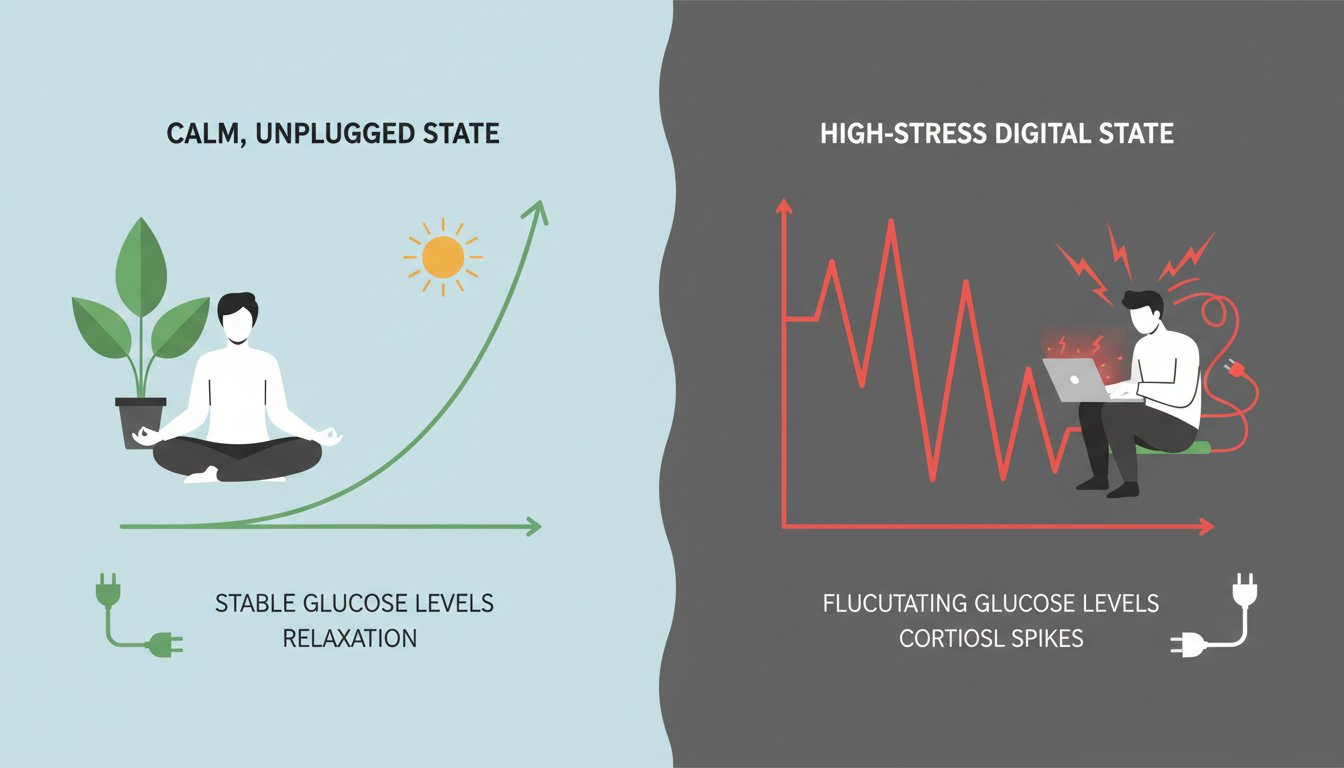
Your adrenal glands release hormones, primarily cortisol and adrenaline. These hormones signal your liver to release stored glucose into the bloodstream, providing your muscles with the quick energy they need to "fight" or "flee." However, in the modern digital age, we aren't running from predators; we are sitting in a chair. Because that glucose isn't being used for physical activity, it lingers in your bloodstream, potentially leading to a glucose spike even if you haven't eaten a carbohydrate-rich meal.
The Feedback Loop of Digital Exhaustion
Constant screen time often keeps us in a state of chronic, low-grade stress. Unlike a sudden, brief stressor, digital habits often create a baseline of elevated cortisol. Over time, this can lead to increased insulin resistance. When your cells become less sensitive to insulin, your body struggles to bring blood sugar levels back down effectively, leading to higher average glucose levels over time.
How Social Media Fuels Metabolic Tension
Social media platforms are designed to capture and hold our attention, often by triggering emotional responses. Whether it is a curated highlight reel of someone else’s life that triggers feelings of inadequacy, or a provocative news headline that induces anger, these emotional triggers are metabolic stressors.
The Impact of "Doomscrolling"
"Doomscrolling"—the act of spending an excessive amount of time consuming negative news—is particularly damaging. This habit keeps the nervous system in a state of high alert. When you combine this with a sedentary lifestyle, the metabolic impact is amplified. Prolonged periods of sitting while engaging in high-stress digital consumption means your body is essentially manufacturing energy it cannot burn, which can manifest as erratic glucose variability.
Blue Light and Circadian Disruption
We cannot talk about screen time without mentioning the impact of light. Exposure to blue light from screens, especially in the evening, suppresses melatonin production. When your sleep quality suffers, your body’s ability to regulate blood sugar the next day is significantly compromised. Poor sleep is a well-documented driver of insulin resistance, making it harder to keep your glucose within a healthy range the following morning.
Practical Strategies to Manage Digital Stress
You don’t have to throw your smartphone in the ocean to protect your metabolic health. Instead, the goal is to develop a more intentional, "glucose-friendly" relationship with your devices. By managing how and when you use technology, you can mitigate its impact on your blood sugar.
1. Implement "Digital Sunset" Rituals
Start winding down your screen use at least one hour before bed. This allows your brain to shift into a resting state and improves your sleep quality. Better sleep leads to better insulin sensitivity, which is the foundation of metabolic health.
2. Practice Mindful Consumption
Ask yourself: "Does this content make me feel calm or agitated?" If a particular app or account consistently spikes your stress levels, consider unfollowing or muting it. Monitoring your blood sugar using tools like GlucoAI can help you identify if specific digital habits coincide with unexplained glucose spikes.
3. Incorporate Movement Breaks
If you must spend hours on a screen for work, follow the "20-20-20" rule—but add a physical component. Every 20 minutes, look away from your screen, stretch, or do a quick two-minute walk. Moving your body helps utilize the glucose released by your liver, preventing those stress-induced spikes from lingering.
Monitoring the Impact with Data
The most empowering step you can take is to observe how your body responds to your unique environment. While we often focus on diet and exercise, digital stress is a "hidden" variable that many people overlook. By using a continuous glucose monitor (CGM) alongside a reliable tracking tool like GlucoAI, you can begin to see patterns that weren't visible before.
For example, do you notice higher glucose levels on days when you spend hours in back-to-back video calls? Do your evening readings spike after a period of intense social media browsing? When you connect these data points, you move from guessing to knowing. This level of insight allows you to make evidence-based decisions about your daily habits.
Summary: Taking Control of Your Metabolic Environment
Digital stress is a modern reality, but it does not have to dictate your metabolic health. By understanding how cortisol influences your glucose levels, you can take active steps to protect your stability:
- Acknowledge the stress response: Recognize that digital agitation triggers the same biological mechanisms as physical threats.
- Prioritize sleep: Use digital boundaries to protect your rest, which is essential for insulin sensitivity.
- Track your trends: Use glucose tracking apps to see how your digital consumption habits correlate with your actual blood sugar readings.
- Move to manage: Use physical activity to burn off the energy spikes caused by stress.
Managing your health is a holistic journey that goes beyond just what you put on your plate. By being mindful of your digital environment, you can foster a more stable, balanced, and healthy metabolic life. If you are ready to take a deeper look at how your lifestyle affects your glucose, start by tracking your daily habits with GlucoAI. Small, consistent changes in your digital routine can lead to significant improvements in your overall metabolic wellbeing. Please consult your doctor if you notice persistent, unexplained spikes or if you are concerned about your glucose management.
GlucoAI — Smart Blood Sugar Monitor
Track, analyze, and optimize your glucose levels with AI-powered insights.