
- Published on
Commuting and Glucose: How Transit Affects Metabolism
Commuting and Glucose: How Transit Affects Metabolism
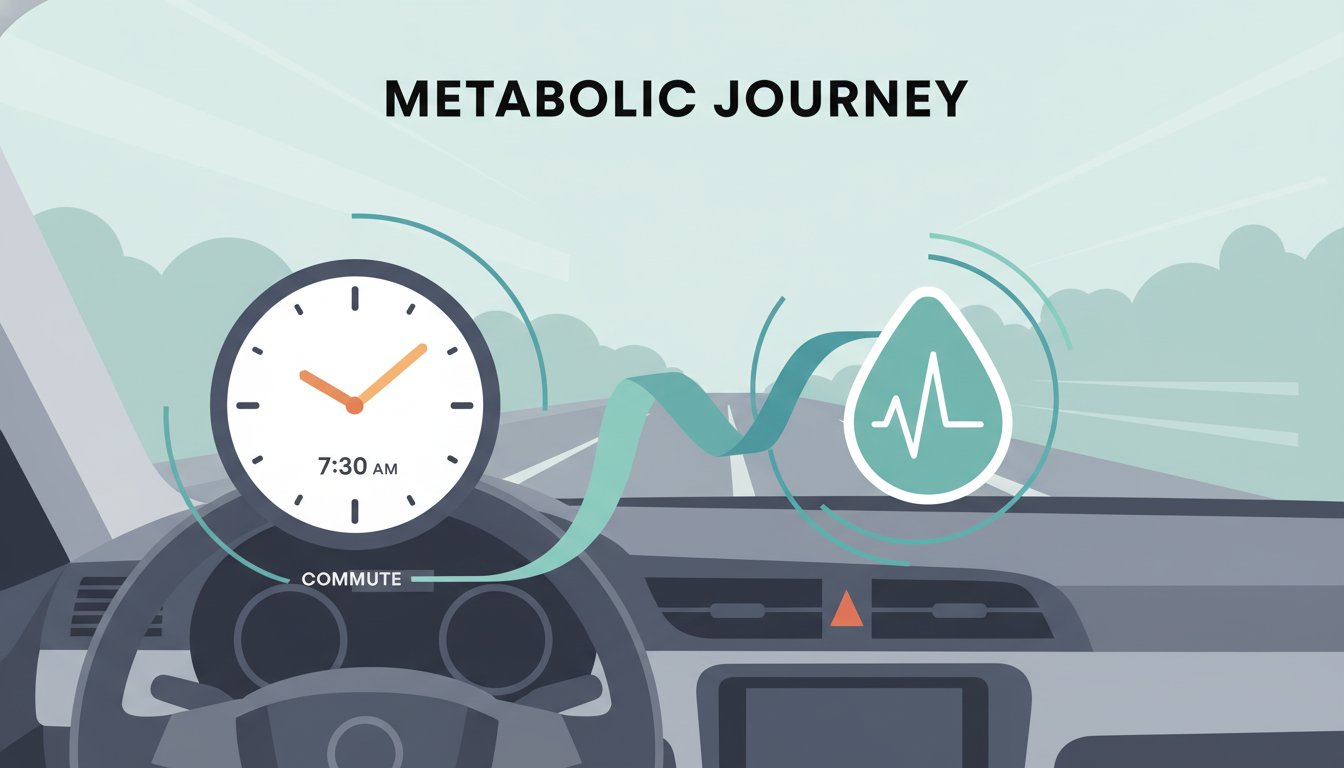
Does your daily commute feel like an uphill battle, not just for your patience, but for your blood sugar levels? Whether you are navigating bumper-to-bumper traffic, rushing to catch a train, or squeezing into a crowded bus, the way you travel to work can have a surprisingly significant impact on your metabolic health. For many people managing blood sugar, the transition from home to the workplace is a period of high variability that often goes overlooked.
Understanding how your transit choices affect your glucose stability is a key step in gaining more control over your day. It is not just about the physical movement—or lack thereof—it is about the physiological response to stress, timing, and environmental factors that occur while you are on the move. Let’s explore how to optimize your daily journey for better metabolic outcomes.
The Stress-Glucose Connection During Transit
The most immediate impact your commute has on your glucose levels is often psychological. Sitting in heavy traffic or navigating a delayed transit system triggers your body’s “fight-or-flight” response. When you feel stressed or frustrated, your body releases hormones like cortisol and adrenaline. These hormones signal your liver to release stored glucose into your bloodstream to provide energy for a perceived threat.
In a modern setting, this extra fuel has nowhere to go. You are sitting at the wheel or in a seat, meaning your muscles aren't burning off that glucose. As a result, you may see an unexplained spike in your blood sugar reading, even if you haven't eaten anything. If you use a Continuous Glucose Monitor (CGM), you might notice these subtle, stress-induced elevations during your morning or evening rush hour. Recognizing this link is the first step toward managing it.
Sedentary Transit vs. Active Commuting
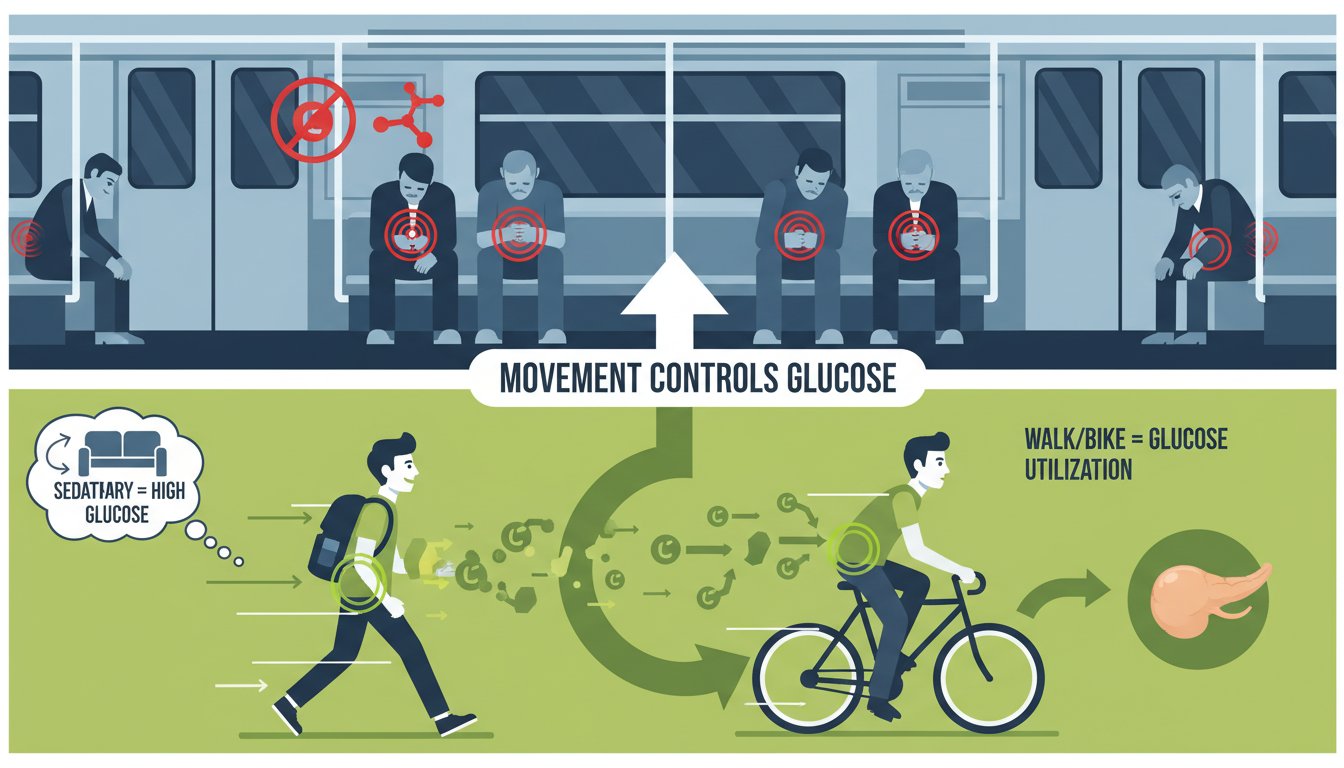
Transportation choices are essentially a spectrum of physical activity. At one end, you have the purely sedentary experience of driving or taking a ride-share. At the other, you have active commuting options like walking, cycling, or taking a transit route that requires a significant walk at either end.
The Problem with Prolonged Sitting
Extended periods of sitting reduce your insulin sensitivity—the ability of your cells to effectively take up glucose from your blood. When you combine a long, sedentary commute with a sedentary office job, you create a "metabolic bottleneck" where your body struggles to maintain stable levels.
The Benefits of “Commuter Movement”
Even small amounts of movement can help. If you take public transit, choosing to stand instead of sitting, or walking a few extra blocks to a further stop, engages your muscles. Skeletal muscle is the largest consumer of glucose in the body. When you engage these muscles, they become more efficient at pulling sugar out of your bloodstream, even without intense exercise.
Timing Your Meals Around Your Schedule
One of the most common mistakes in glucose management is timing meals around a rigid clock rather than your activity levels. If your commute is long, eating a high-carbohydrate meal right before jumping into the car can set you up for a post-meal spike that is difficult to manage while you are stationary.
Instead, try to align your nutrition with your transit windows. If you know you will be sitting for an hour, aim for a meal or snack that is higher in healthy fats and fiber, which helps slow down the rate of glucose absorption. Conversely, if your commute involves walking or cycling, your body might be better equipped to handle a moderate amount of carbohydrates during that timeframe.
Environmental Factors and Metabolic Stability
Your physical surroundings during your commute also play a role. Temperature extremes, for instance, can affect your metabolism. In cold weather, your body burns more energy to maintain its core temperature, which can influence your glucose levels. Similarly, exposure to high levels of noise pollution or poor air quality during your commute has been linked in some studies to increased systemic inflammation, which can affect insulin resistance over time.
While you cannot always control the air quality of your commute, you can control your internal environment. Maintaining proper hydration is vital. Dehydration can cause blood sugar to appear more concentrated, and it can also increase your body's stress response. Keeping a water bottle on hand, even during a short drive, helps keep your metabolism running smoothly.
Practical Strategies for a Glucose-Friendly Commute
Managing your blood sugar during your commute doesn't require a complete life overhaul. Here are a few actionable steps you can take:
- Practice mindful breathing: If you find yourself getting frustrated in traffic, try four-count breathing to dampen the cortisol response.
- Optimize your seating: If you take a bus or train, stand when possible to keep your muscles engaged.
- Pack smart snacks: Keep glucose-friendly, fiber-rich snacks in your bag to avoid the temptation of vending machines at transit hubs.
- Use technology to track patterns: Use tools like GlucoAI to log your commute times and observe how your glucose levels respond to different modes of transit. You might be surprised to find that a specific train route leads to lower glucose variability than your usual driving route.
When to Consult Your Doctor
While making lifestyle adjustments is a powerful tool, it is essential to remember that everyone’s metabolic profile is unique. If you notice consistent, unexplained spikes or drops in your glucose levels during your commute, please consult your doctor. They can help you determine if these patterns are related to your transit habits or if they require adjustments to your overall management plan or medication.
Summary and Next Steps
Your commute is more than just time spent getting from point A to point B—it is an active part of your metabolic day. By understanding how stress, movement, and timing influence your body, you can turn a stressful transit period into a managed part of your health routine.
Start by tracking your glucose levels alongside your transit choices for a few days. You can use your personal logs in GlucoAI to identify whether your stress levels in traffic or the physical activity of walking to the subway are having the biggest impact on your stability. Once you see the data, you can make small, informed changes to your routine. Remember, small, consistent improvements are the secret to long-term metabolic health.
CTA: Ready to see how your daily habits, including your commute, affect your glucose levels? Download GlucoAI today to start tracking your data and uncovering the patterns that help you achieve better stability and metabolic balance.
GlucoAI — Smart Blood Sugar Monitor
Track, analyze, and optimize your glucose levels with AI-powered insights.