
- Published on
Best CGM Placement Sites for Accuracy and Comfort
Did you know that placing your continuous glucose monitor (CGM) just a few inches to the left could be the difference between a highly accurate reading and a frustrating false alarm at 3:00 AM? If you have ever experienced a sudden, terrifying dip in your glucose readings while sleeping, only to find out it was a "compression low" from lying on your sensor, you know exactly how frustrating poor placement can be. Finding the perfect spot for your CGM sensor is a balancing act between medical accuracy, daily comfort, and your unique lifestyle.
Whether you are a seasoned CGM user or just unboxing your first sensor, understanding where to place your device can dramatically improve your experience. Your CGM does not actually measure blood glucose directly; instead, it reads glucose levels in your interstitial fluid (the fluid between your cells). Because of this, the thickness of your subcutaneous fat layer, your daily movement, and even your sleeping habits play a massive role in how well your sensor performs. Let's explore the best CGM placement sites to help you find your ultimate sweet spot.
Why CGM Placement Directly Impacts Your Readings
Before we dive into the specific locations, it is helpful to understand why placement matters so much. Your CGM sensor uses a tiny, flexible filament inserted just beneath your skin. This filament needs to sit comfortably in the subcutaneous fat layer. If the sensor is placed in an area with too little fat, it might touch muscle tissue, which can cause discomfort and highly inaccurate, erratic readings.
Additionally, blood flow and mechanical pressure affect your sensor. If you apply your sensor to an area that gets compressed when you sit, sleep, or exercise, you can temporarily restrict local fluid movement. This restriction leads to "compression lows"—sudden drops in your tracked glucose levels that do not reflect your actual blood sugar. By choosing your sites mindfully, you can prevent these annoying false alarms and ensure your data remains highly reliable.
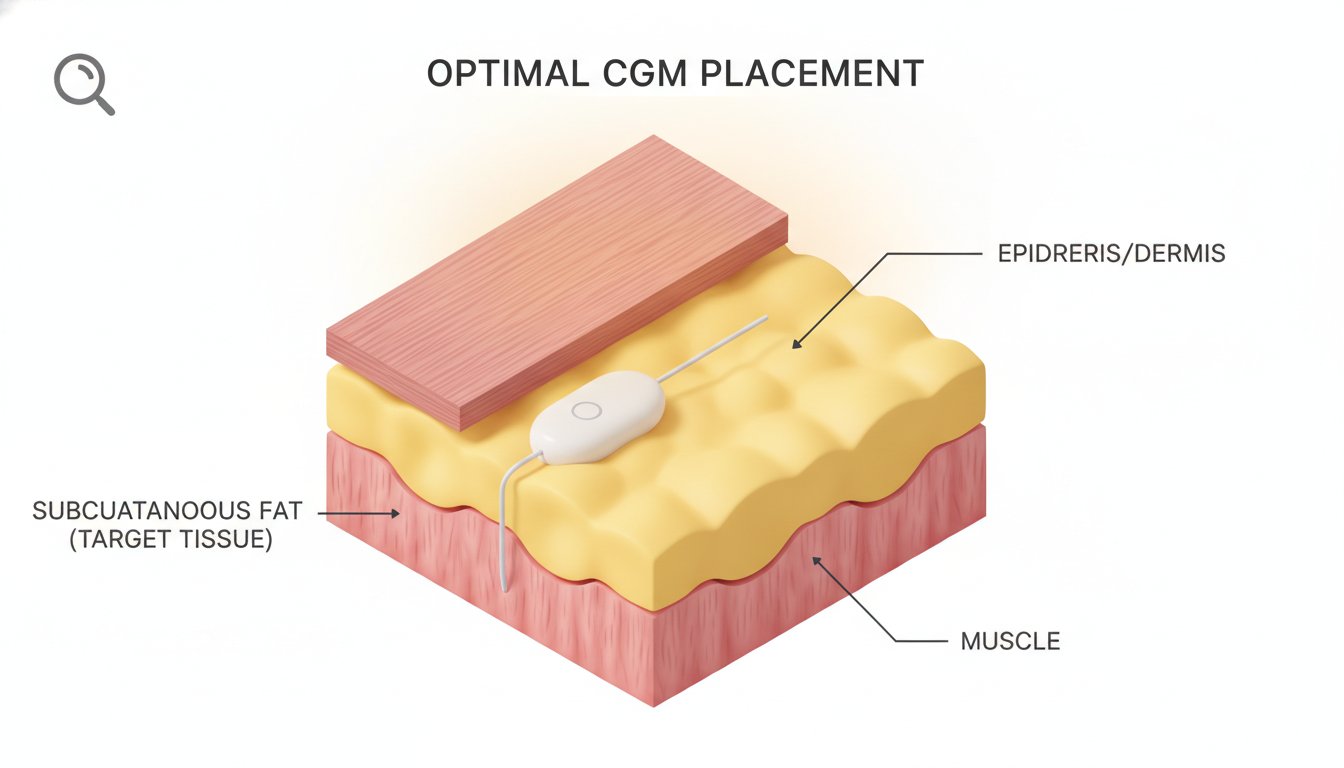
The Top FDA-Approved CGM Placement Sites
Medical manufacturers extensively test specific areas of the body to secure regulatory approval. For the highest level of accuracy and manufacturer support, starting with these officially approved sites is always your best bet.
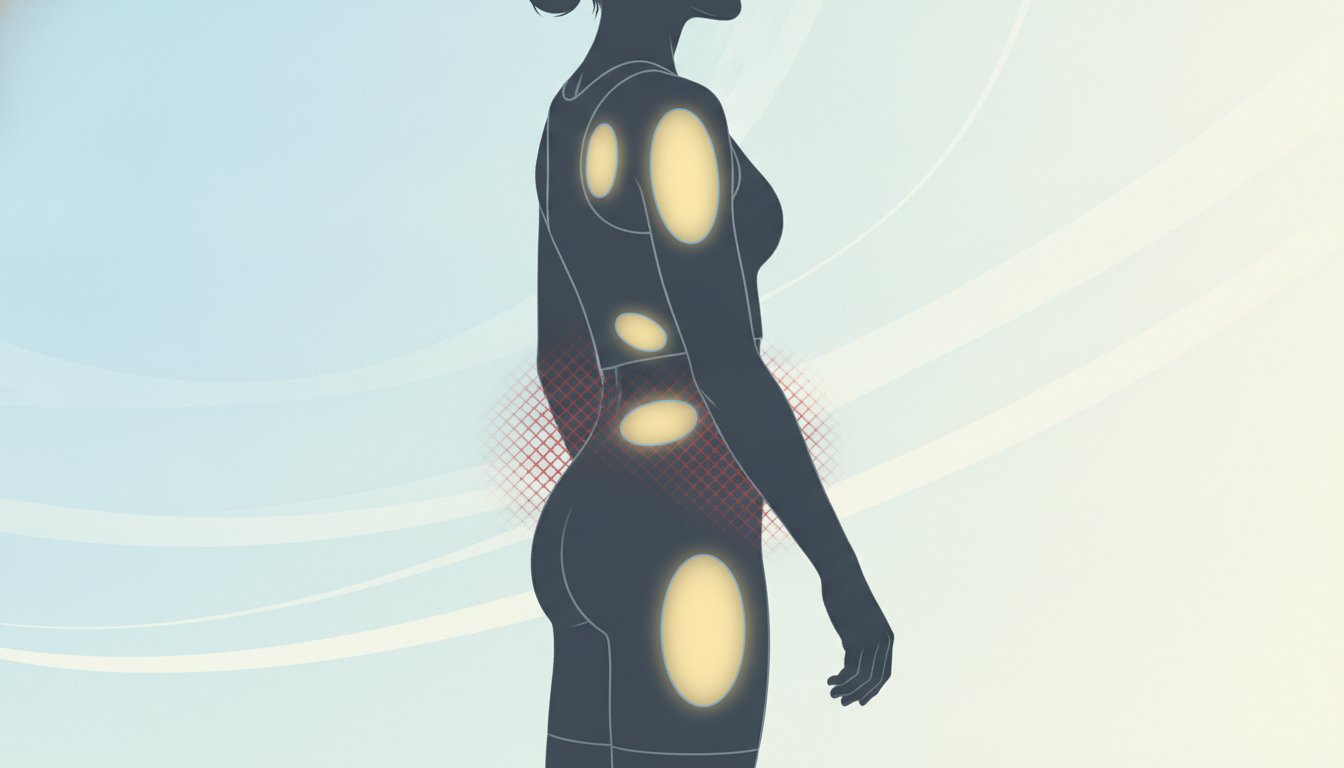
The Back of the Upper Arm
The back of the upper arm is currently the most popular and widely approved site for major CGM brands. This area typically offers a consistent layer of subcutaneous fat and is relatively protected from daily bumps.
- Why it works: It provides stable interstitial fluid readings that closely match fingerstick blood glucose tests.
- Best for: Side-sleepers (on the opposite side), runners, and individuals who wear fitted waistbands.
- Pro tip: Place the sensor about three to four inches below your shoulder and slightly toward the back of your arm to avoid catching it on doorframes or backpack straps.
The Abdomen (Stomach)
The abdomen is another highly reliable, FDA-approved site for several continuous glucose monitors. It generally offers a larger surface area and a deeper fat layer, making insertion virtually painless for many people.
- Why it works: The stomach provides excellent insulin absorption correlation and highly stable glucose readings throughout the day.
- Best for: Back-sleepers, active individuals who do arm-heavy workouts, and people who prefer to keep their devices completely hidden under clothing.
- Pro tip: Stay at least two inches away from your belly button, existing scar tissue, or insulin infusion sites. Avoid placing it right along your natural waistline where your pants or belt might rub against it.
The Upper Buttocks
While this site is primarily approved for pediatric users (typically ages two to 17, depending on the device brand), some adults find it incredibly comfortable and accurate. Please consult your doctor before trying an alternative placement site.
- Why it works: This area naturally has a generous layer of subcutaneous fat, which shields the sensor filament.
- Best for: Active children, stomach-sleepers, and individuals who want their sensor completely out of sight and out of mind.
- Pro tip: Position the sensor high enough on the gluteal area so that you do not sit directly on it when using a chair.
Off-Label CGM Placement Sites (With Caution)
Many experienced CGM users choose to wear their sensors in "off-label" locations—areas that are not officially cleared by regulatory bodies but are highly favored in the diabetes community. If you find the approved sites uncomfortable, you might want to discuss these alternatives with your doctor.
The Outer Thigh
The upper, outer thigh is a highly popular alternative site. It offers a flat surface that is easy to reach and simple to prep.
- The benefit: It is incredibly easy to hide under shorts or pants, and it is highly unlikely to get bumped during daily activities.
- The drawback: Tight jeans or leggings can rub against the sensor, potentially pulling it off or causing compression lows when you sit down.
- Safety first: Ensure you place it in the fatty outer pocket of the thigh, well away from the inner thigh or muscle-heavy areas.
The Forearm
Some users swear by the inner or outer forearm, especially those who struggle with skin irritation on their upper arms or stomach.
- The benefit: Extremely easy access for scanning and visual checks.
- The drawback: Highly exposed to accidental bumps, scrapes, and water exposure. It also has a much thinner fat layer, increasing the risk of hitting muscle.
How to Choose the Best Site for Your Lifestyle
There is no single "perfect" spot that works for everyone. The best CGM placement site is highly personal and depends on how you move, sleep, and dress. Consider these three factors to find your ideal match:
1. Your Sleeping Position
If you are a side-sleeper, placing a sensor on the outer aspect of both arms can lead to frustrating midnight compression alarms. Try placing the sensor on your abdomen, or keep it strictly on the arm opposite your preferred sleeping side. If you sleep on your stomach, the back of your arms or your upper buttocks will likely feel much more comfortable.
2. Your Wardrobe and Daily Habits
Take a moment to think about your daily clothing. Do you wear high-waisted pants, tight belts, or heavy backpacks? Avoid placing your sensor anywhere these items press firmly against your skin. For example, if you frequently carry a heavy shoulder bag, the back of your arm might be prone to friction, making the abdomen a much safer choice.
3. Site Rotation Habits
To keep your skin healthy and maintain high sensor accuracy, you must rotate your sites with every single sensor change. Applying a new sensor to the exact same spot can cause lipodystrophy (a localized change in fat tissue under the skin) or scar tissue buildup, both of which severely impair glucose absorption and sensor accuracy. Always move your new sensor at least one inch away from your previous site, and try to alternate between the left and right sides of your body.
Step-by-Step Tips for a Secure and Accurate Placement
Once you have selected your ideal site, proper preparation is the key to ensuring your sensor stays put for its entire lifespan and delivers highly accurate data.
- Clean the area thoroughly: Wash the site with plain soap and water, then dry it completely. Avoid moisturizing soaps or body washes, which can leave an oily residue.
- Sanitize with alcohol: Wipe the area with an alcohol prep pad and let it air dry completely for at least 60 seconds. Inserting a sensor through wet alcohol can cause stinging and ruin the adhesive.
- Pinch the skin (if needed): If you are placing the sensor in a leaner area, gently pinch a fold of skin to lift the subcutaneous fat away from the underlying muscle during insertion.
- Smooth down the adhesive: Once inserted, run your finger firmly around the adhesive patch several times to seal the edges and prevent peeling.
Summary and Key Takeaways
Finding the right CGM placement site is a journey of trial and error, but keeping these key points in mind will help you succeed:
- Stick to approved sites first: The back of the arm and the abdomen offer the most validated accuracy.
- Avoid compression zones: Do not place your sensor where you sleep directly on it or where tight clothing rubs.
- Rotate consistently: Never use the exact same spot twice in a row to prevent scar tissue and preserve skin health.
- Prioritize skin prep: Clean, dry skin is essential for both sensor longevity and reading accuracy.
Managing your glucose levels does not have to feel like guesswork. Once you have found the perfect placement for your CGM, the next step is making sense of all that rich data. Rather than staring at confusing graphs, you can use a glucose tracking app to seamlessly log your meals, track your trends, and understand exactly how your lifestyle choices affect your metabolic health.
If you want to take your glucose management to the next level, download GlucoAI today. Our intelligent platform helps you decode your CGM readings, identify patterns, and receive personalized insights to keep your blood sugar stable and your energy high.
GlucoAI — Smart Blood Sugar Monitor
Track, analyze, and optimize your glucose levels with AI-powered insights.