
- Published on
The Second Meal Effect: Mastering Daily Glucose
Have you ever noticed that even if you eat the exact same lunch two days in a row, your blood sugar reacts completely differently? One day you might see a gentle curve, while the next you’re hit with a massive spike that leaves you feeling sluggish and "brain-fogged" by 3:00 PM. While we often blame the lunch itself, the real culprit might be what you ate hours earlier—or even the night before. This phenomenon is known as the "Second Meal Effect," and mastering it is one of the most powerful ways to stabilize your glucose levels for the entire day.
In the world of metabolic health, we often focus on the immediate impact of a single meal. We check our levels 60 to 120 minutes after eating to see how we handled that specific plate of food. However, your metabolism doesn't reset to zero every time you pick up a fork. Your body carries the "metabolic memory" of your previous meal into the next one. By understanding how to leverage the Second Meal Effect, you can turn your breakfast into a metabolic anchor that keeps you steady through lunch and dinner.
Understanding the Second Meal Effect: Your Metabolic Memory
The Second Meal Effect (SME) describes a fascinating biological quirk: the glycemic response to a second meal is significantly influenced by the composition of the first meal. This isn't just a theory; it was first documented in the early 20th century and has been backed by decades of clinical research.
The classic example involves legumes. Researchers found that when people ate lentils or beans for dinner, their blood sugar response to a high-carbohydrate breakfast the next morning was significantly lower than if they had eaten bread or pasta the night before. This suggests that certain foods have a "carry-over" benefit that lasts for many hours, improving your insulin sensitivity (how effectively your body uses insulin to lower blood sugar) long after the initial meal has been digested.
While the effect is most famous for the "lentil effect" from dinner to breakfast, it works just as effectively from breakfast to lunch. If you start your morning with a meal that triggers the Second Meal Effect, you aren't just managing your morning glucose; you are pre-treating your body to handle your midday meal with much greater efficiency.

The Science: Why Your Breakfast Controls Your Lunch
You might be wondering how a piece of toast or a bowl of oats at 8:00 AM can possibly change how your body handles a sandwich at 1:00 PM. The secret lies in a combination of slow digestion, gut hormones, and the fascinating world of short-chain fatty acids (SCFAs).
1. Slowing Down the Sugar Rush
When you eat a breakfast rich in soluble fiber and protein, it slows down gastric emptying—the rate at which food leaves your stomach. This leads to a slower, more gradual release of glucose into the bloodstream. Because your body isn't overwhelmed by a massive initial spike, your pancreas doesn't have to pump out excessive amounts of insulin. This prevents the "crash" or reactive hypoglycemia that often follows a high-sugar breakfast, leaving your system in a calmer state when lunch arrives.
2. The Power of Short-Chain Fatty Acids
This is where the magic happens. When you consume fermentable fibers (found in beans, seeds, and certain vegetables), they travel to your large intestine where your gut bacteria feast on them. As these bacteria break down the fiber, they produce short-chain fatty acids, specifically butyrate, acetate, and propionate.
These SCFAs enter your bloodstream and signal your liver to produce less glucose. They also improve insulin sensitivity in your muscle cells. Because this fermentation process takes several hours, the peak production of these "metabolic helpers" often coincides perfectly with your next meal.
3. GLP-1 and Appetite Hormones
A high-fiber, high-protein breakfast also stimulates the release of GLP-1 (glucagon-like peptide-1). You might recognize this as the hormone targeted by many modern weight-loss medications. GLP-1 slows digestion and enhances insulin secretion. By stimulating your natural production of GLP-1 in the morning, you set a hormonal tone that keeps your appetite in check and your glucose stable for hours.
Note: If you are managing a medical condition like Type 2 diabetes or are on medication, please consult your doctor before making significant changes to your dietary routine.
How to Build a "Second-Meal-Friendly" Breakfast
To harness the Second Meal Effect, you need to move away from the "Continental Breakfast" model of pastries, juices, and sugary cereals. Instead, focus on these three pillars:
Prioritize Fermentable Fiber
Not all fiber is created equal. To trigger the SME, you want fermentable, soluble fiber. Excellent choices include:
- Chia seeds and flaxseeds: These are easy to stir into yogurt or puddings.
- Legumes: While "breakfast beans" are more common in the UK, a savory lentil bowl or chickpea flour omelet is a metabolic powerhouse.
- Berries: Raspberries and blackberries are packed with fiber and antioxidants.
- Resistant Starch: Cold oats or cooked-and-cooled potatoes contain resistant starch, which acts like a "super-fiber" for your gut bacteria.
The "Protein First" Rule
Starting your meal with protein can significantly dampen the glucose response of any carbohydrates that follow. Aim for at least 20 to 30 grams of protein at breakfast. This could come from eggs, Greek yogurt, cottage cheese, or a high-quality protein powder. Protein increases satiety and works alongside fiber to slow down the absorption of sugars.
Healthy Fats for Stability
Adding healthy fats like avocado, nuts, or olive oil further slows digestion. A breakfast of avocado on sprouted grain toast with a poached egg is a classic example of a meal that utilizes the Second Meal Effect. The combination of healthy fats, fiber, and protein ensures that your glucose levels remain steady, preventing the midday "rollercoaster."
Seeing the Effect in Action with CGM Data
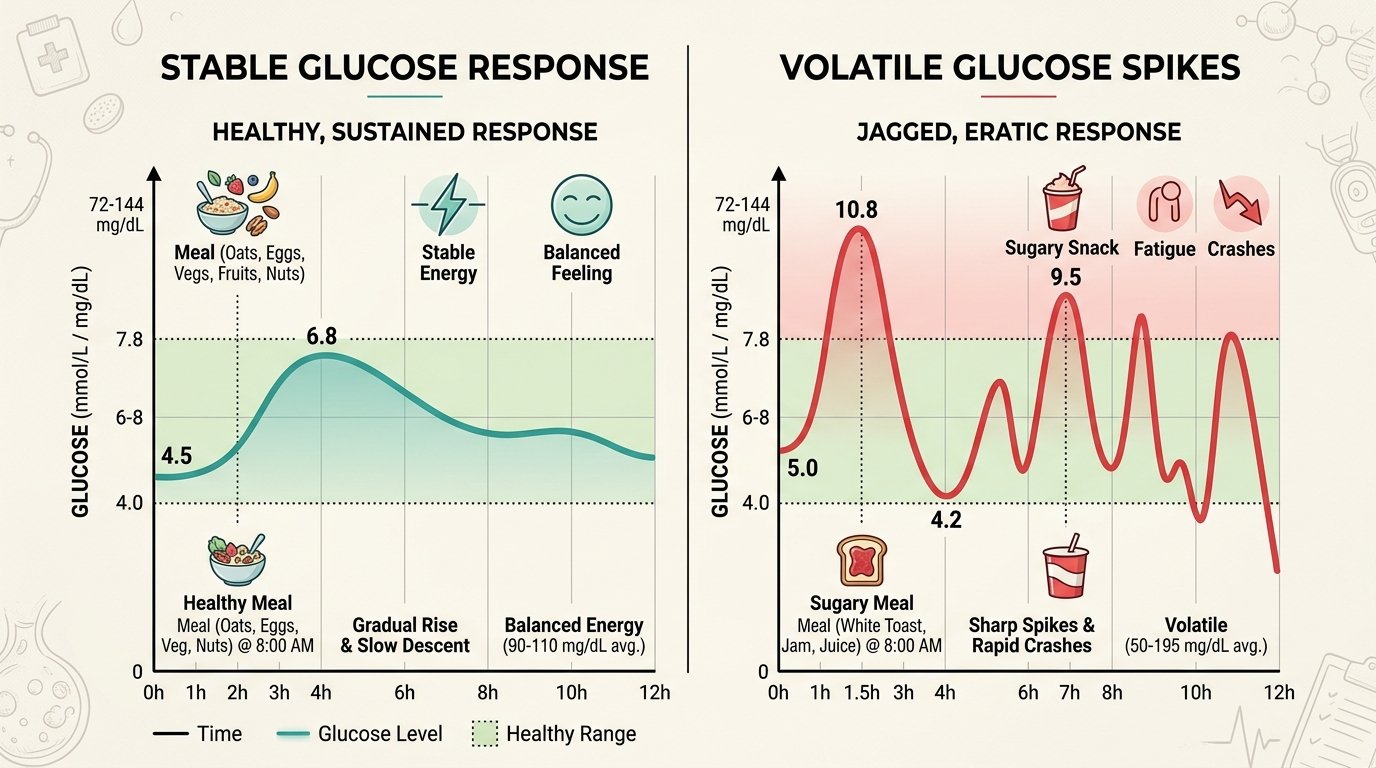
The best way to understand how the Second Meal Effect works for your unique body is to use a Continuous Glucose Monitor (CGM). Everyone’s gut microbiome is different, meaning a food that triggers a strong SME for one person might not work as well for another.
When you use a glucose tracking app like GlucoAI, you can begin to spot these patterns. Try this experiment:
- Day 1: Eat a "fast" breakfast like a bagel or sweetened cereal. Record your lunch glucose response.
- Day 2: Eat a "slow" breakfast like a veggie omelet with black beans or a chia seed pudding. Eat the exact same lunch as Day 1.
Most users find that on Day 2, their lunch spike is significantly lower—sometimes by as much as 20 to 40 mg/dL—simply because of the foundation laid by breakfast. If you’re new to looking at these graphs, our beginner's guide to interpreting CGM data can help you make sense of the curves.
By logging your meals in GlucoAI, the AI can help identify these "carry-over" effects. It might notice, for example, that whenever you have almond butter in the morning, your afternoon energy levels are more stable. This data-driven approach takes the guesswork out of nutrition.
Troubleshooting: When the Effect Seems to Fail
If you’ve optimized your breakfast but still see lunch spikes, there are a few other factors to consider:
- Sleep Quality: A single night of poor sleep can significantly increase insulin resistance the next day. No amount of fiber can completely override the metabolic impact of 4 hours of sleep. Check out our guide on sleep and morning blood sugar for more on this.
- Stress Levels: High cortisol (the stress hormone) tells your liver to dump glucose into your bloodstream. If your workday is high-stress, your lunch spike might be driven by your inbox rather than your food.
- The "Dawn Phenomenon": Some people experience naturally high glucose in the morning due to hormonal shifts. Managing this often requires specific timing strategies for that first meal.
Key Takeaways for Mastering Your Glucose
The Second Meal Effect is a reminder that our health is a continuous journey, not a series of isolated events. What you do now impacts how you feel four, eight, or even 12 hours from now.
- Breakfast is a "Set-Up": Think of your morning meal as the foundation for your metabolic day.
- Focus on Fiber and Protein: Aim for fermentable fibers (beans, seeds, berries) and at least 20g of protein.
- Experiment and Track: Use tools like a CGM and GlucoAI to see which breakfast combinations give you the best "carry-over" protection for lunch.
- Be Patient: The gut microbiome takes time to adapt to increased fiber. Start slow to avoid digestive discomfort.
Summary
The Second Meal Effect proves that breakfast really is the most important meal of the day—not just for the energy it provides, but for the metabolic protection it offers. By choosing foods rich in fermentable fiber and protein, you stimulate the production of short-chain fatty acids and hormones like GLP-1 that keep your insulin working efficiently all day long.
Managing your glucose doesn't have to be a constant struggle against every single meal. By mastering your morning, you can enjoy a more stable, energetic, and healthy day with far less effort.
Ready to see the Second Meal Effect in your own data? Start by tracking your meals and glucose responses consistently. Small changes in your morning routine can lead to massive improvements in your A1C and overall metabolic health. Download GlucoAI today to start connecting the dots between what you eat and how you feel!
GlucoAI — Smart Blood Sugar Monitor
Track, analyze, and optimize your glucose levels with AI-powered insights.