
- Published on
Resistant Starch: How to Lower Glucose Spikes
Have you ever looked at a bowl of warm pasta or a fluffy baked potato and felt a sense of conflict? On one hand, these foods are comforting and delicious. On the other, if you are living with diabetes or prediabetes, you know that these simple carbohydrates can send your blood sugar on a wild roller coaster ride. But what if I told you there is a simple kitchen "hack" that could change the way your body processes these carbs, potentially reducing their impact on your glucose levels?
Welcome to the world of resistant starch. It sounds like a complex scientific term, but it is actually one of the most powerful tools in your metabolic health toolkit. By simply changing how you prepare, store, and reheat your favorite starchy foods, you can transform them from "sugar spikes in waiting" into "gut-friendly fuel." Let's dive into how this works and how you can start using this technique today.
What Exactly Is Resistant Starch?
Most of the carbohydrates we eat, like the starch in white bread or freshly boiled potatoes, are broken down quickly into glucose in our small intestine. This rapid digestion is what causes that familiar spike in your blood sugar levels. However, resistant starch is different. As the name suggests, it "resists" digestion.
Instead of being turned into sugar and absorbed into your bloodstream, resistant starch passes through your small intestine mostly intact. It then travels to the large intestine (the colon), where it acts as a prebiotic. This means it feeds the "good" bacteria in your gut. Because it isn't absorbed as sugar, it doesn't cause the same dramatic rise in blood sugar that regular starch does.
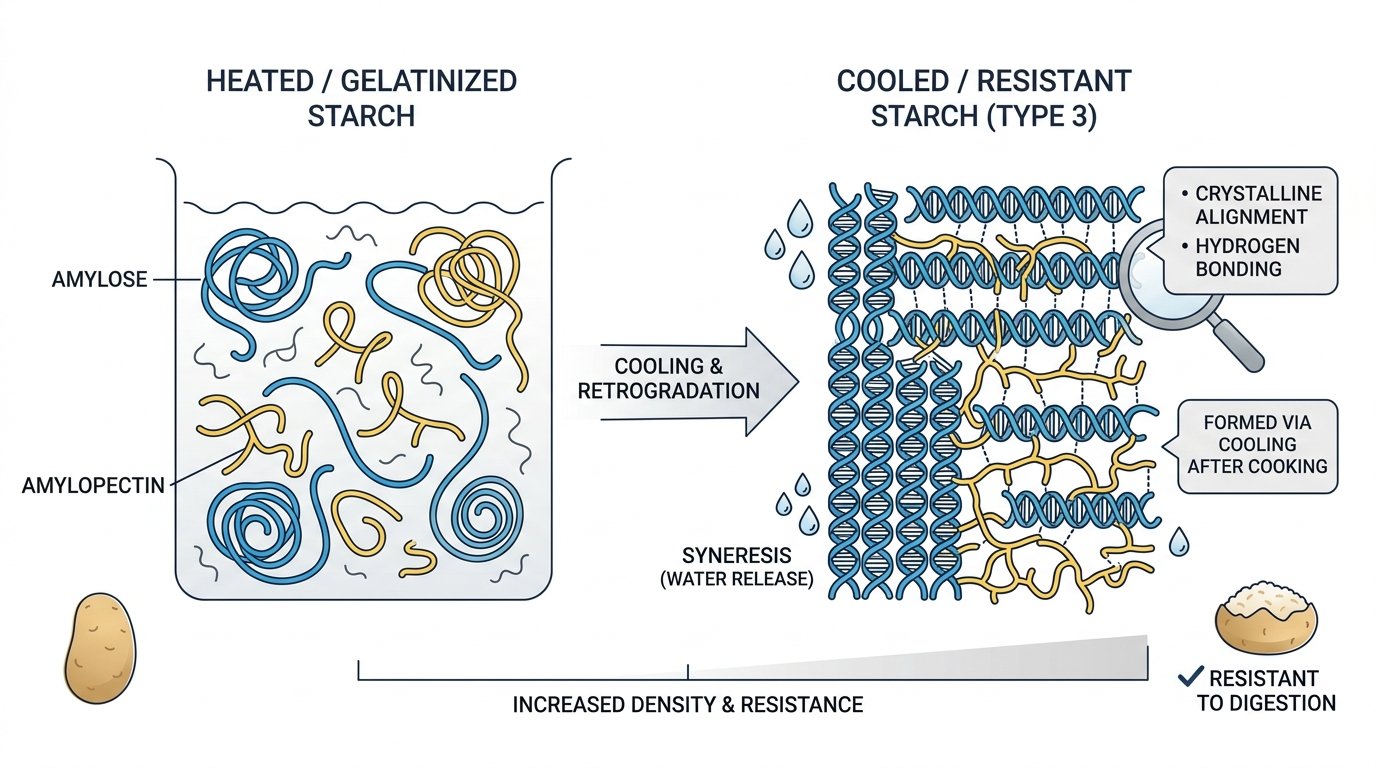
There are four main types of resistant starch, but the one we are most interested in for daily cooking is Type 3. This is formed when certain starchy foods are cooked and then cooled. This process, known as retrogradation, changes the physical structure of the starch molecules, making them harder for your digestive enzymes to break down.
The Science of "Cook and Cool"
When you cook a potato or a cup of rice, the starch granules absorb water and swell, a process called gelatinization. In this state, the starch is very easy for your body to digest. However, when you take that same food and put it in the refrigerator for 12 to 24 hours, the starch molecules begin to rearrange themselves into a tight, crystalline structure.
Even if you reheat the food the next day, much of that resistant starch remains. In fact, some studies suggest that reheating the food might even increase the resistant starch content further! For someone monitoring their glucose levels, this is a game-changer. You are essentially lowering the glycemic index of your meal without changing the ingredients—just the temperature history.
Why Your Gut Loves It
When resistant starch reaches your colon, your gut bacteria ferment it. This fermentation process produces short-chain fatty acids, most notably one called butyrate. Butyrate is the preferred fuel source for the cells lining your colon. Beyond just gut health, butyrate has been linked to:
- Improved insulin sensitivity: Helping your cells respond better to insulin.
- Reduced inflammation: Lowering markers of systemic inflammation.
- Increased satiety: Helping you feel full for longer, which can prevent overeating.
How to Lower Glucose Spikes: The 3-Step Method
If you want to try this at home, you don’t need any fancy equipment. You just need a little bit of planning. Here is the standard protocol for maximizing resistant starch in your diet.
1. Cook Thoroughly
Cook your pasta, rice, or potatoes as you normally would. Boiling or steaming works best for this process.
2. Cool Completely
This is the most important step. Place the cooked food in the refrigerator. Research indicates that cooling for at least 12 hours is the sweet spot for starch retrogradation. Leaving it overnight is usually the easiest way to ensure this happens.
3. Reheat Gently (Optional)
You don't have to eat your potatoes cold! You can reheat your food the next day. While some resistant starch is lost during intense reheating, a significant portion remains "resistant." Just try to avoid overcooking it a second time; a gentle warm-up in a pan or microwave is usually sufficient.
The Best Foods for Resistant Starch
Not all carbs are created equal when it comes to forming resistant starch. If you are looking to keep your blood sugar stable, focus on these heavy hitters:
Potatoes
Potatoes are perhaps the most famous source of Type 3 resistant starch. A cold potato salad (made with a vinegar-based dressing rather than heavy mayo) is a metabolic superstar. If you prefer them warm, cook them a day in advance, let them sit in the fridge, and then lightly sauté them the next day.
White or Brown Rice
Rice is a staple for many, but it can be a major source of glucose spikes. By cooling your rice overnight, you can significantly reduce its impact. This makes leftover rice perfect for healthy "fried rice" dishes where you use minimal oil and plenty of fiber-rich vegetables.
Pasta
Pasta lovers, rejoice! Cooling your pasta changes its structure just like rice and potatoes. This is why a pasta salad often feels more filling and less "heavy" than a hot bowl of spaghetti. If you're managing Type 2 diabetes, this small shift can make a noticeable difference in your post-meal glucose readings.
Legumes and Beans
Lentils, chickpeas, and black beans are already high in fiber, but they also contain high amounts of resistant starch. Unlike rice and potatoes, beans have high levels of resistant starch even when they are warm, but cooling them still provides an extra boost.
Real-World Impact: What the Data Says
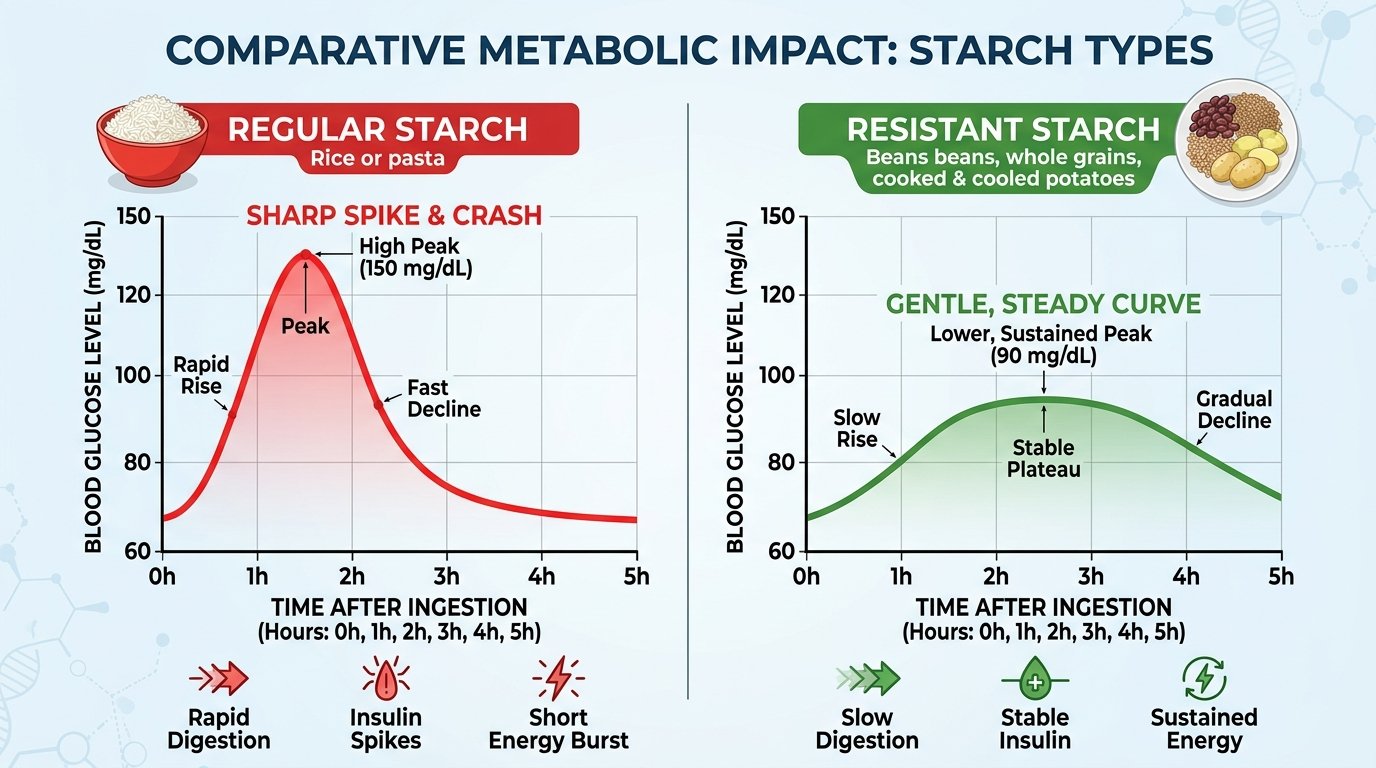
We often see a significant difference in our community members who switch to the "cook and cool" method. For example, someone might see their blood sugar rise to 180 mg/dL after eating freshly mashed potatoes. However, when eating the same portion of potatoes that have been cooled and reheated, that same person might only see a peak of 140 mg/dL.
That difference of 40 mg/dL is huge. It can be the difference between staying within your "Time in Range" or experiencing a stressful spike that leads to a "sugar crash" an hour later. By lowering the glycemic load of your meal, you are giving your pancreas a break and helping your body maintain a state of metabolic balance.
Tips for Success and Safety
While resistant starch is a fantastic tool, there are a few things to keep in mind to ensure you’re doing it safely and effectively:
- Watch for food safety: When cooling rice, ensure it goes into the fridge quickly. Rice can carry bacteria called Bacillus cereus if left at room temperature for too long. Always store your cooked carbs in airtight containers.
- Start slow: Because resistant starch is fermented in the gut, adding too much too quickly can cause gas or bloating. Start with small servings and let your gut microbiome adjust.
- Focus on the whole plate: Resistant starch isn't a "get out of jail free" card to eat unlimited carbs. You still need to balance your plate with protein, healthy fats, and non-starchy vegetables.
- Consult your doctor: As with any dietary change, especially if you are taking insulin or other medications for diabetes, please consult your doctor or a registered dietitian. Changes in how your body processes carbs may require adjustments to your medication.
Tracking Your Response with GlucoAI
Every body is different. Some people see a massive reduction in glucose spikes with resistant starch, while others see a more modest change. The only way to know for sure how your body reacts is to monitor the data.
Using a glucose tracking app like GlucoAI can help you visualize these differences. Try an experiment: One day, log a meal with fresh rice. The next day, log the exact same meal but use rice that has been cooled for 24 hours. When you compare the two "events" in GlucoAI, you’ll be able to see the literal curve of your glucose response. This kind of bio-feedback is incredibly empowering—it turns a "diet rule" into a proven strategy that works for your unique biology.
Summary: Key Takeaways
- Resistant starch behaves like fiber, passing through the small intestine without being converted into sugar.
- The "Cook and Cool" method (retrogradation) increases the amount of resistant starch in foods like potatoes, rice, and pasta.
- Cooling for 12-24 hours is the ideal timeframe to transform the starch structure.
- Reheating is okay, provided it is done gently, as it preserves most of the resistant starch.
- Benefits include lower post-meal glucose spikes, improved gut health, and better insulin sensitivity over time.
- Personalization is key—use tools like GlucoAI and your CGM to see exactly how much this technique helps you stay in your target range.
Managing your health doesn't always have to mean "giving things up." Sometimes, it’s just about changing how you prepare the things you love. By embracing the power of resistant starch, you can enjoy your favorite carbohydrates while keeping your metabolic health on track.
Ready to see how your body responds? Start by tracking your next "cool and reheat" meal and watch those spikes flatten out! For more tips on mastering your metabolism, keep exploring the GlucoAI blog and stay consistent with your monitoring. Small changes in the kitchen lead to big wins for your health.
GlucoAI — Smart Blood Sugar Monitor
Track, analyze, and optimize your glucose levels with AI-powered insights.