
- Published on
How to Safely Read and Respond to CGM Trend Arrows
Have you ever glanced at your continuous glucose monitor (CGM) and felt a sudden spike of anxiety at the sight of a straight-up arrow? You are certainly not alone. While a single glucose number tells you exactly where your blood sugar is at this exact moment, trend arrows offer something much more valuable: they show you where your blood sugar is heading and how fast it is getting there.
Think of your glucose level as a moving car. The number on your screen is your current location, but the trend arrow is your speedometer and steering wheel. Understanding how to interpret and safely respond to these arrows is one of the most powerful skills you can build for your metabolic health. It allows you to shift from reacting to emergencies to proactively keeping your glucose in a stable, healthy range.
What Are CGM Trend Arrows?
Continuous glucose monitors do not only measure your glucose at isolated moments; they track your levels continuously throughout the day and night. By comparing your current reading to your readings from the last few minutes, your CGM calculates the rate of change in your glucose.
This rate of change is displayed as a trend arrow on your receiver or smartphone screen. These arrows show you the direction of your glucose (up, down, or flat) and the speed of the change, usually measured in milligrams per deciliter per minute (mg/dL/min). By recognizing these patterns early, you can make informed decisions about food, exercise, and insulin before your blood sugar goes too high or too low.
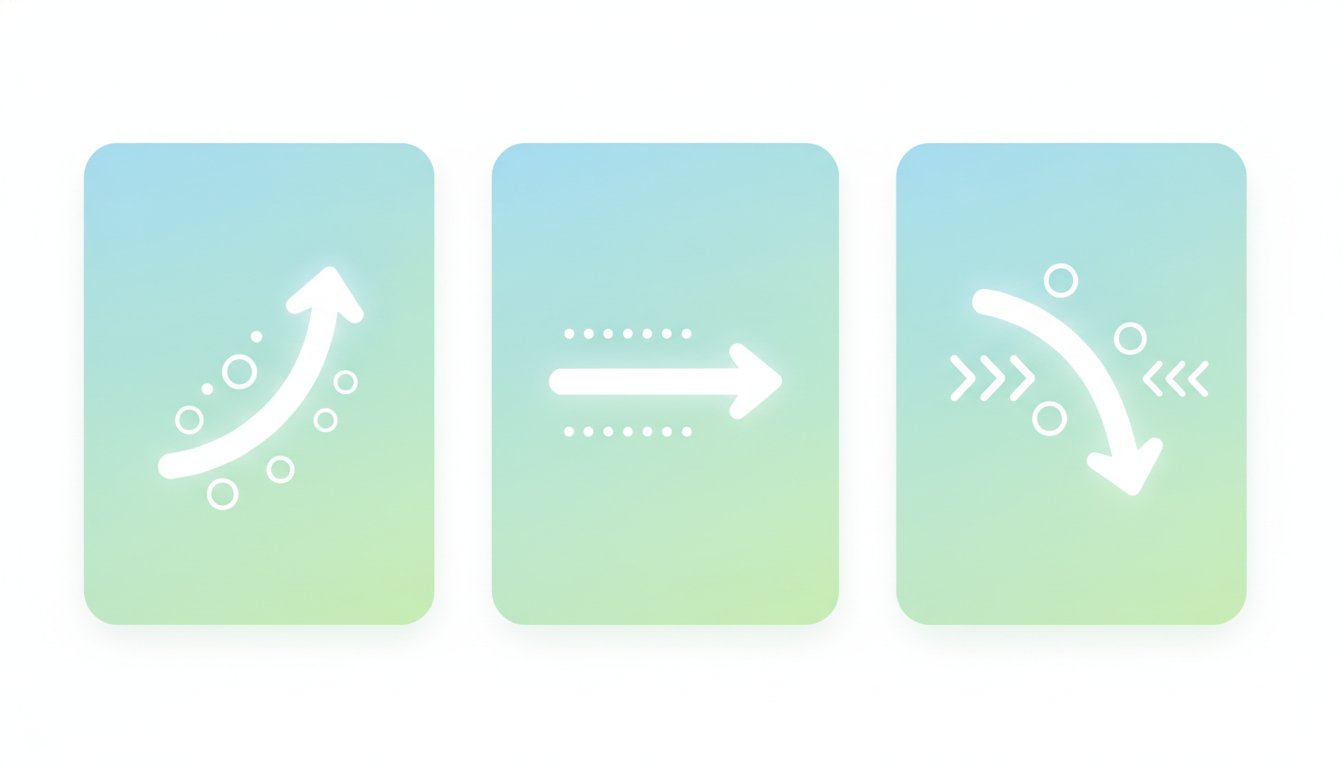
Decoding the Arrows: Your Quick Guide
While different CGM systems might look slightly different, most use a standardized set of arrows to represent how quickly your glucose is shifting. Here is a simple breakdown of what those arrows typically mean:
Horizontal Arrow (Flat)
- Meaning: Your glucose is stable.
- Speed: Changing less than 1 mg/dL each minute.
- What to expect: Your levels are likely to change by less than 30 mg/dL over the next 30 minutes.
Diagonal Arrow Up (Angled at 45 Degrees)
- Meaning: Your glucose is rising slowly.
- Speed: Rising between 1 to 2 mg/dL each minute.
- What to expect: Your levels could rise by 30 to 60 mg/dL over the next 30 minutes.
Single Arrow Up (Vertical)
- Meaning: Your glucose is rising rapidly.
- Speed: Rising between 2 to 3 mg/dL each minute.
- What to expect: Your levels could rise by 60 to 90 mg/dL over the next 30 minutes.
Double Arrow Up (Two Vertical Arrows)
- Meaning: Your glucose is rising extremely rapidly.
- Speed: Rising by more than 3 mg/dL each minute.
- What to expect: Your levels could rise by more than 90 mg/dL in the next 30 minutes.
Diagonal Arrow Down (Angled at 45 Degrees)
- Meaning: Your glucose is falling slowly.
- Speed: Falling between 1 to 2 mg/dL each minute.
- What to expect: Your levels could drop by 30 to 60 mg/dL over the next 30 minutes.
Single Arrow Down (Vertical)
- Meaning: Your glucose is falling rapidly.
- Speed: Falling between 2 to 3 mg/dL each minute.
- What to expect: Your levels could drop by 60 to 90 mg/dL over the next 30 minutes.
Double Arrow Down (Two Vertical Arrows)
- Meaning: Your glucose is falling extremely rapidly.
- Speed: Falling by more than 3 mg/dL each minute.
- What to expect: Your levels could drop by more than 90 mg/dL in the next 30 minutes.
The Golden Rule: Look Before You Leap
When you see a rapid trend arrow, your natural instinct might be to take immediate action. If you see a steep downward arrow, you might want to eat everything in your pantry. If you see a steep upward arrow, you might feel tempted to take a large dose of insulin to bring it down.
However, reacting too quickly often leads to a phenomenon known as "rollercoasting." This is where you overcorrect a high, crash into a low, overcorrect the low with too many carbohydrates, and spike right back up.
To avoid this exhausting cycle, be sure to consider your context before you make a move. Ask yourself these key questions:
- When did I last eat?
- When did I last take insulin or medication?
- Have I been physically active recently, or am I about to be?
- How do I actually feel physically?
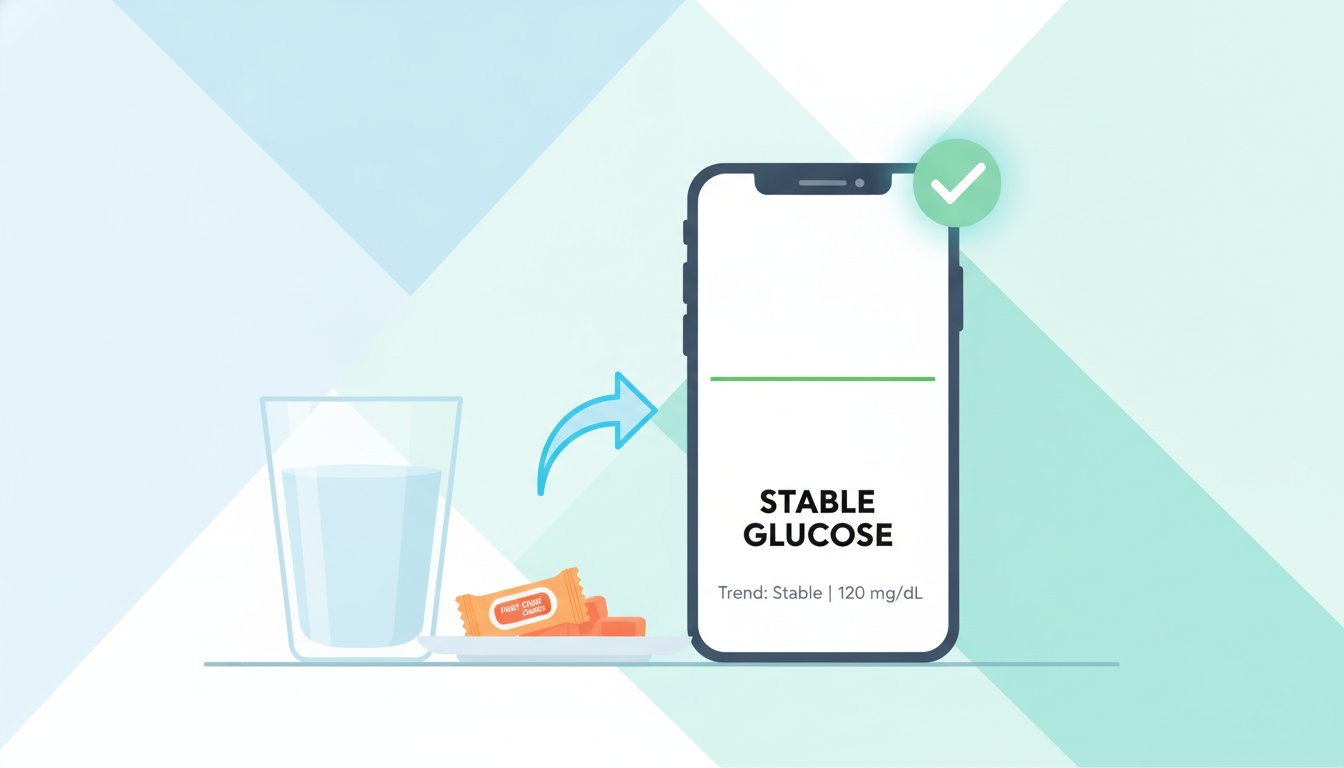
How to Safely Respond to Different Trends
Responding to trend arrows safely requires a balanced approach. It is best to work with your healthcare provider to establish personalized guidelines, but here are some safe, general strategies for handling different scenarios.
Managing Rapidly Rising Arrows (Upward Arrows)
If you see a single or double upward arrow, your glucose is climbing fast.
- Check your active insulin: If you take fast-acting insulin, check your "insulin on board" (IOB) or active insulin. If you recently took a dose, that insulin is still working in your system. Taking more insulin too soon is called "insulin stacking," and it can cause a severe low blood sugar event hours later.
- Hydrate: Drinking a large glass of water can help your kidneys flush out excess glucose.
- Get moving: A simple 10 to 15-minute walk can encourage your muscles to absorb glucose for energy, helping to flatten out the spike without the need for extra medication.
- Wait and watch: Give your body time to process your meal or previous insulin dose before taking corrective action.
Managing Rapidly Falling Arrows (Downward Arrows)
A downward vertical arrow can be intimidating, especially if your glucose is already near your target range.
- Intervene early but gently: If your glucose is at 110 mg/dL and falling rapidly, you do not need to wait until you are officially low (below 70 mg/dL) to act. However, you also do not need a full meal.
- Use a modified approach: Normally, the standard rule of 15 suggests eating 15 grams of fast-acting carbs and waiting 15 minutes. If you are falling rapidly but not yet low, a smaller amount—such as five to eight grams of fast-acting carbohydrates (like a few sips of juice or a glucose tablet)—is often enough to gently level off your curve.
- Avoid high-fat treats: Avoid chocolate, peanut butter, or baked goods to treat rapid drops. The fat in these foods slows down sugar absorption, which means your glucose will continue to fall before the carbohydrates can help.
When to Double-Check with a Fingerstick
Your CGM is an incredibly advanced tool, but it does have physical limitations. CGMs do not measure blood glucose directly; instead, they measure glucose in the interstitial fluid (the fluid surrounding your cells).
Because of this, there is a natural lag time of about five to 15 minutes between your actual blood sugar and your CGM reading. This lag time becomes much more pronounced when your glucose is changing rapidly—which is exactly when those trend arrows appear.
It is highly recommended to perform a traditional fingerstick blood test if:
- Your symptoms do not match your CGM reading (e.g., you feel sweaty and shaky, but your CGM says you are stable at 100 mg/dL).
- You see a rapid trend arrow and are about to make a significant insulin correction.
- Your CGM alerts you to a severe low, but you feel completely fine.
- The sensor is in its first 24 hours of use, when readings can occasionally be less stable.
Harnessing Data for Long-Term Balance
Over time, you will start to notice patterns in how your body reacts to specific foods, stress, and exercise. For instance, you might find that oatmeal frequently causes a single upward arrow, while eggs keep your trend line completely flat.
Instead of viewing trend arrows as a source of stress, try to view them as valuable feedback. Tracking these patterns over weeks and months is the key to mastering your metabolic health. Using a glucose tracking app like GlucoAI can make this process incredibly simple. By logging your meals, sleep, and physical activity, GlucoAI helps you visualize exactly what triggers those sudden rises and falls. This allows you to make sustainable, proactive lifestyle changes so you can enjoy more stable, flat lines and fewer vertical arrows.
Summary and Key Takeaways
Managing your glucose with trend arrows is all about staying calm, looking at the big picture, and making small, calculated adjustments.
- Arrows show velocity: Trend arrows show both the direction and the speed of your glucose changes.
- Avoid overcorrecting: Do not stack insulin for high arrows, and do not overeat for falling arrows.
- Use active insulin data: Check your active insulin (insulin on board) before taking a correction dose.
- Verify when in doubt: Trust your body. If your symptoms do not match your CGM screen, double-check with a fingerstick.
- Consult your team: Work closely with your endocrinologist or diabetes educator to establish personalized guidelines for arrow adjustments.
Are you ready to take the guesswork out of your glucose trends? Download GlucoAI today to start tracking your daily patterns, understanding your body's unique responses, and building healthier, more stable glucose habits!
GlucoAI — Smart Blood Sugar Monitor
Track, analyze, and optimize your glucose levels with AI-powered insights.